Gerasa is one of the largest and best-preserved late antique cities. There are magnificent colonnaded streets, gates and squares, two imposing temple complexes and theatres, and the remains of numerous early Byzantine churches.
In Roman times, the ancient city was larger than the modern town is today. Most of the ancient buildings that can be visited in Gerasa today date from the Roman period. In the 1st century AD, as in all cities of the Levant, Gerasa seemed to have experienced a construction boom that lasted at least two centuries. The Temple of Artemis/Diana, the Temple of Zeus/Jupiter and the magnificent streets date from this period.
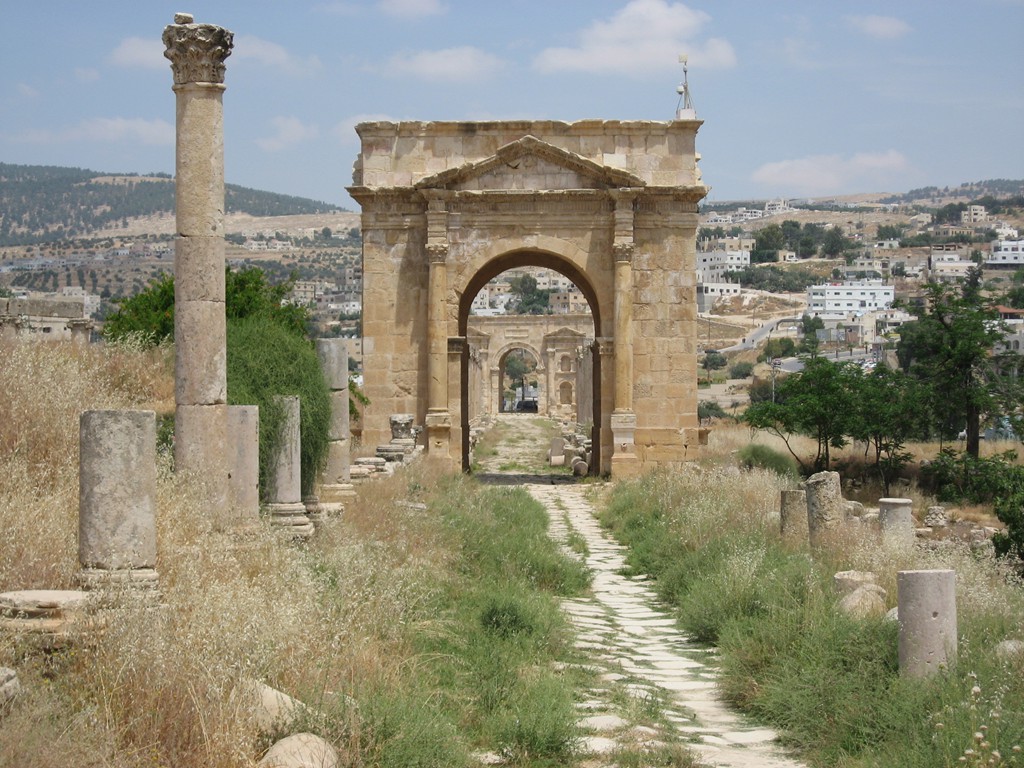
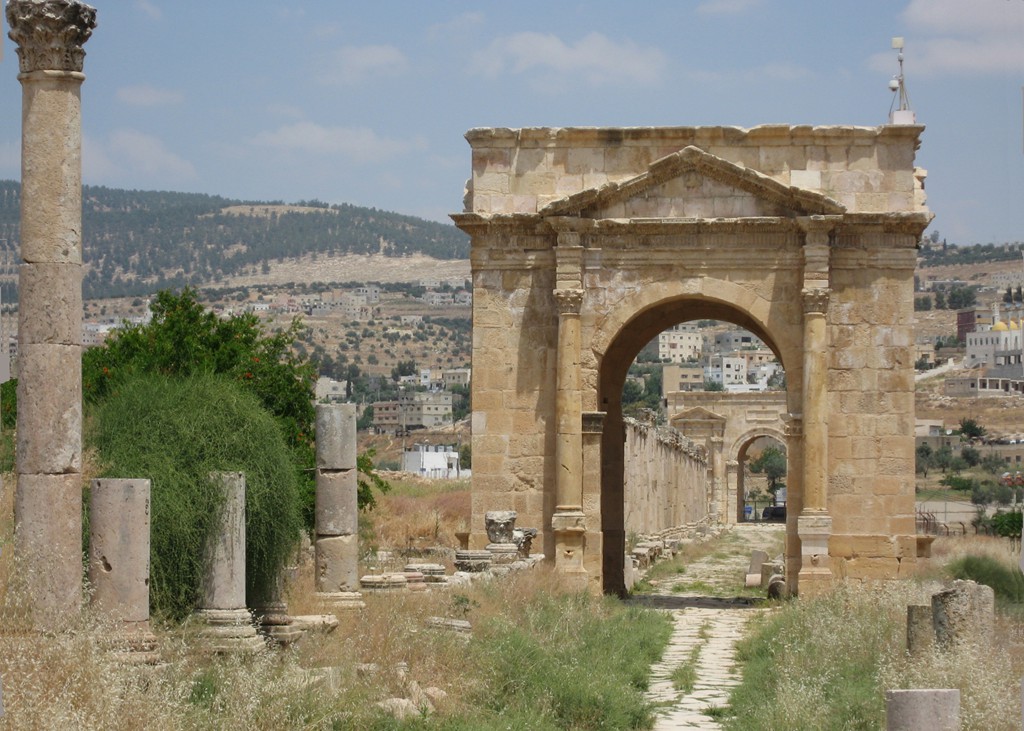
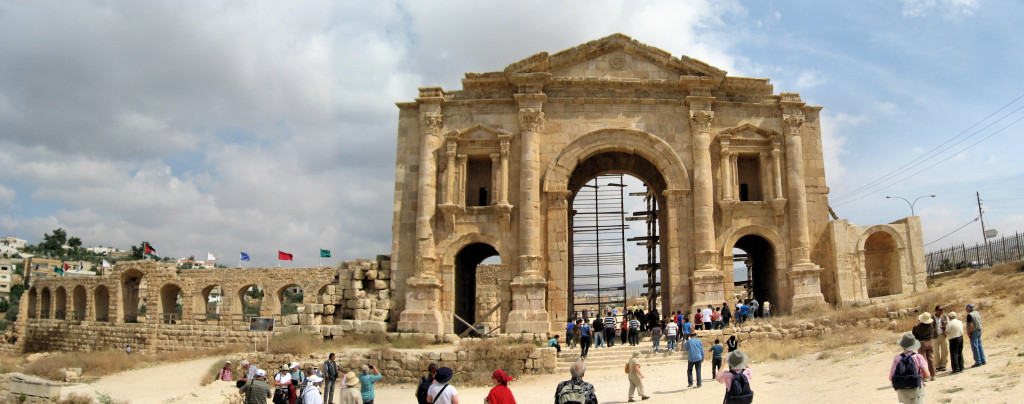
Hadrian's Arch
The citizens of the city built it in honour of the Roman Emperor Hadrian on the occasion of his visit to their city in the winter of 129/130 AD. With a width of over 37 metres, a height of 21 metres and a depth of approximately 9 metres, it is one of the largest of its kind in the Roman Empire. As the surrounding parts could be identified, it was possible to reconstruct the structure. When we were there, scaffolding was still visible.
Hippodrom
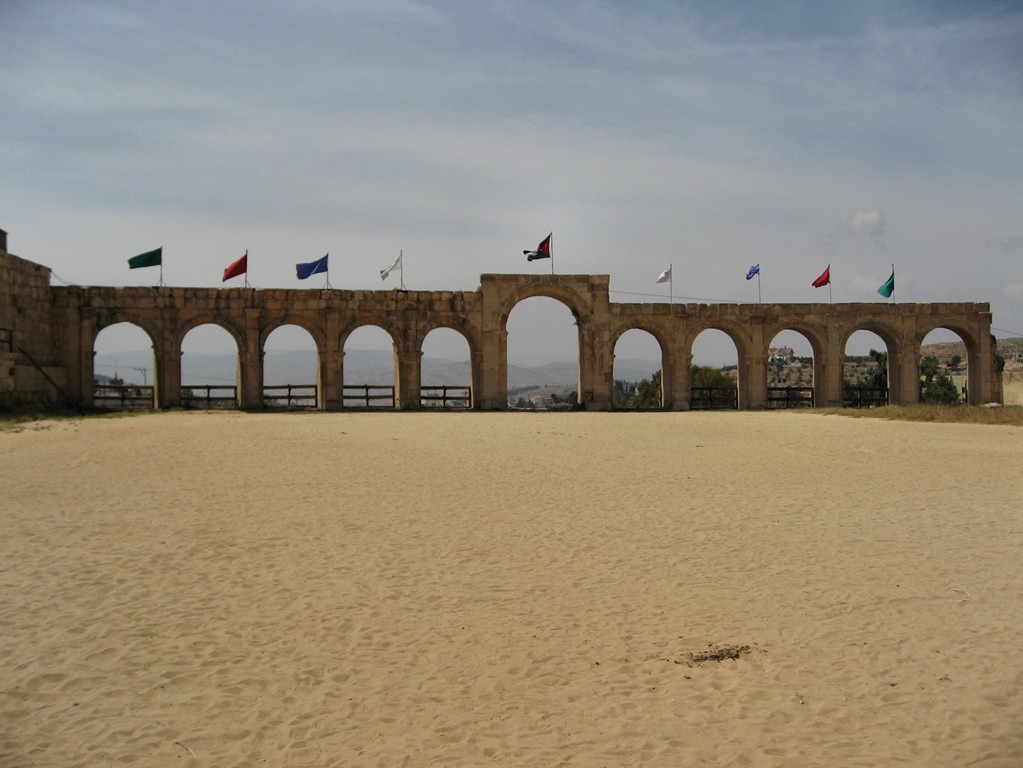
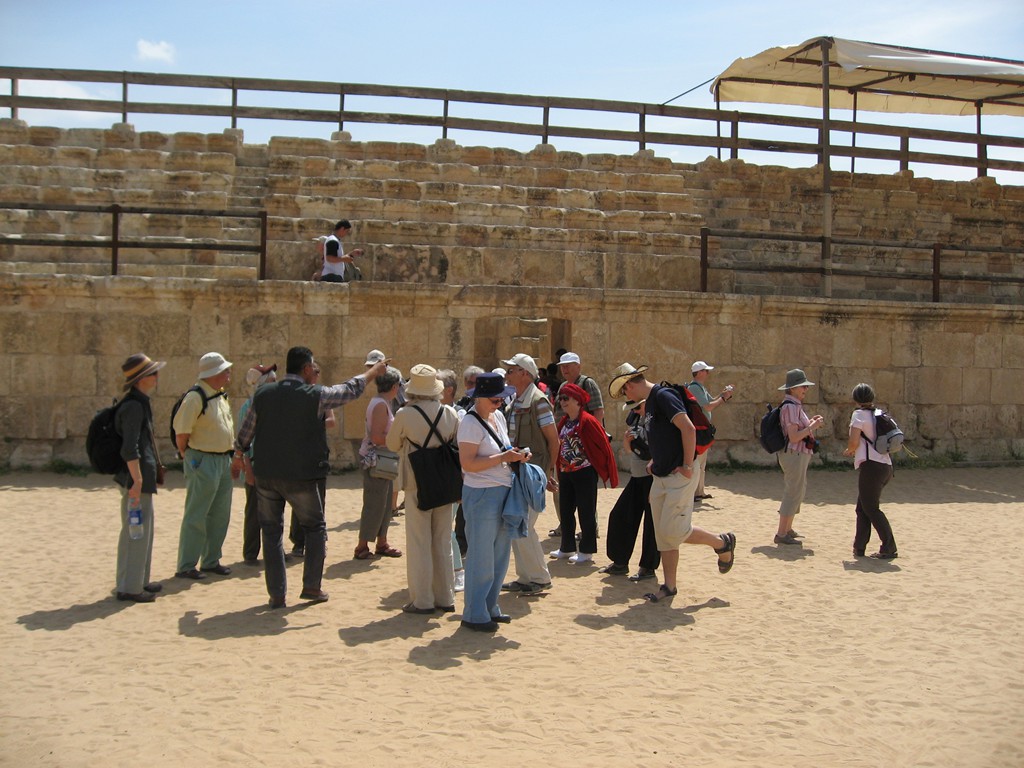
Just behind Hadrian's Arch, on the left (west) side of the path, you can see the Hippodrome, which is approximately 265 metres long and 76 metres wide. According to the archaeologists who excavated and reconstructed it, it is the smallest of the 48 Roman circus buildings known today, but ‘the best preserved in terms of its functional and technical elements’. To the right of the path, you can see the remains of the small Church of Marianos.
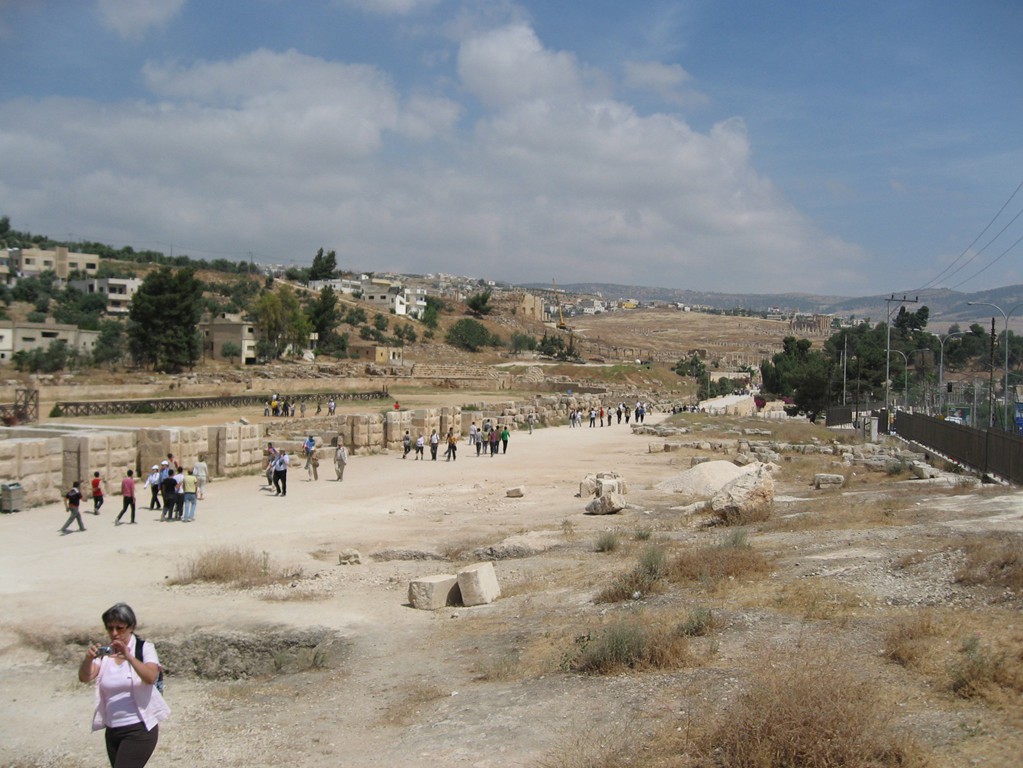
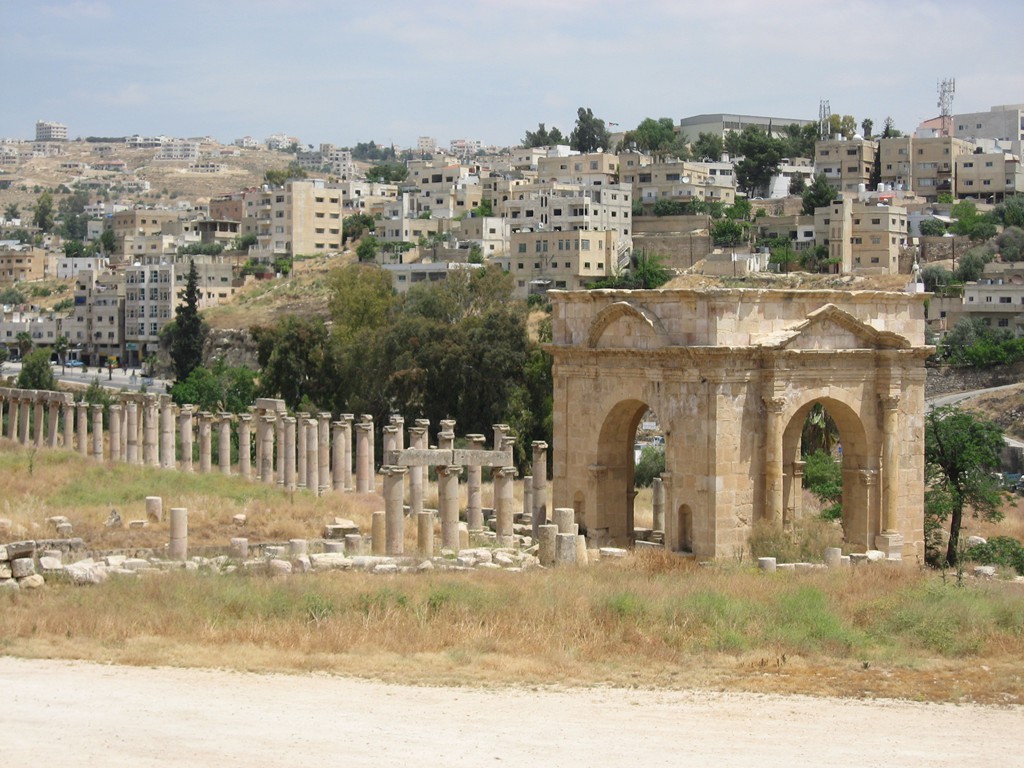
South Gate
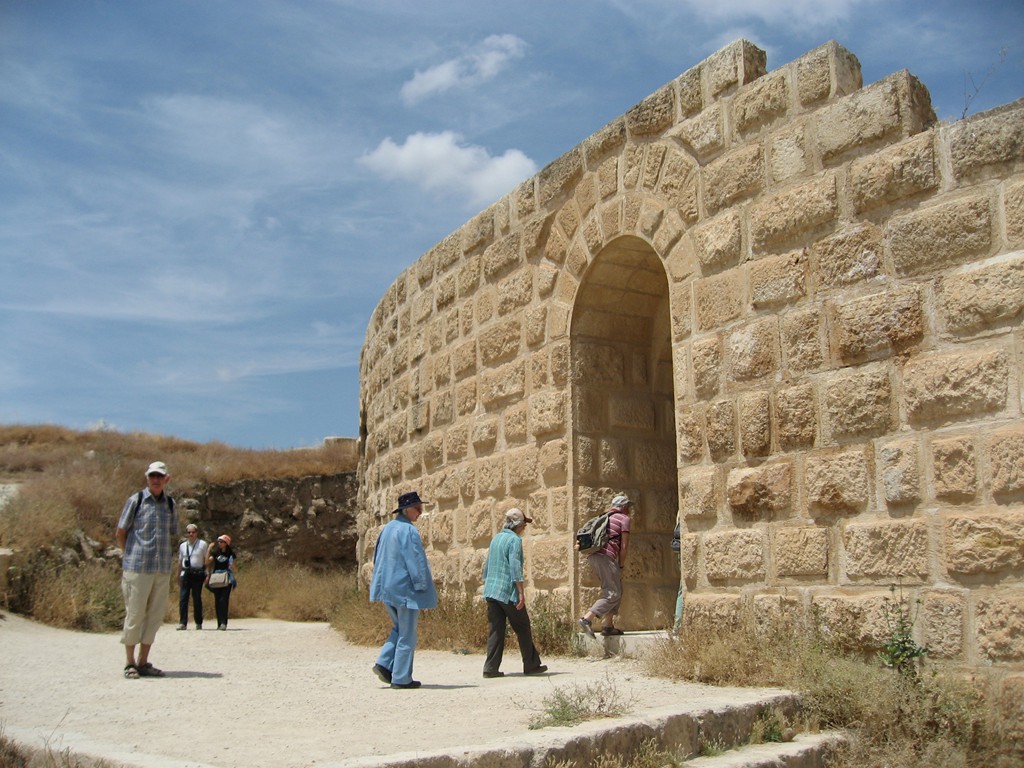
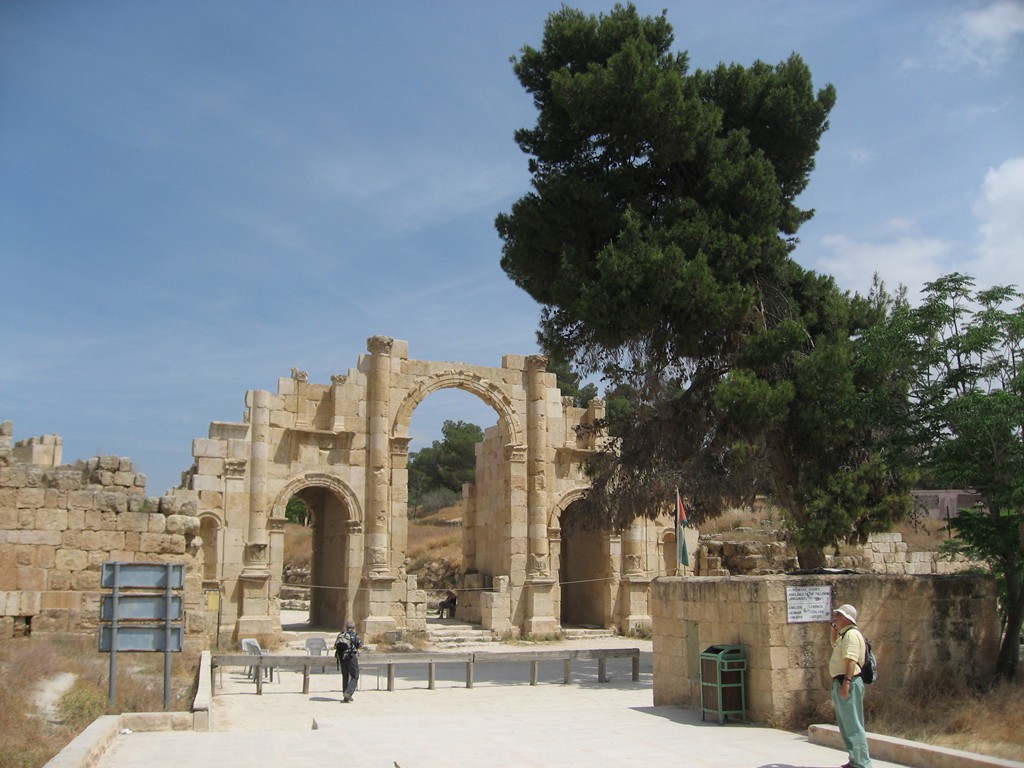
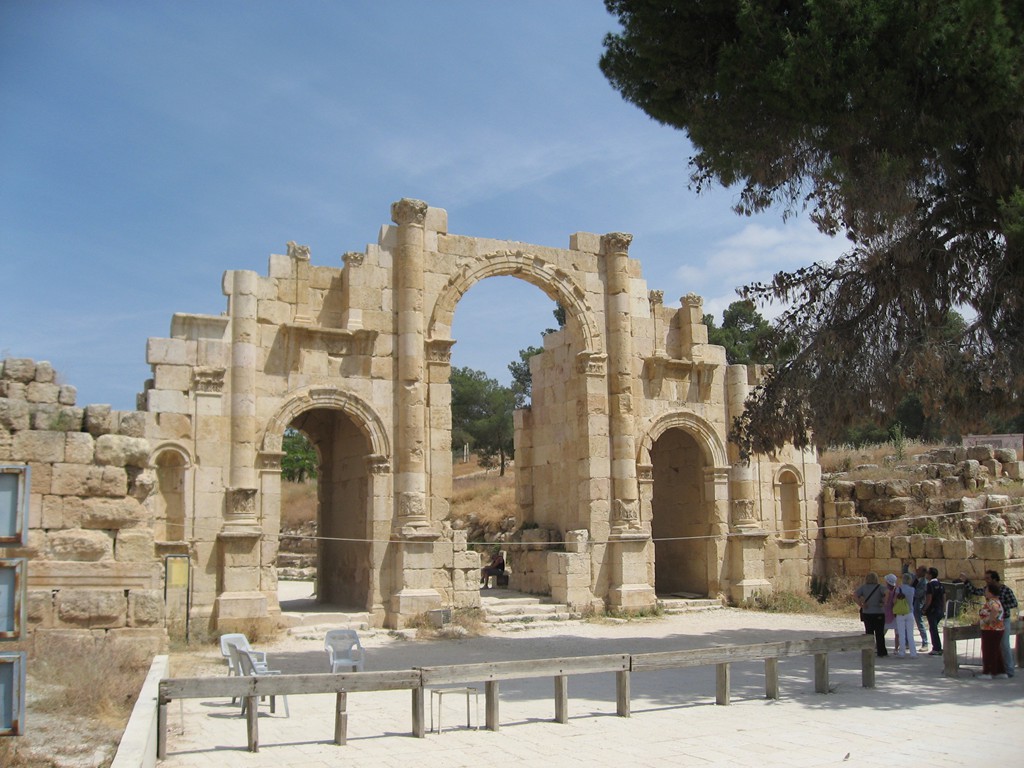
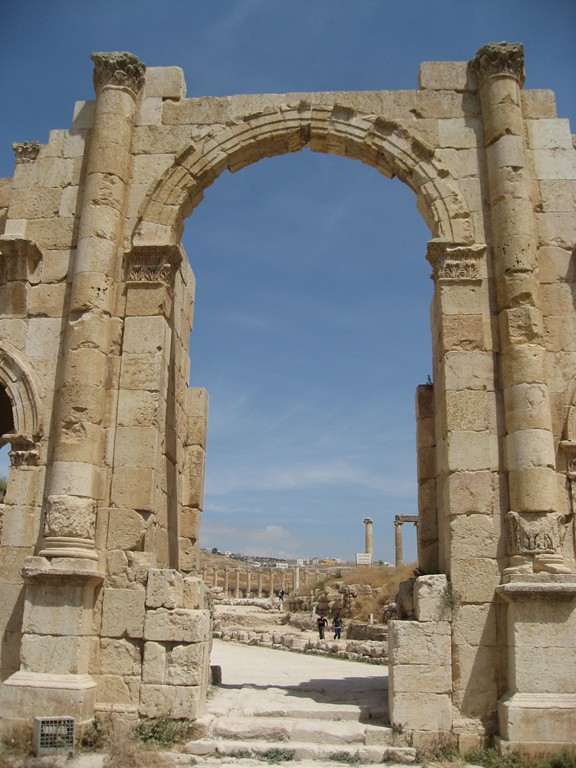
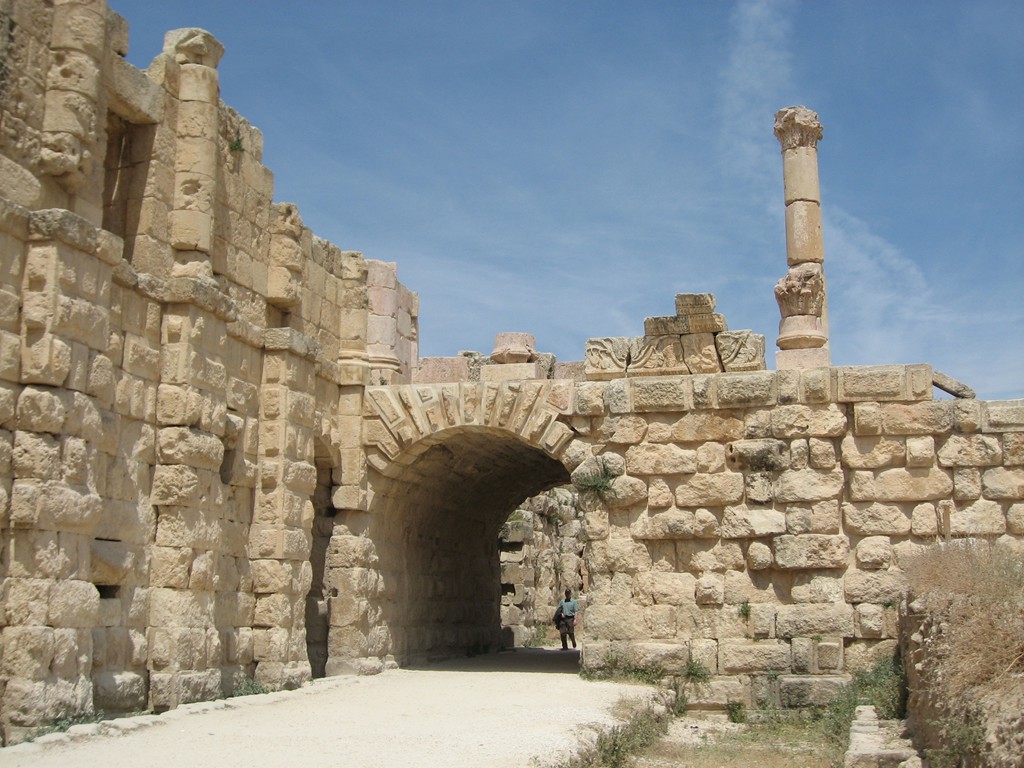
The South Gate, like the much larger Hadrian's Arch, which was built somewhat later, was constructed in honour of the Roman Emperor Hadrian on the occasion of his visit to Gerasa in the winter of 129/130 AD.
Zeus Temple
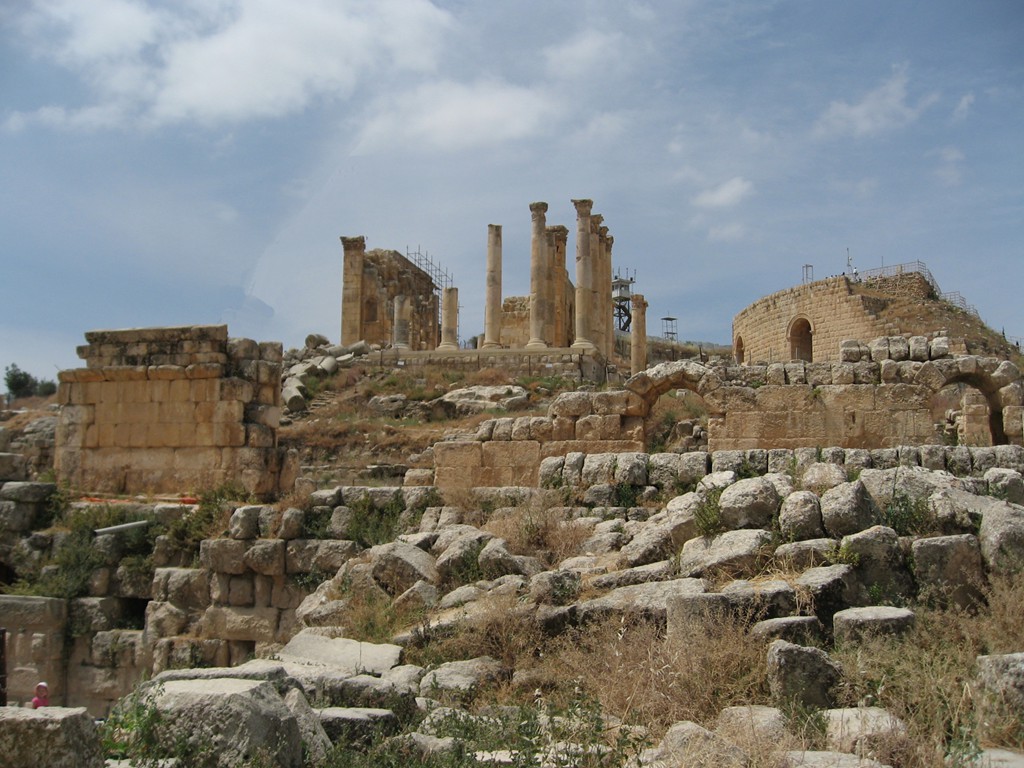
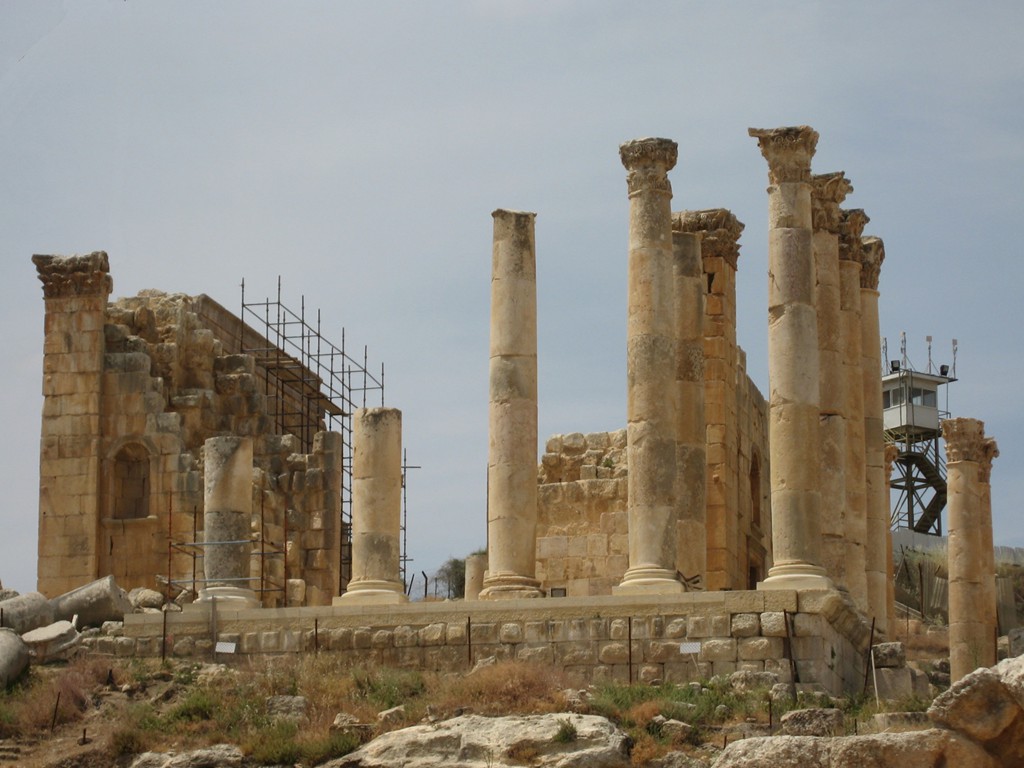
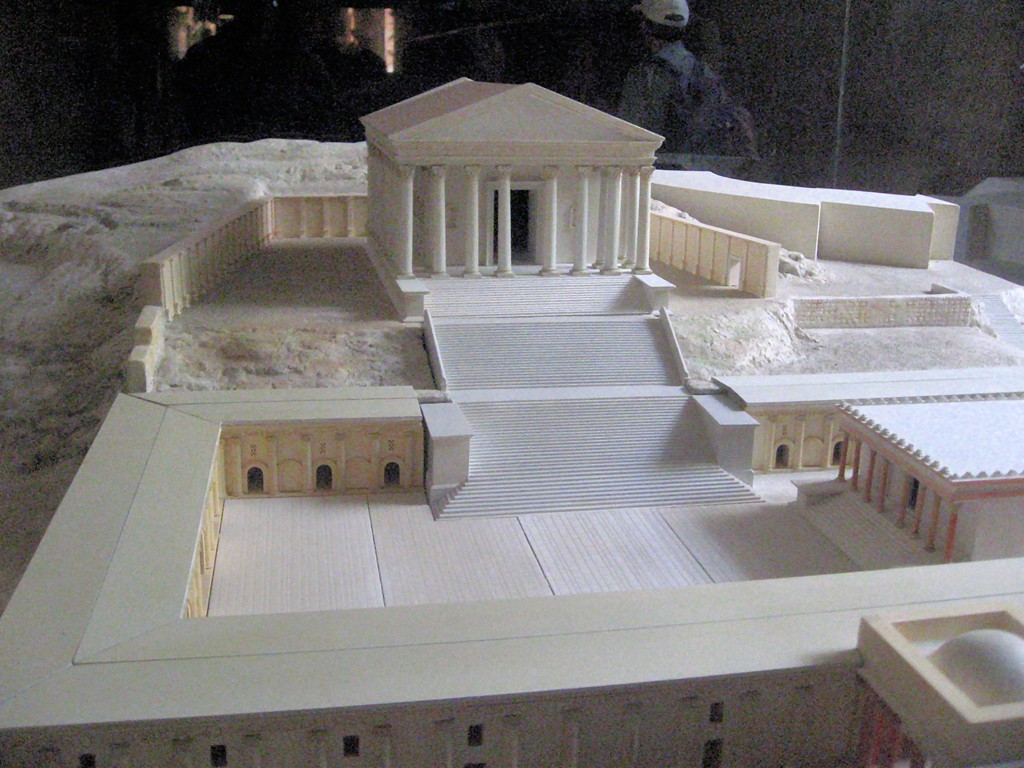
The high masonry of the cryptoporticus, behind which lies an almost 90-metre-long barrel vault, supports a 100-metre-long and 50-metre-wide terrace on which the sacred area (temenos) of the sanctuary is located. The remains of the outer walls of the temenos with half-columns are clearly visible.
South Theatre
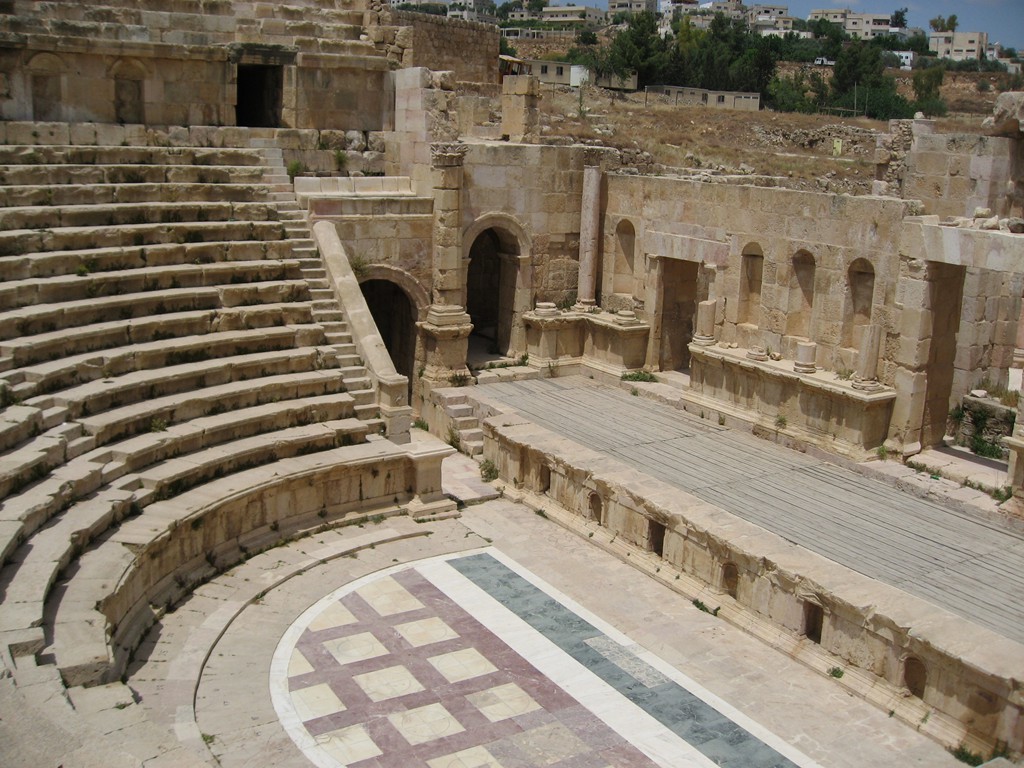
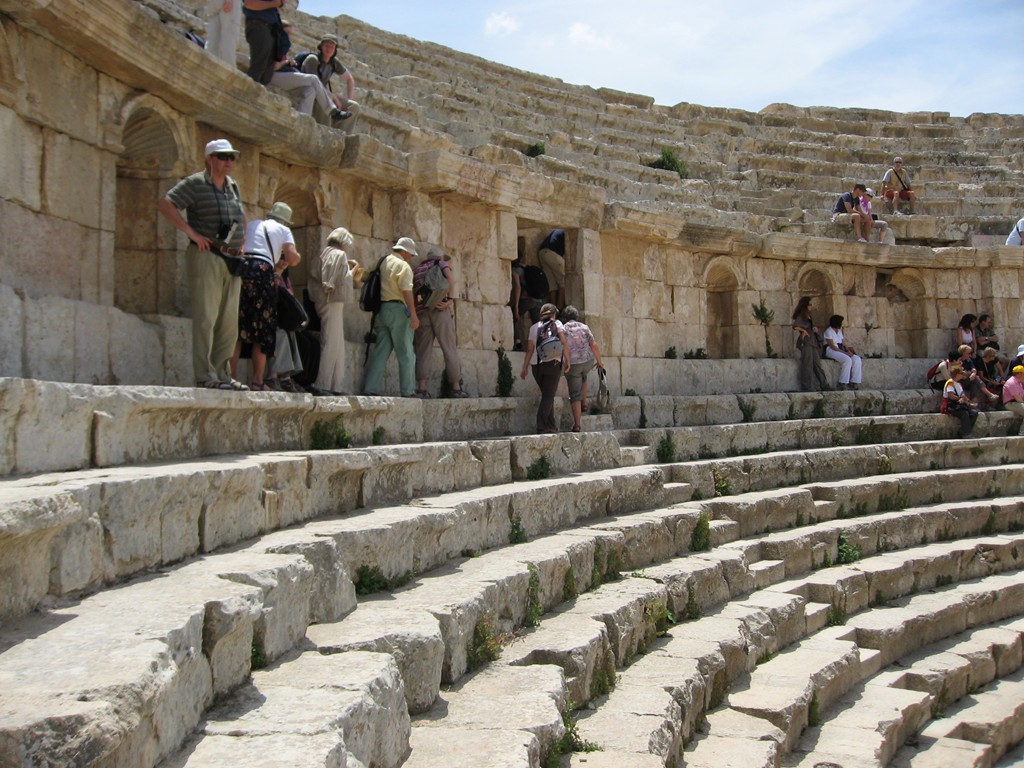
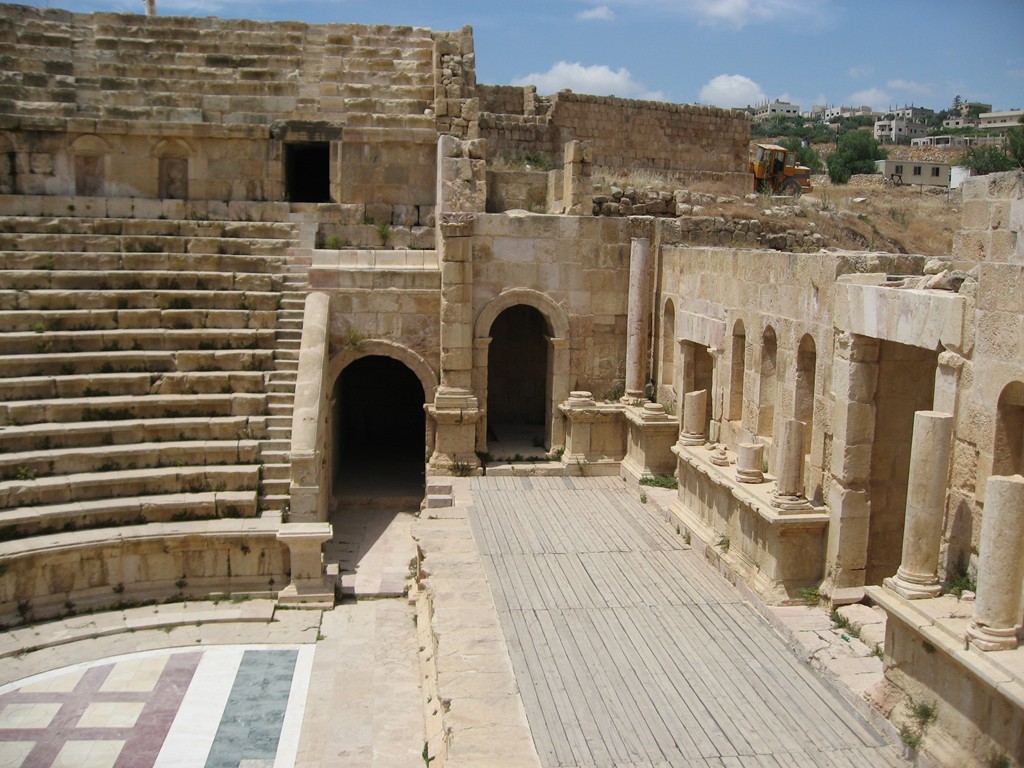
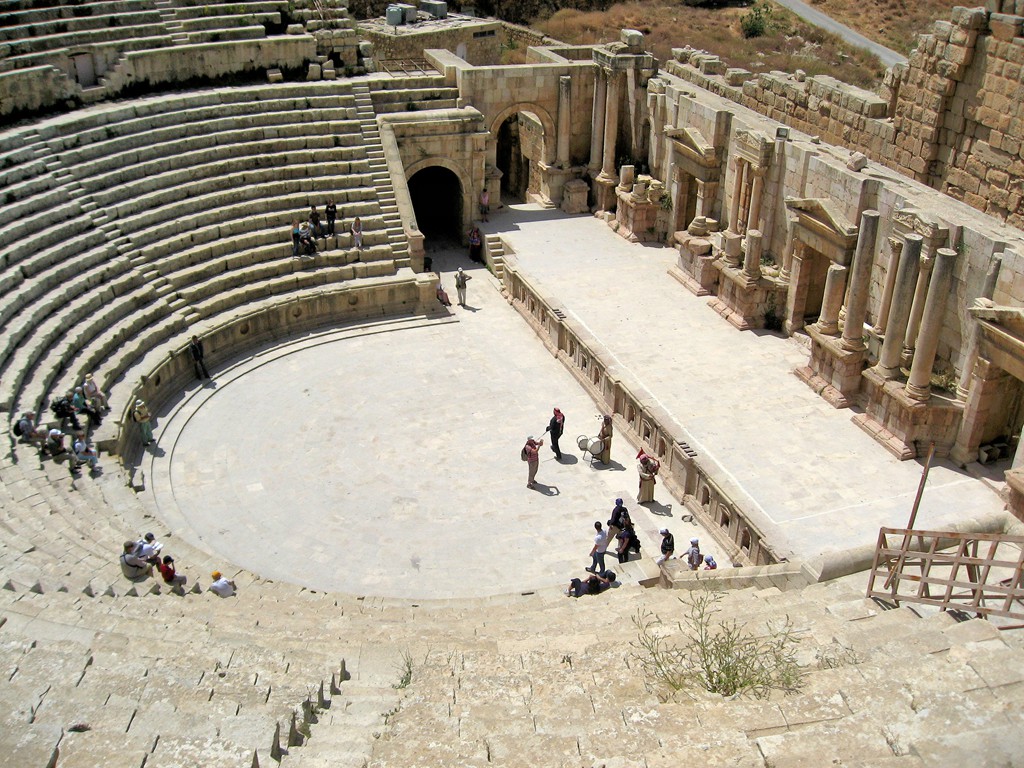
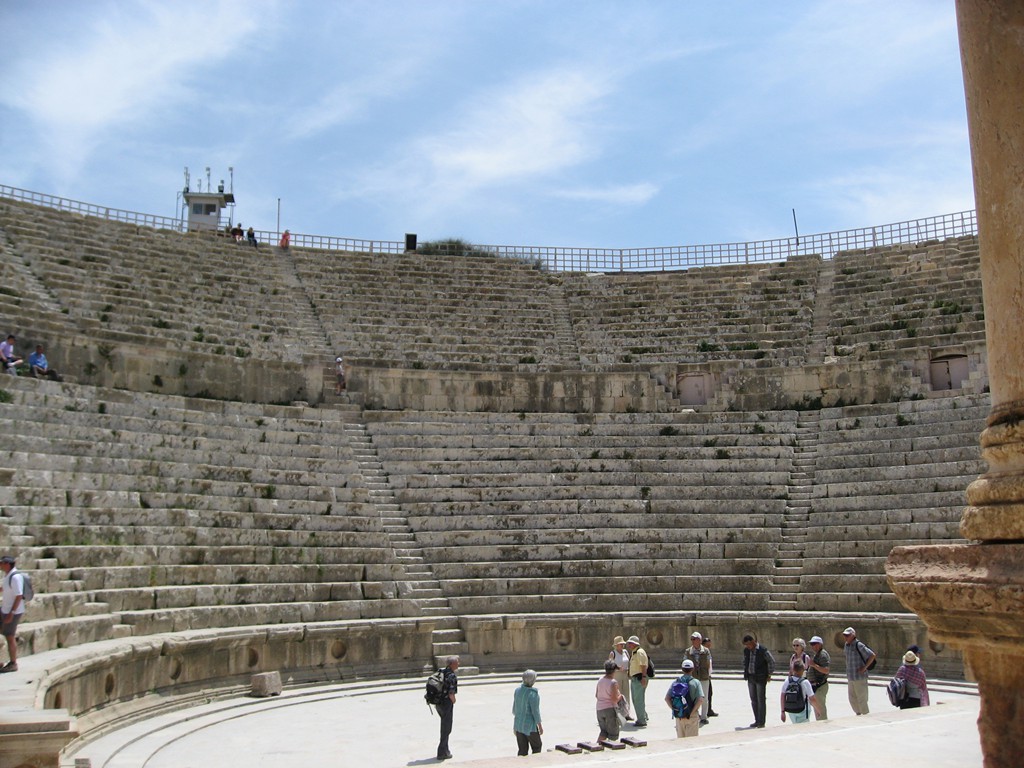
It is the largest and oldest of the three theatres in ancient Gerasa. The others are the North Theatre and the one in Birketein, about 1.7 km north of the archaeological site. The South Theatre was built right next to the Sanctuary of Zeus on the western side of the same hill and may also have served cultic purposes. Although the inhabitants plundered stones from here to build their houses until the 1950s, it remained remarkably well preserved. After extensive, though not always appropriate, restoration and reconstruction in various phases, the South Theatre, with its excellent acoustics, is used as a main venue for the Jerash Festival of Culture and Arts. The upper rows of seats offer a magnificent view of the archaeological site.
Oval Square
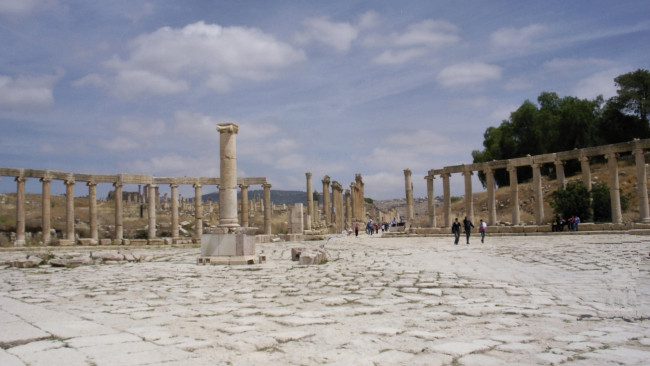
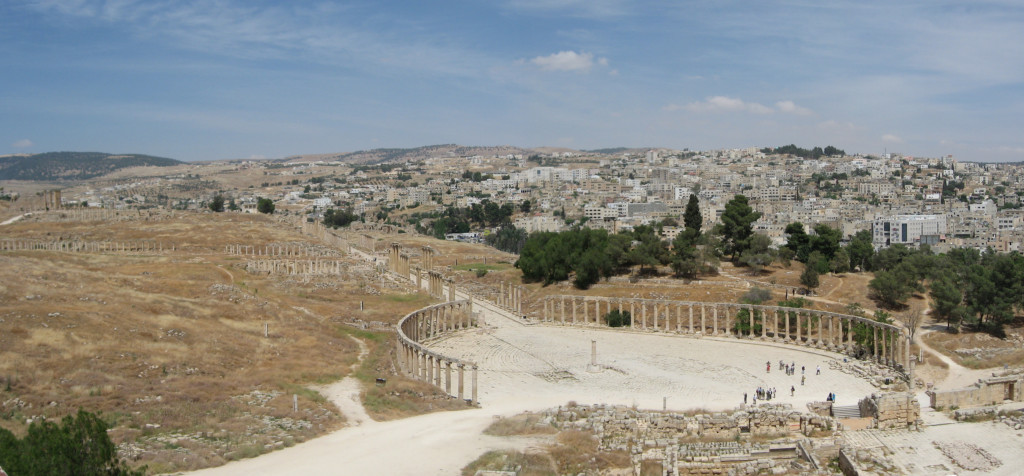
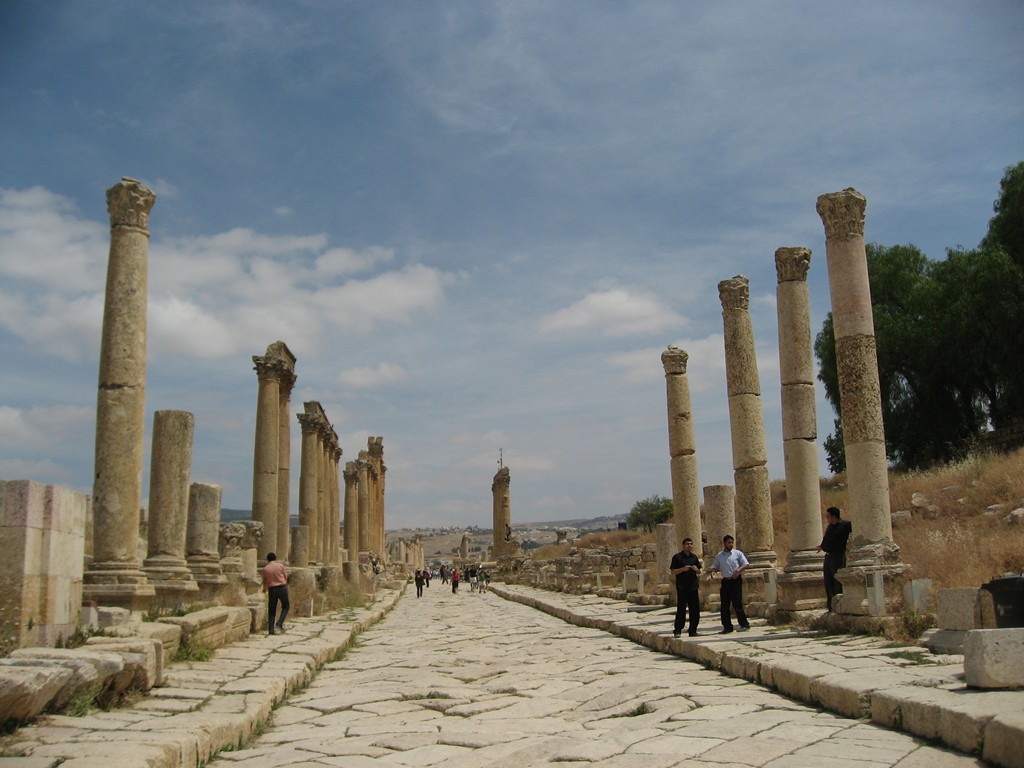
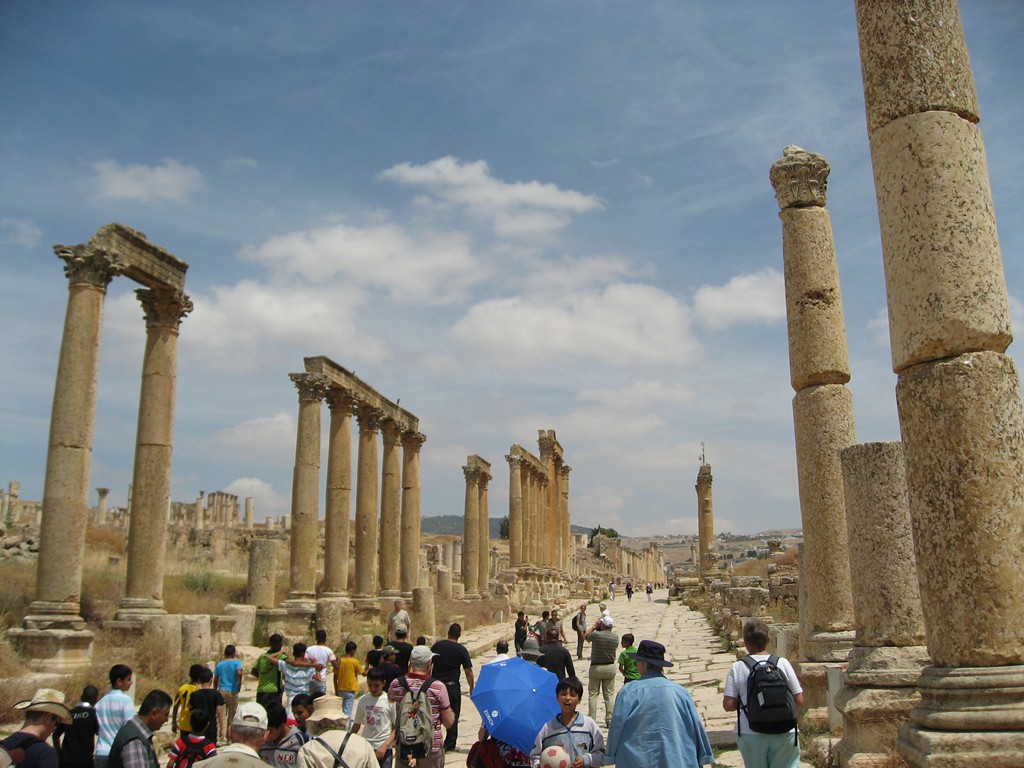
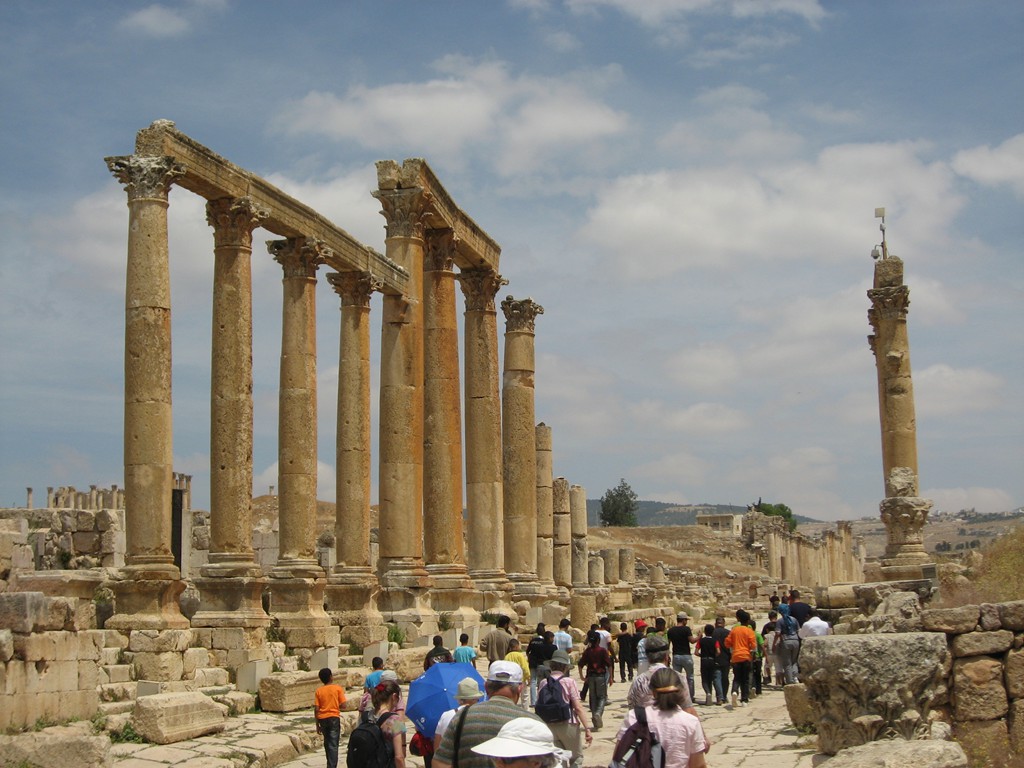
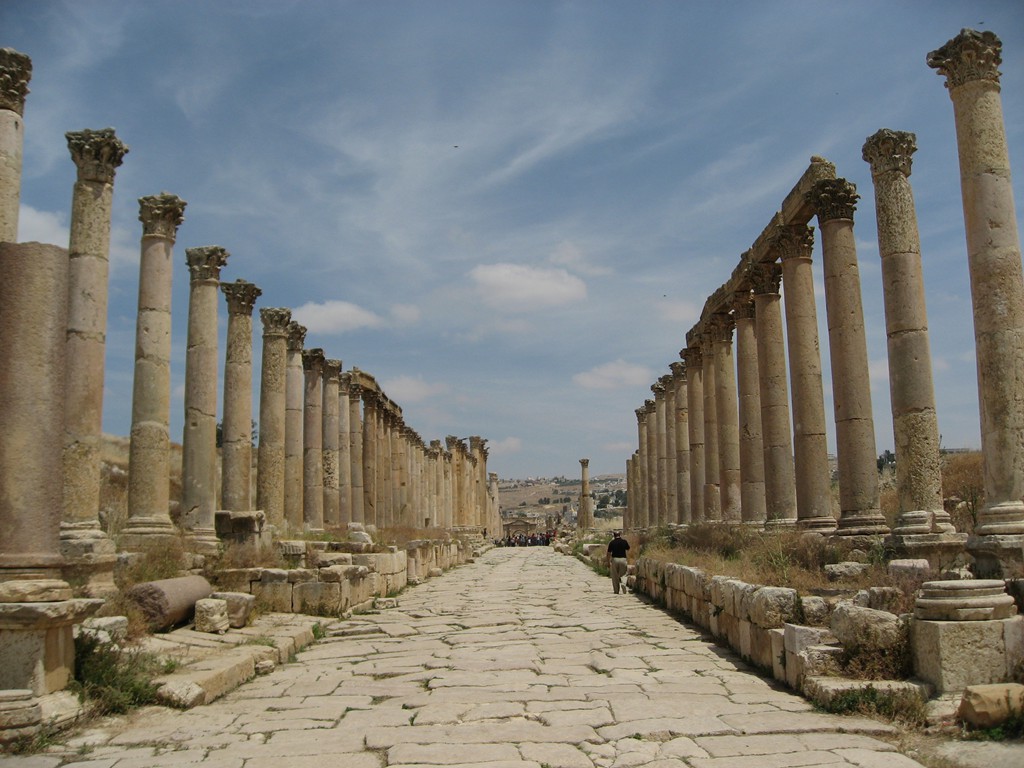
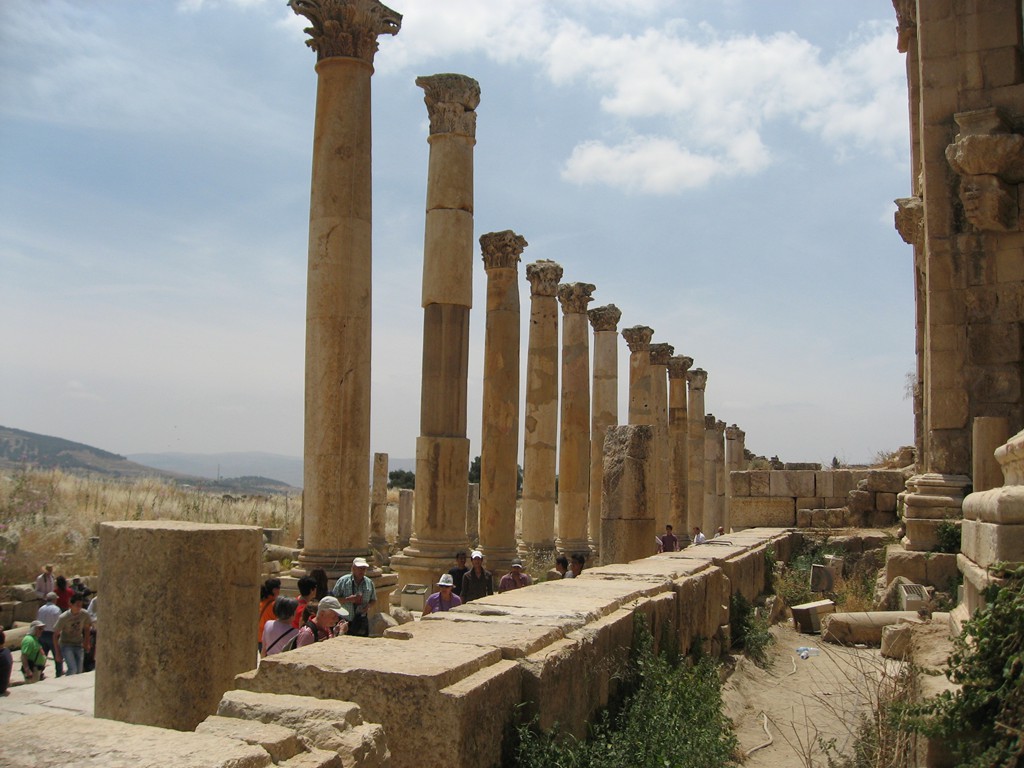
The Oval Square, also known as the Oval Forum, cleverly connects the two main axes of the ancient city. This is where the 800-metre-long colonnaded street, the Cardo Maximus, begins.
Cardo and Decumanus
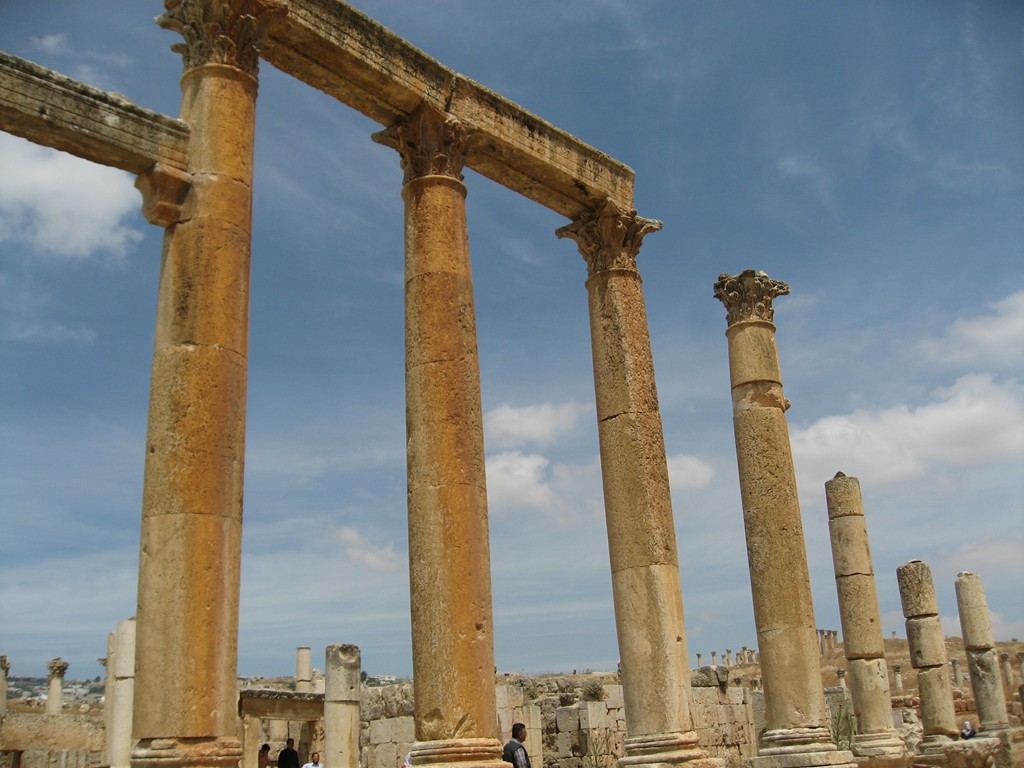
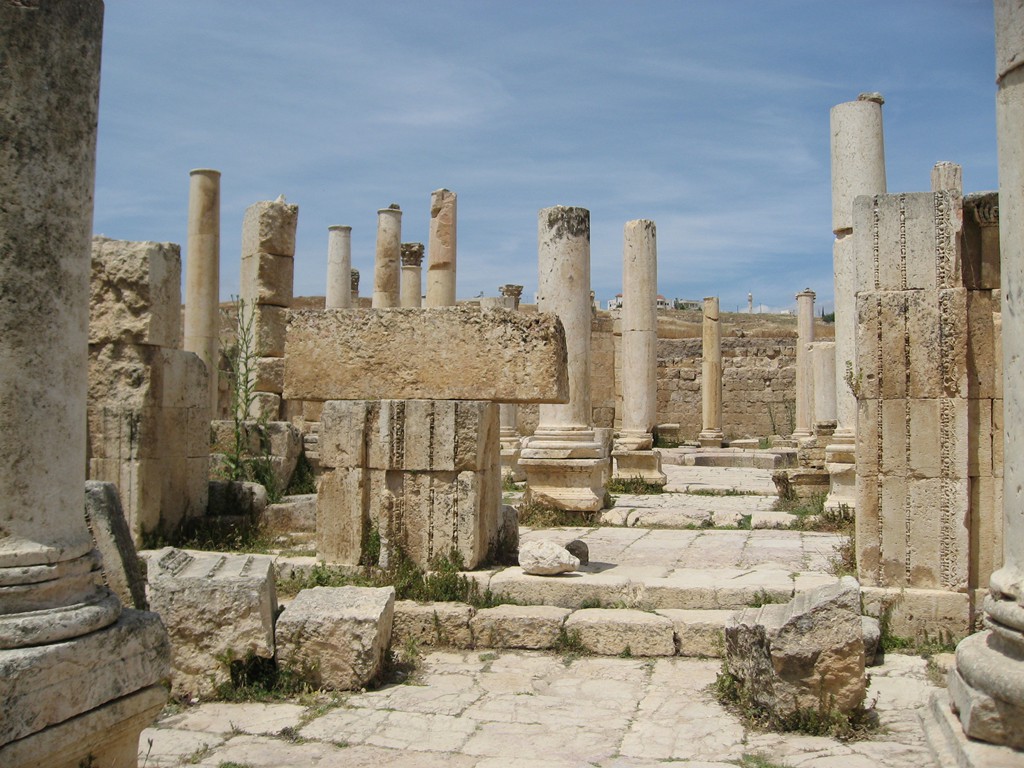
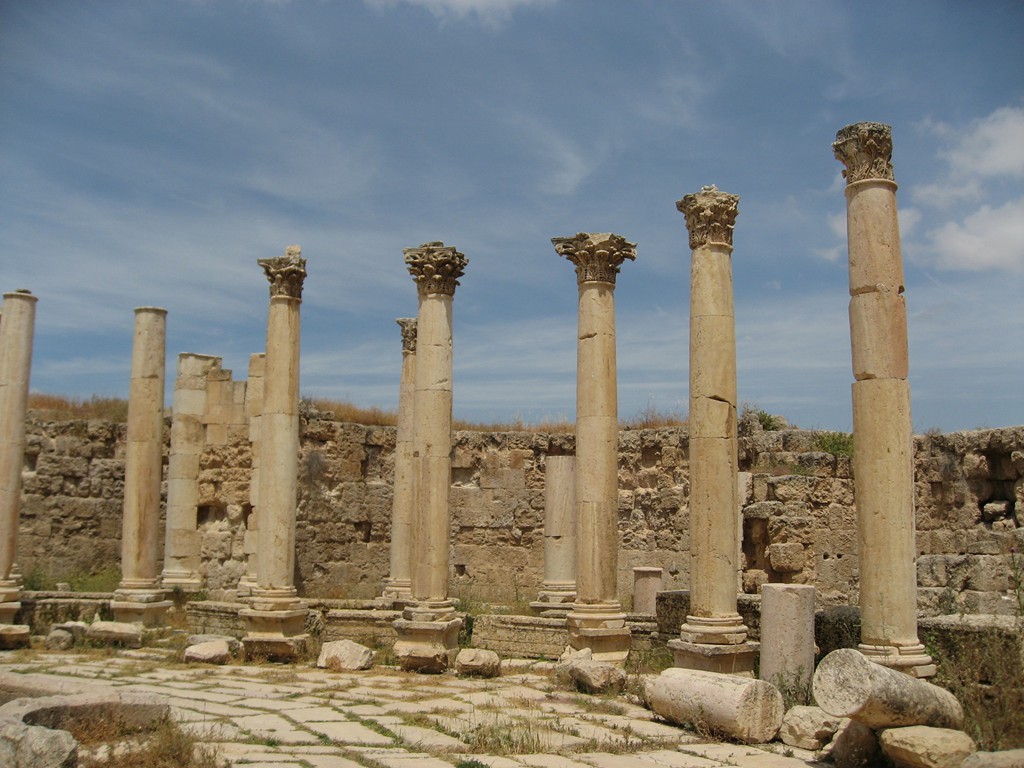
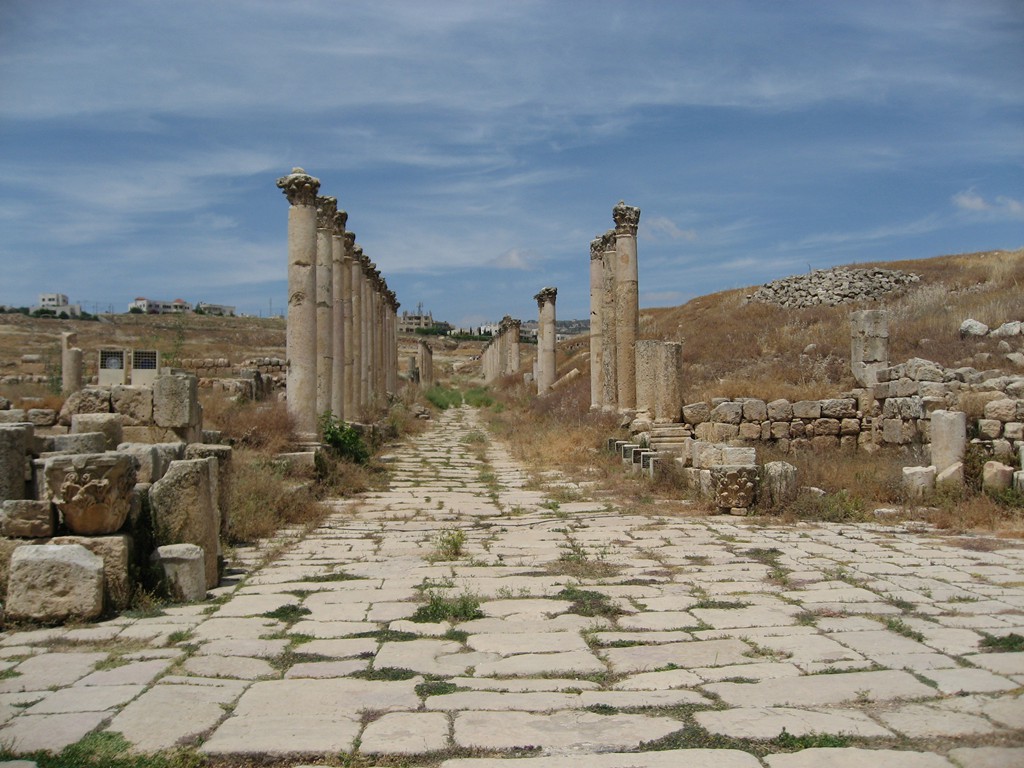
The colonnaded streets of Gerasa are among the best preserved of their kind in the Middle East. Although their alignment deviates from the strict Greco-Roman scheme, the usual names for the main axes are used: Cardo for the central north-south connection and Decumanus for the two large cross streets that intersect the Cardo at right angles in the south and north.
Nymphaeum
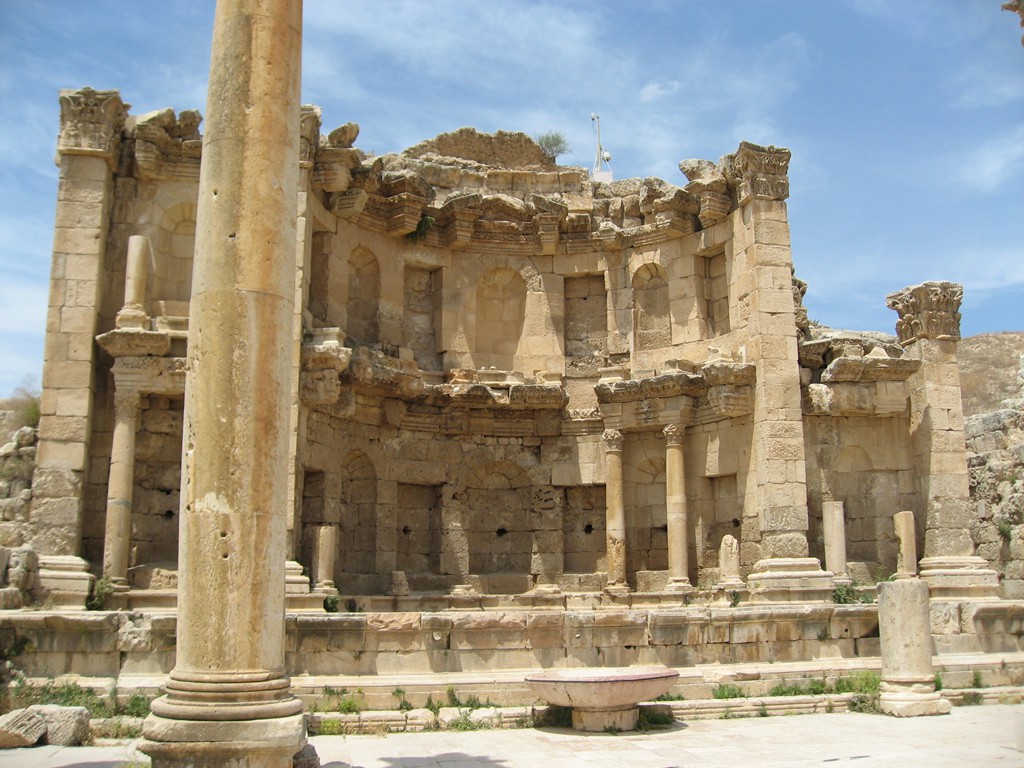
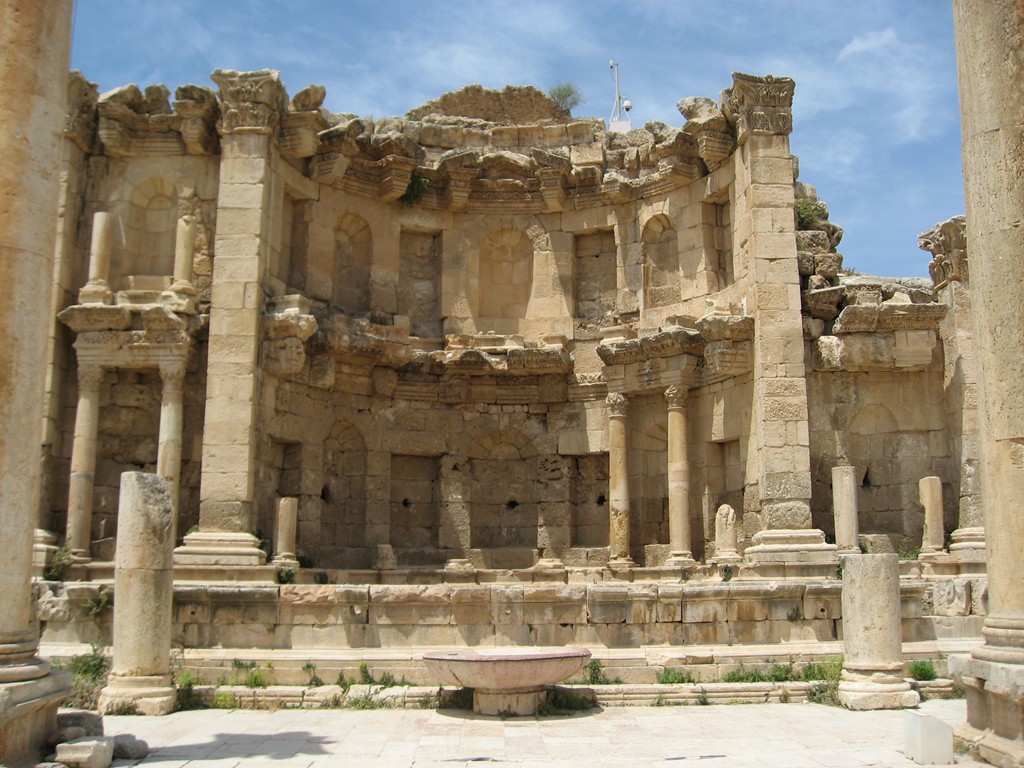
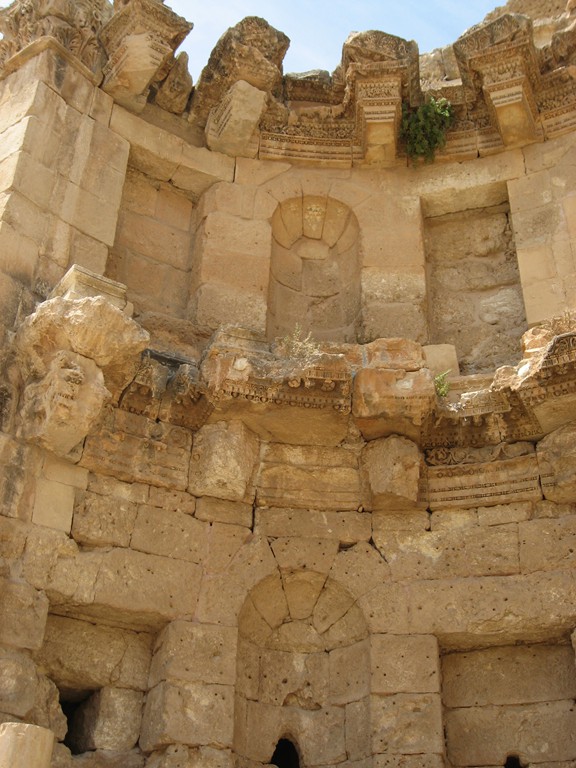
As Gerasa flourished and expanded, the city needed considerably more water. Around 125 AD, the water supply system was built, and at the end of the 2nd century, the capacity of the main aqueduct was increased to meet the growing demand of the baths. According to an inscription naming the city as the client, this imposing nymphaeum was completed in 191 AD. It was intended to supplement the numerous small public fountains that already existed along the cardo with a main water source.
Artemis Temple
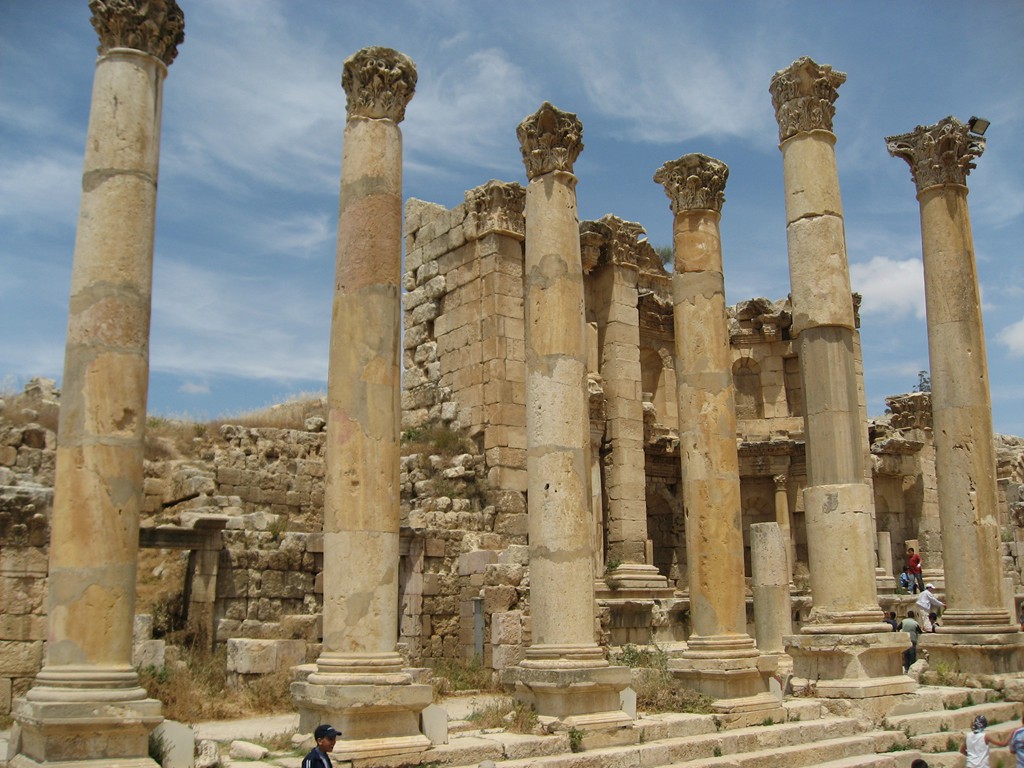
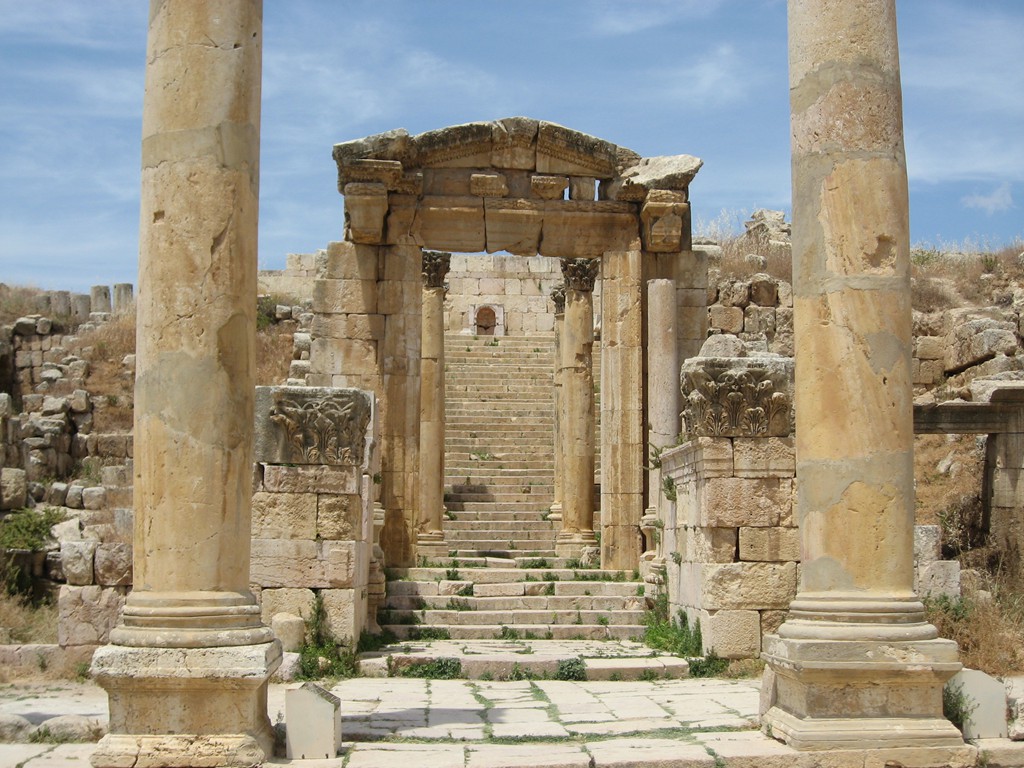
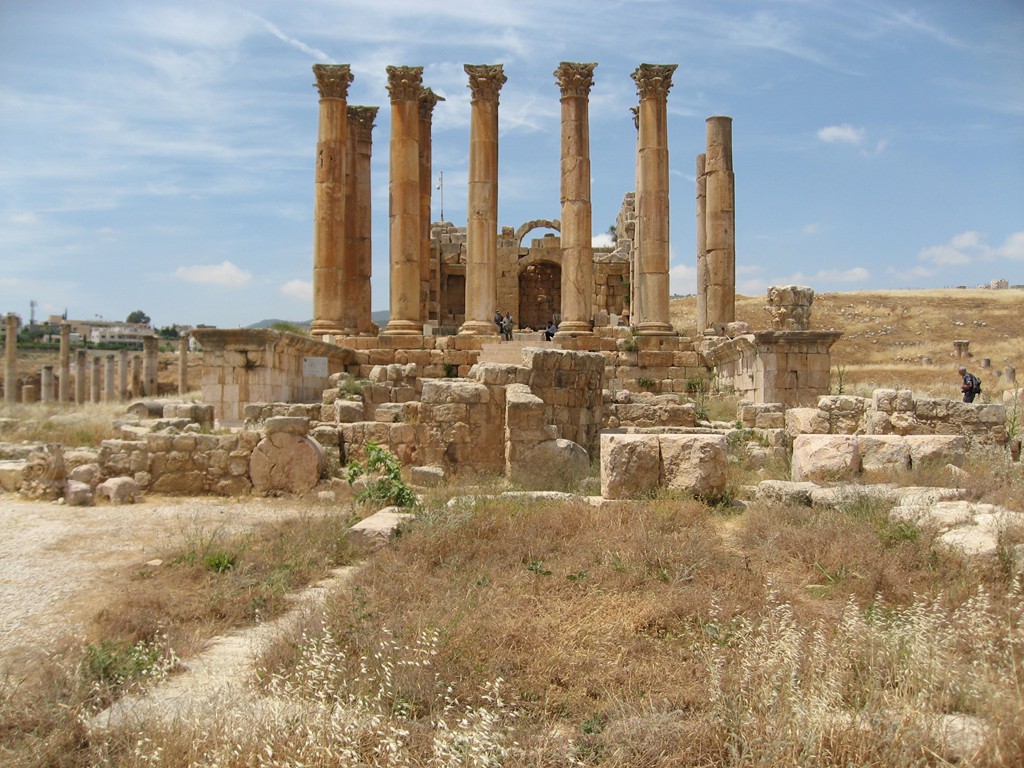
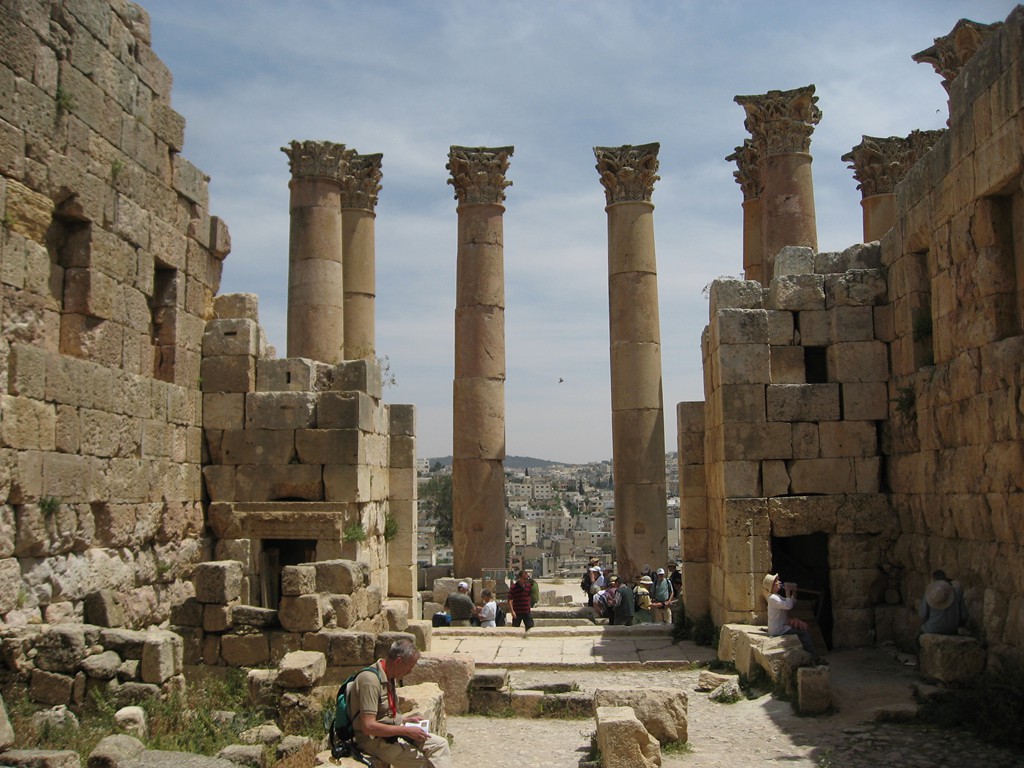
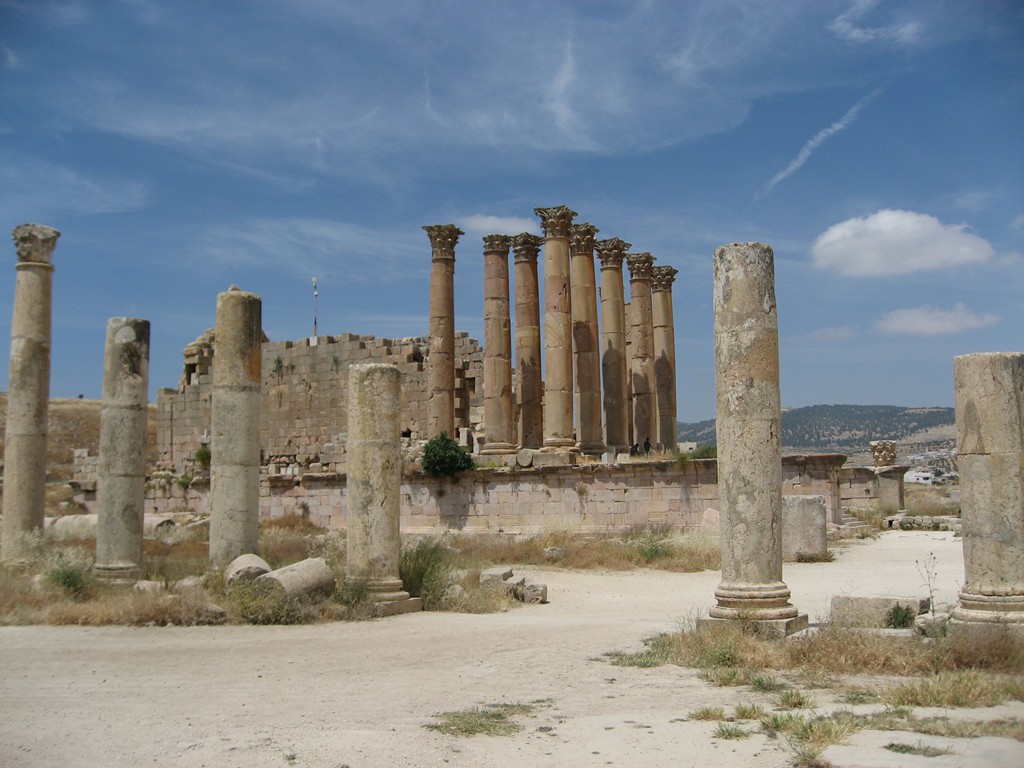
The Artemis Sanctuary was built in the 2nd century AD. Even at the time of its construction, it was one of the most important buildings in the city and, measuring 160 by 120 metres, one of the most impressive monuments in Gerasa. The temple once had 32 supporting columns, but only eleven of these remain standing today, decisively shaping the image of the temple.
North Theatre and buildings in the north
The North Theatre was built in the first half of the 2nd century AD. It was constructed as a bouleuterion, i.e. a meeting place for the boule (city councillors) and representatives of other administrative units of Gerasa.
In addition, the remains of the Church of St. Isaiah, the Tetrapylon, the western baths and the northern gate can also be seen in the north.
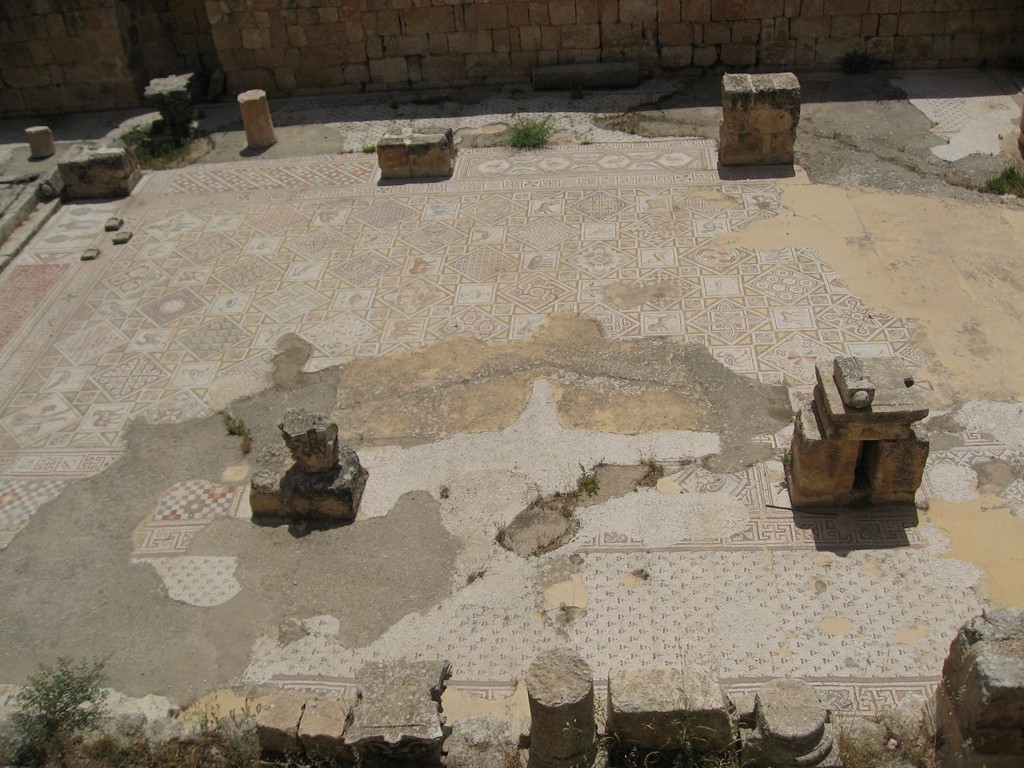
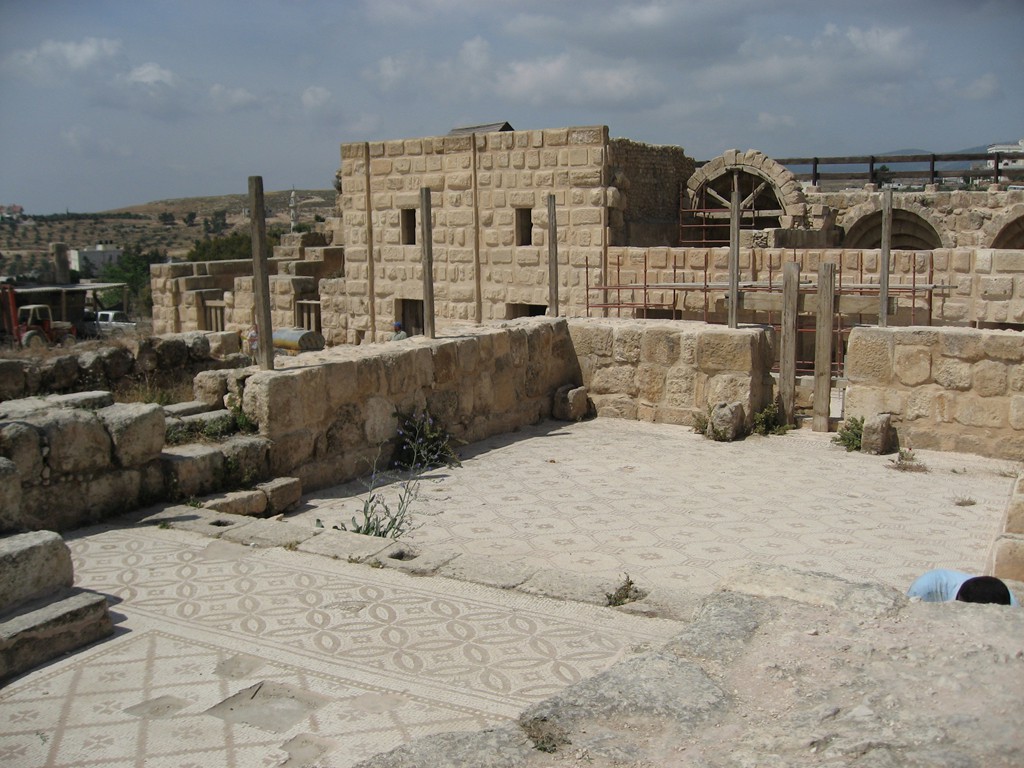
The image of the mosaic floor comes from the remains of the Church of St. Cosmas and Damian.