


From Gengenbach, we hike along cycle paths and field paths along the Kinzig river.
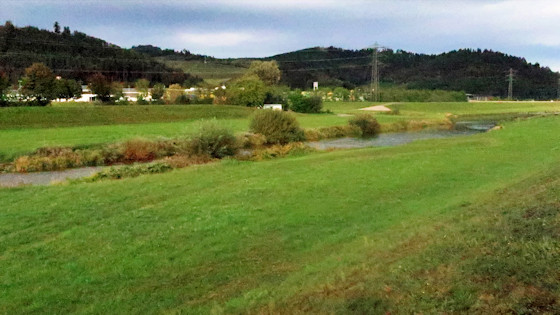
The Kinzig accompanies us.
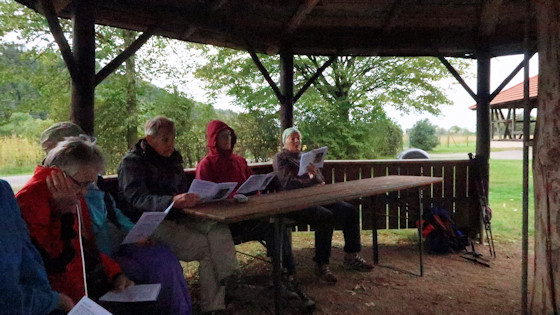
During a meditation break in Ohlsbach, we sing from our songbooks, sheltered from the rain.
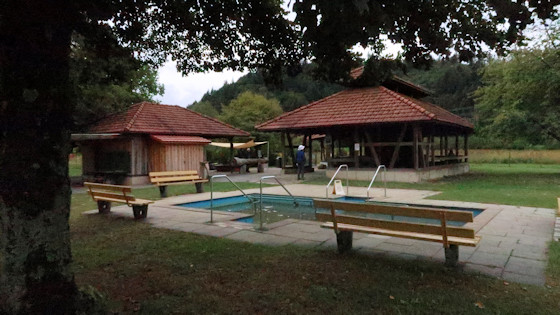
Ohlsbach mineral water spring (sodium chloride mineral water)
It was too cold for water treading.
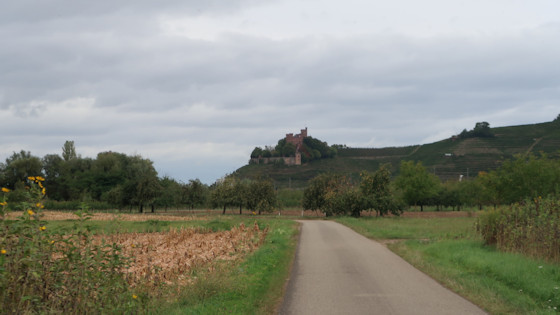
Ortenberg Castle
is the landmark of the Ortenau region and is located above the village of Ortenberg at the end of the Kinzig Valley, between Offenburg and Gengenbach. The origins of Ortenberg Castle date back to a castle complex from the 11th/12th century. Ortenberg Castle was originally built by the Zähringer dynasty to secure the Kinzig Valley. Today, Ortenberg Castle is home to a youth hostel.
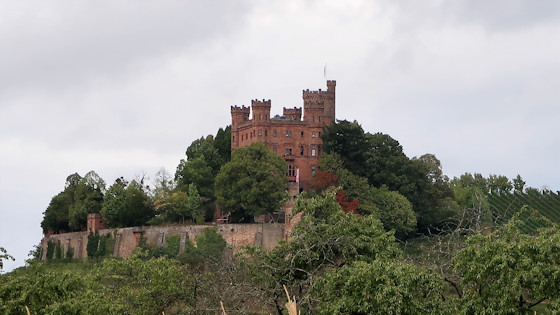
History: After the Zähringer family built Ortenberg Castle in the 11th/12th century, it was used as the seat of the Ortenau bailiffs during the Hohenstaufen dynasty. The administrative headquarters for the Ortenau bailiwick was the centre for imperial taxation, a court of law and a customs authority. In the 15th century, the castle was expanded and equipped with defensive towers. The castle was destroyed for the first time in 1678 during the Franco-Dutch War by the troops of Louis XIV. After being rebuilt in the following years, the castle was destroyed again by the French in 1697 during the War of the Palatinate Succession. As a result of this second destruction, the official seat of the bailiffs was moved to Offenburg.
View from Ortenberg Castle
In the foreground is the town of Ortenberg, behind it is Offenburg, and on the horizon is Strasbourg.

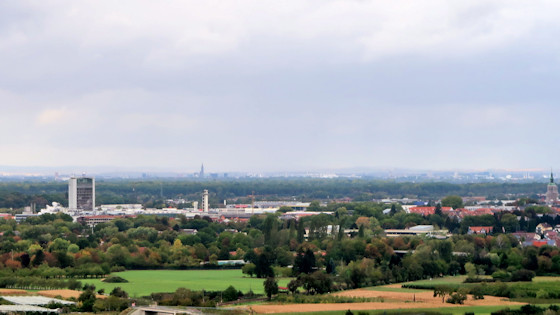
In the distance, you can see the Strasbourg Cathedral.
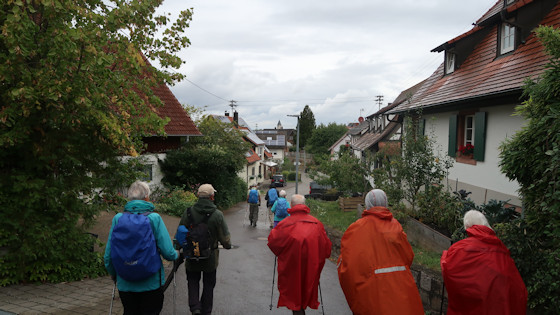
Descent from Ortenberg Castle
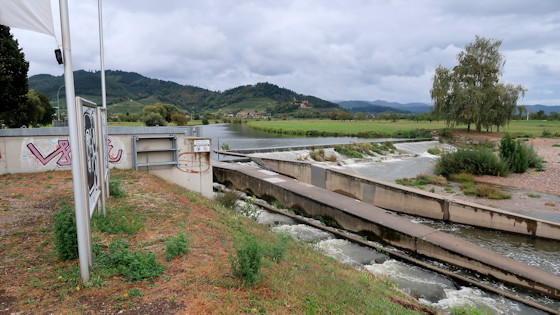
Hydraulic plant on the Kinzig
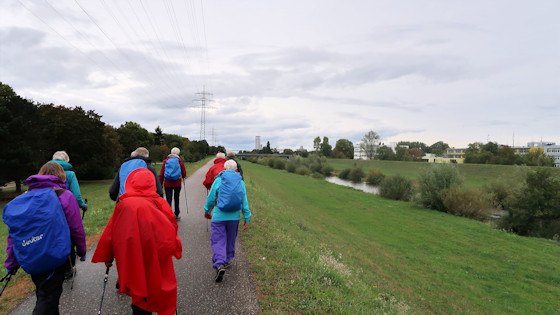
Hiking along the flood dam
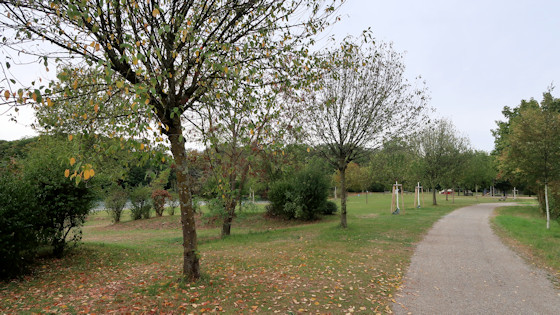
Along Lake Gifiz in Offenburg
We stayed overnight in Offenburg and had a little look around.

group photo
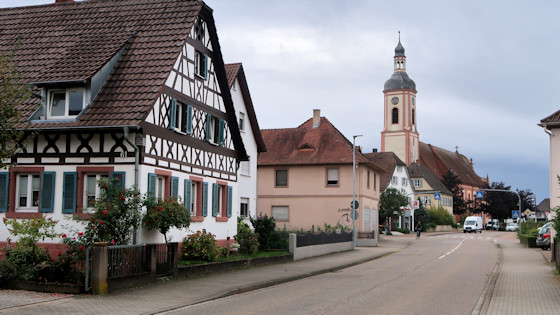
The destination, St. James Church in Schutterwald, has been reached. It is a striking landmark in the centre of the village.

The St. James Church in Schutterwald was first mentioned in documents in 1268. There were frequent changes in rule until the town finally became part of the Grand Duchy of Baden in 1806. There is evidence of a parish church in Schutterwald as early as 1316, which belonged to the Diocese of Strasbourg. As the Reformation passed Schutterwald by, the community is still predominantly Catholic today. The foundation stone for the present church, dedicated to St. James, was laid in 1784. The church was built in the Baroque style by a master builder from Vorarlberg. The tower, almost 50 metres high, towers over Schutterwald with its simple architecture and can be seen from far into the Rhine valley.
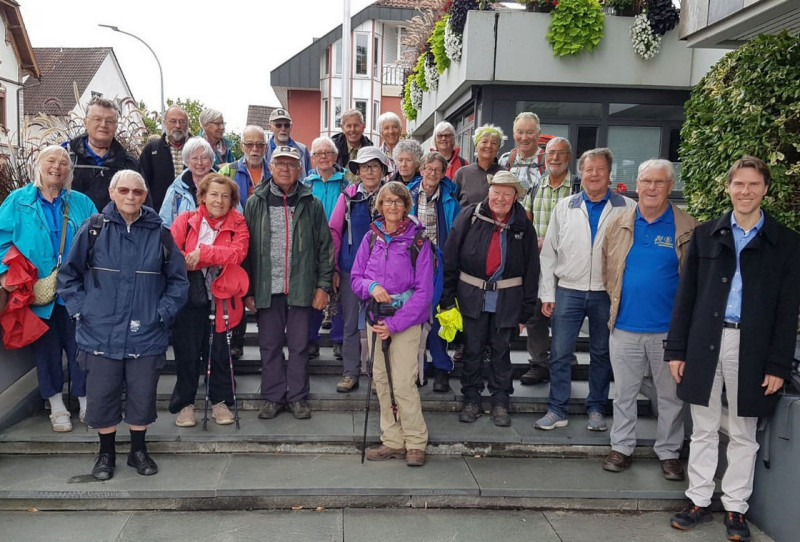
Here we are standing on the steps of Schutterwald Town Hall, welcomed by the Schutterwald Friends of St James and Mayor Holschuh (far right).
In the past, pilgrims from the Kinzig Valley in Schutterwald tended to turn south towards Freiburg im Breisgau and Basel. Today, the Way of St. James continues via Strasbourg.

Gengenbach


Strasbourg
