


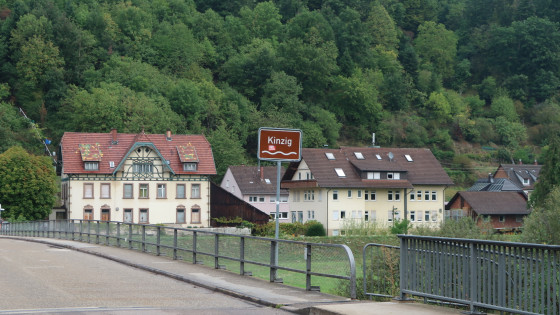
In Haslach we cross the Kinzig river...
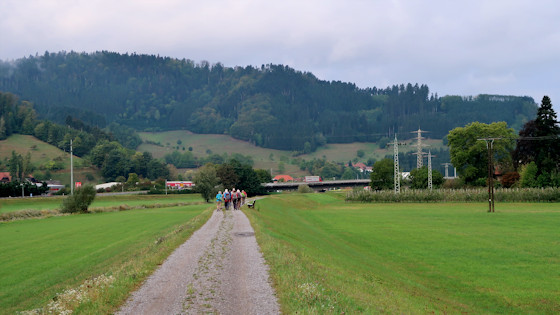
... and initially walk along flat cycle paths.
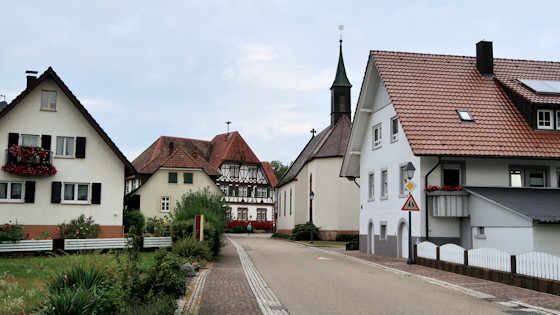
First stop of the day: Bollenbach Church as a place to pause for our meditation.
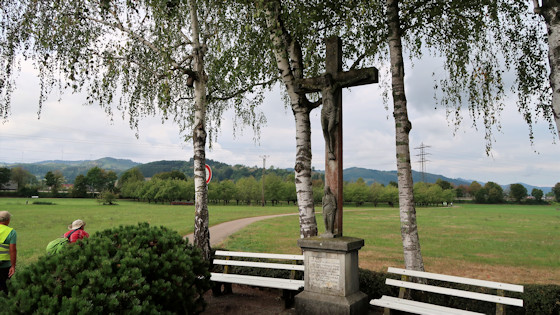
A cross in the Kinzig Valley
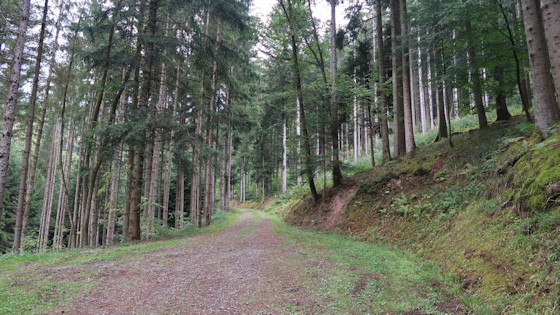
It's a gentle uphill climb.
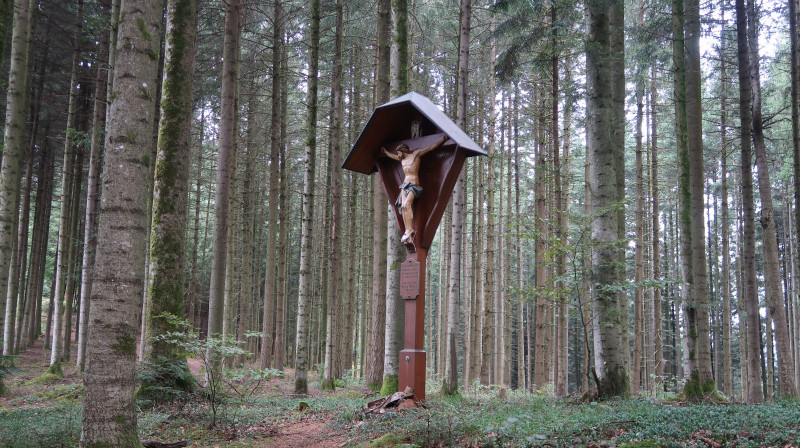
We take a break at the ‘Weberkreuz’ (410 m).
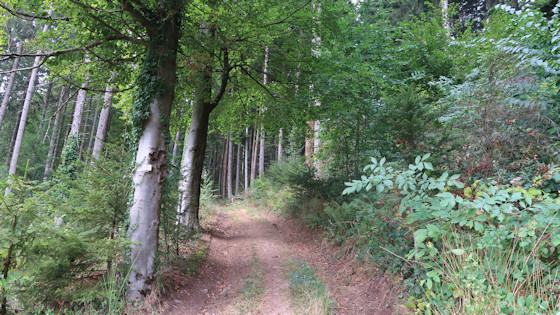
The route continues uphill through the forest.
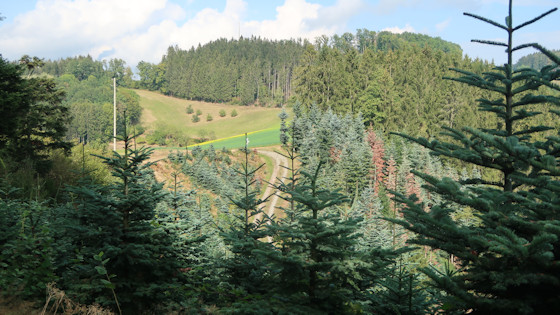
Ascent in the Black Forest to Nilleck
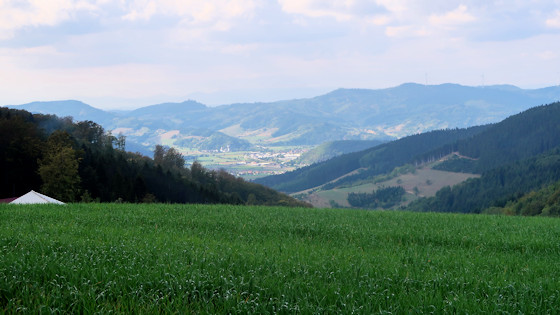
In the distance, the Kinzig Valley. The place is probably called Strohbach.
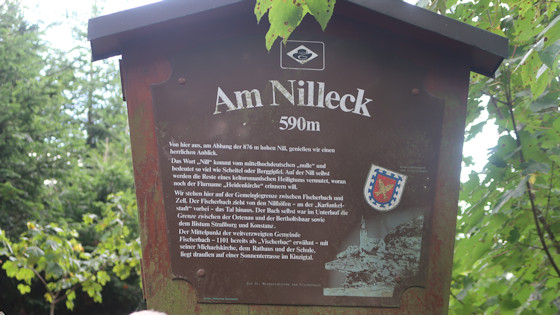
On the Nilleck, 590 m
From here, on the slope of the 876 m high Nill, we enjoy a magnificent view.
The word ‘Nill’ comes from the Middle High German ‘nulle’ and means something like crest or mountain peak. The remains of a Celtic-Roman sanctuary are believed to be located on the Nill itself, as indicated by the field name ‘Heidenkirche’ (pagan church).
We are standing here on the municipal border between Fischerbach and Zell. The Fischerbach stream flows from the Nillhöfe farms – past the ‘Karfunkelstadt’ – out of the valley. The lower reaches of the stream formed the border between Ortenau and Bertholdsbaar and between the dioceses of Strasbourg and Constance.
The centre of the widely scattered municipality of Fischerbach – mentioned as early as 1101 as ‘Vischerbac’ – with its St. Michael's Church, town hall and school, lies on a sunny terrace in the Kinzig Valley.
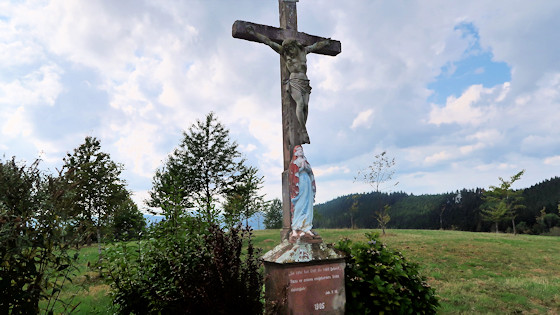
On the descent, we pass this cross from 1905. The inscription reads:
‘For God so loved the world that he gave his only begotten Son.’ John 3:16.
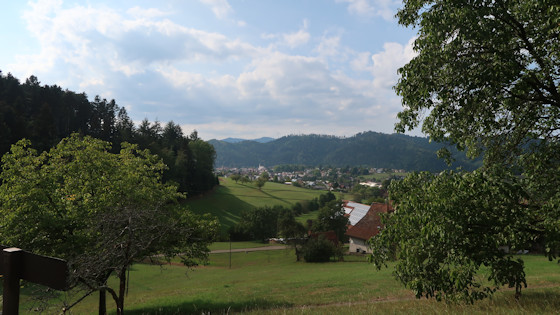
First glimpse of our destination: Zell am Harmersbach
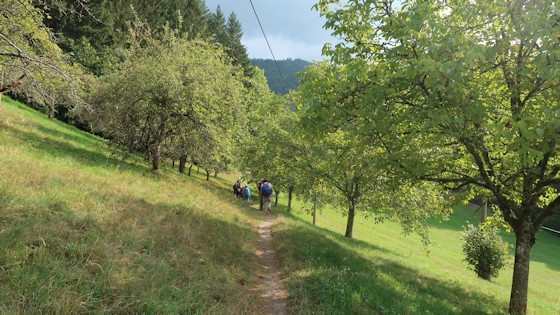
Descent to Zell
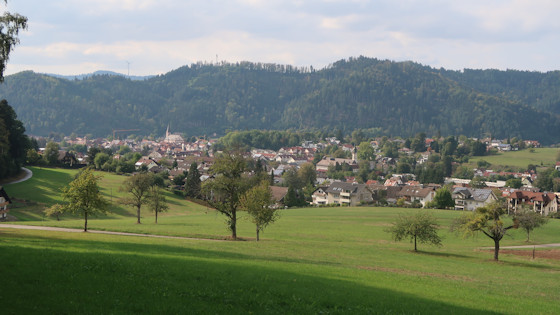
Zell am Harmersbach
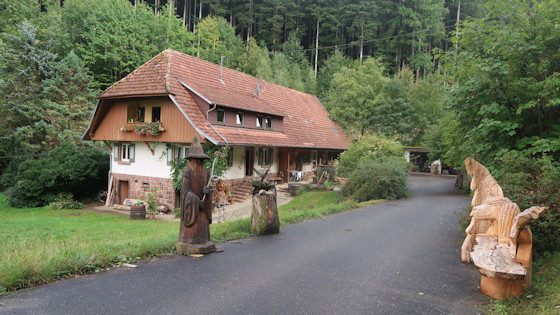
sculptures
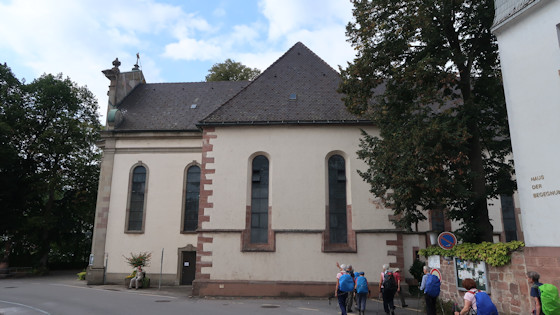
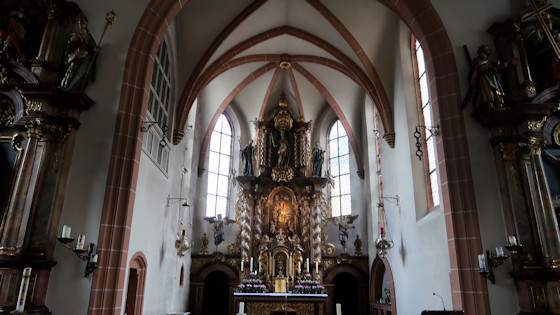
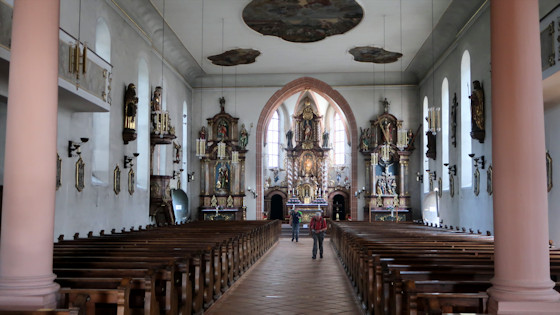
Pilgrimage church ‘Maria zu den Ketten’
The pilgrimage church ‘Maria zu den Ketten’ has existed in Zell am Harmersbach since the end of the 15th century. According to legend, a blacksmith from Schuttern who was held captive by the Muslims during the Crusades called upon the Mother of God during his imprisonment and made a vow that, after a safe return home, he would lay down his chains before the image of Mary in Zell. His prayer was answered, he was freed from captivity and returned to his homeland. The legend tells that the chains fell from his hands and feet and a white horse was waiting to take him home. In a procession, he went with his fellow countrymen from Schuttern to the miraculous image in Zell and fulfilled his promise. Since then, chains have hung in the church, and it is said: We go to Mary at the chains. There is a record of the pilgrimage of four citizens of Zell to Santiago de Compostela: in 1610, the bricklayer Paulus Ritt, the baker Jacob Lehmann, Dieboldt Erb and, a little later, Hans Sohler asked the local council for permission to travel to St. James in Spain. Some of the wills drawn up before their departure are still preserved.


Wolfach - Haslach


Zell am Harmersbach - Gengenbach
