


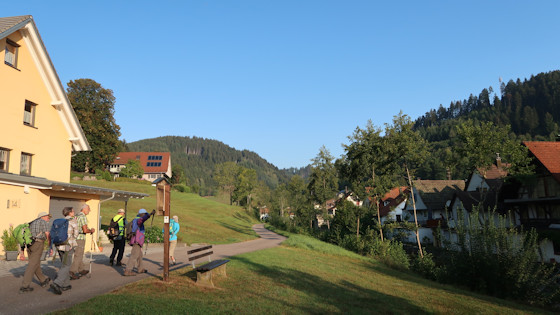
We leave Schenkenzell (365 m) and follow the little Kinzig river.
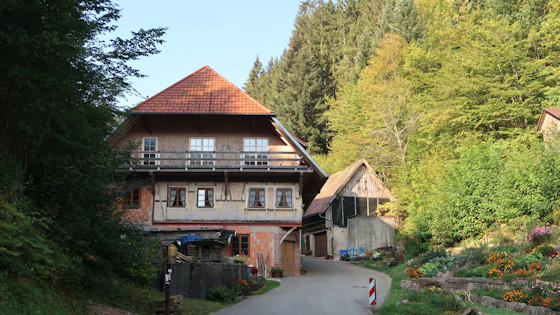
Farm at Gallenbächle
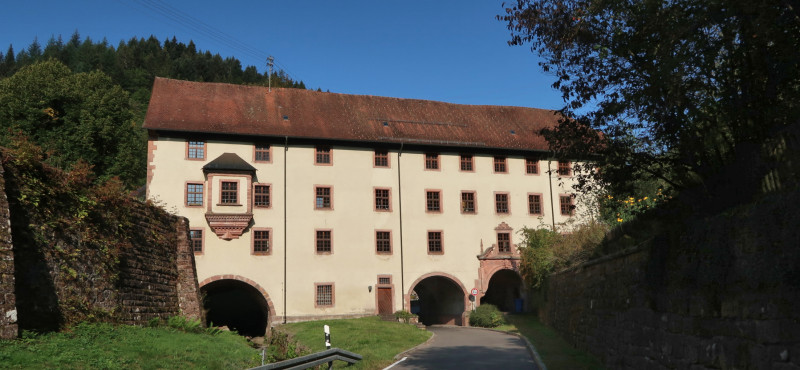
Wittichen Monastery
Wittichen Monastery was founded in 1324 by Blessed Liutgard as a tertiary hermitage. In 1325, 34 Poor Clares moved into the newly built monastery. In 1402, it was elevated to an abbey. Around 1500, the Counts of Fürstenberg acquired patronage rights and bailiwick rights over the monastery. 1663-1681: Reconstruction of the monastery after a fire. 1802: Dissolution of the convent by the Princes of Fürstenberg. 1858: Demolition of the convent buildings with the exception of the church and the long building.

A museum was established in the former monastery stable (since 1992). Today, it is a listed, attractive half-timbered building.
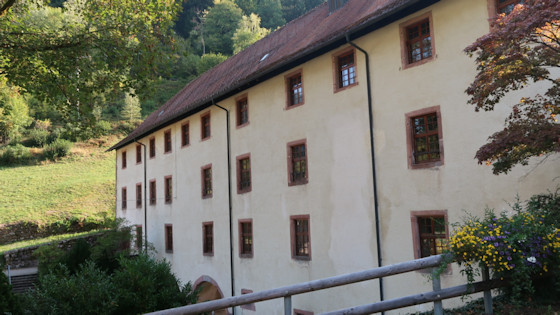
During the renovation in 1979/80, after the prince had transferred ownership to the parish through a deed of gift, the ‘Lange Bau’ was converted into a vicarage with a parish hall. The parish centre on the lower floor remains. Two large flats on the middle floor, once occupied by the vicar and his housekeeper, now stand empty. They are no longer needed.

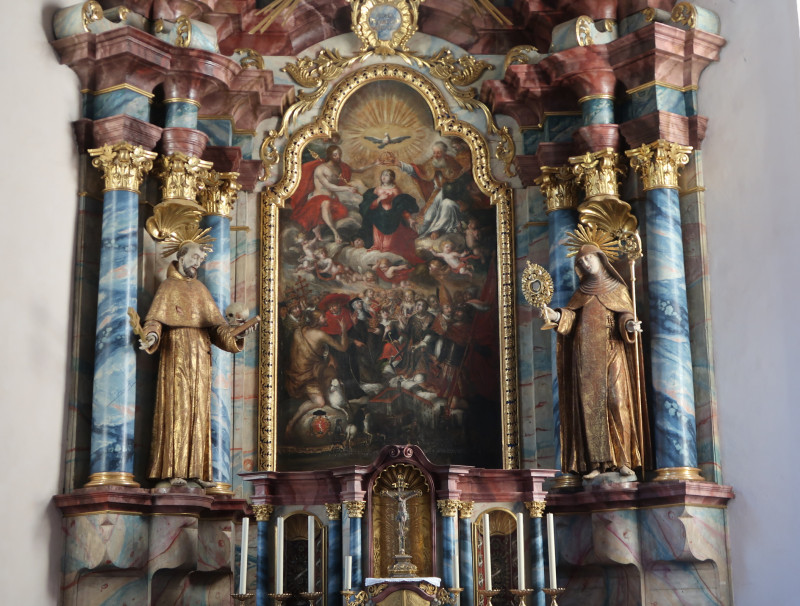
On the left side of the altar stands St. Francis of Assisi and on the right side stands Blessed Luitgard of Wittichen with the monstrance. Click on the image to enlarge it.
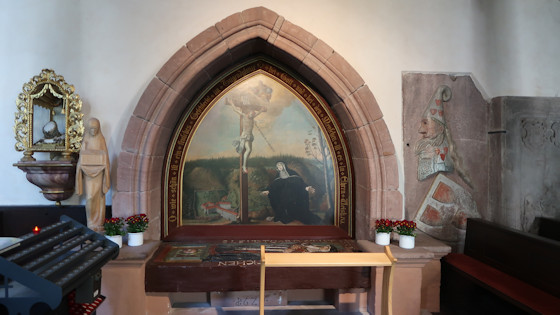
The image at the founder's grave shows her beneath the cross. Jesus speaks to her (inscription): ‘Luitgard, here you shall build me a house.’
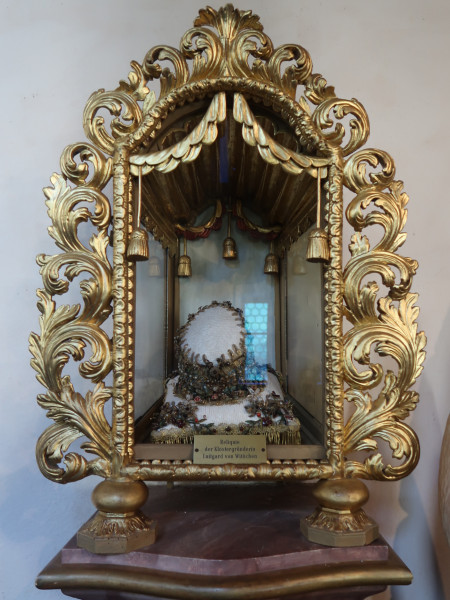
The small image (can be enlarged with a mouse click) shows a relic of Blessed Luitgard.
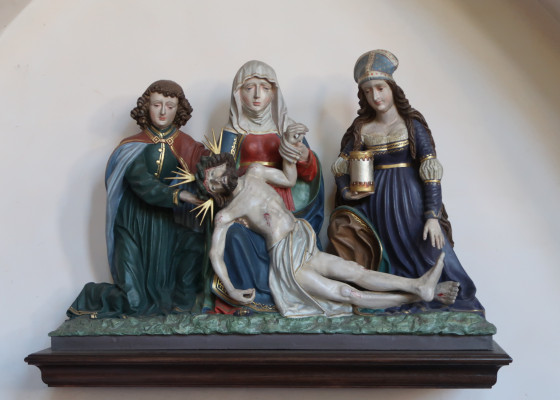
Mary and Jesus, John and Mary Magdalene, enlarged Pietà in the monastery church
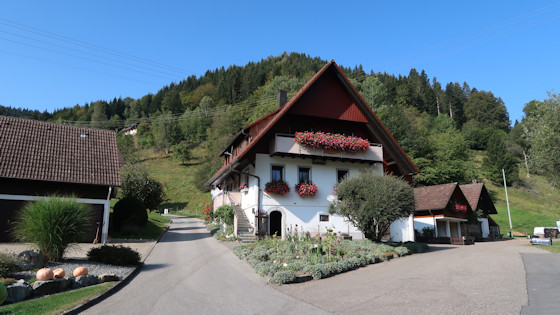
After Wittichen Monastery (465 m), the Way of St. James continues uphill and past this farm.
Then it climbs very steeply through the forest to 805 m!
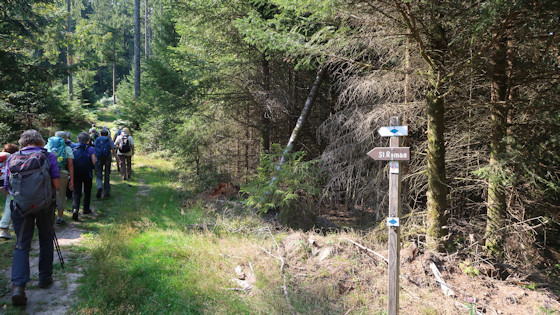
Once you reach the top, the route to St. Roman is fairly flat.
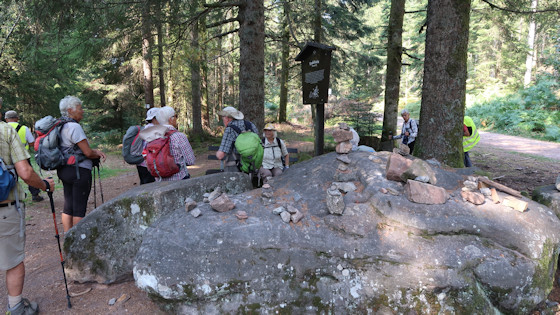
Devil's Stone
A red sandstone boulder measuring approximately 6m3 located on the saddle between Allmendhöhe and Weberhöhe (natural monument).
The following legend surrounds it: when the St. Romaner pilgrimage church was built, this enraged the devil so much that he wanted to destroy the building with a large stone. Then God came by and marked the stone with two crosses. Although the devil tried his best, as can still be seen today from his fingerprints, he was unable to lift the stone.
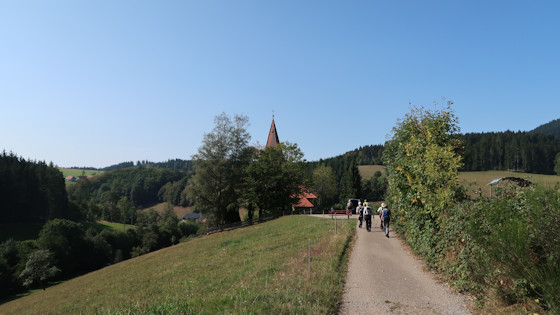
Sankt Roman comes into view.
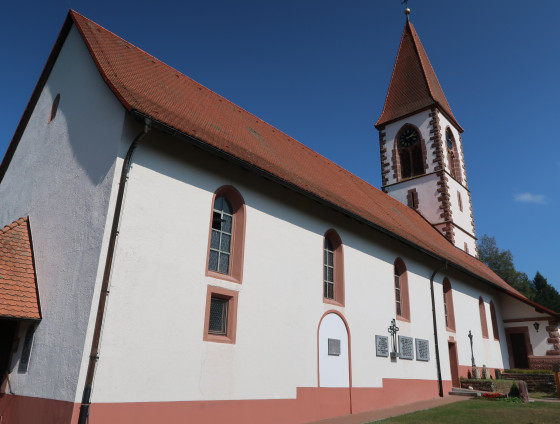
The mountain village of St. Roman is a place of pilgrimage. The patron saint of the church, St. Roman, is said to be able to help girls who want to get married find a husband. This is why many young and older girls have always been drawn to the small mountain church on 9 August, the patron saint's day. They all believed in the truth of the old pilgrim's saying: ‘If you are looking for a husband, make a pilgrimage to St. Roman.’ The current church was rebuilt and expanded in 1922, and the tower dates from 1902. The oldest part of the building is a Gothic tabernacle from 1841. The church ceiling features the coats of arms of the St. Roman farmers who helped with the construction by providing labour and transport services. According to theological encyclopaedias, there are 5-6 saints named Romanus. In St. Roman, the martyr who was beheaded in Rome in 258 during the persecution of Christians by Emperor Valerian is venerated. Images usually show Romanus as a soldier with a lance and shield. He also carries a palm branch as a symbol and a sword as the instrument of his martyrdom.
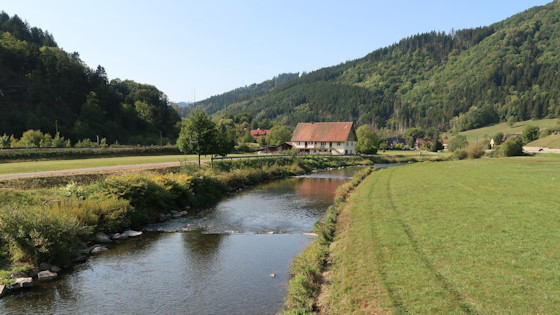
After the descent, we cross the Kinzig, walk to the other side of the valley and climb up to St. James' Chapel.
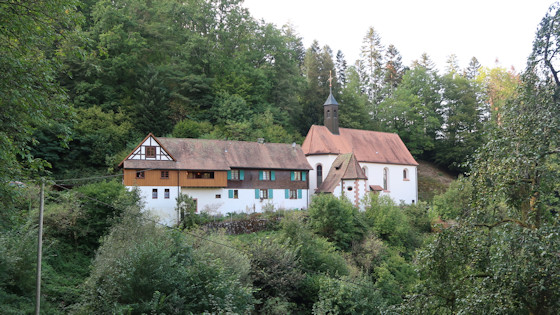
St. James' Chapel
St. James' Chapel and the sacristan's house next to it are located in the forest on the hillside above Wolfach. For many centuries, the chapel has been a popular destination for pilgrims. A path leads up to it. St James' Day is a busy time here. There is a legend about the origins of this place of pilgrimage: in the late Middle Ages, a wooden statue was discovered while felling a tree, which can still be seen in the church today. As a result, a hermit named Conrad von Kalbs built a chapel on the site where the wooden statue was found in 1433. Around 1540, the chapel was destroyed in the turmoil of the Reformation. It took over 100 years before it was rebuilt in 1660. The inauguration took place on St James's Day in 1664.
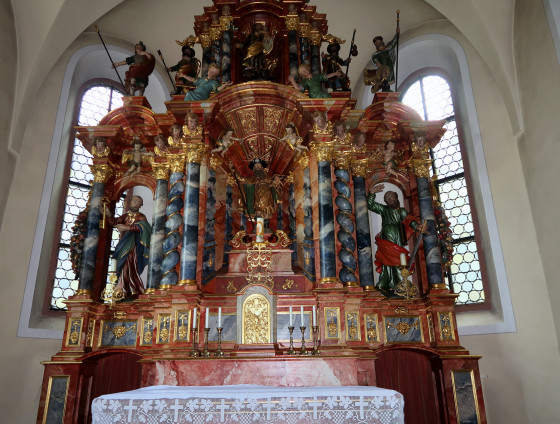
The old holy image, which had been lost after the turmoil of the Reformation, was soon rediscovered in a well. A brotherhood dedicated to St James the Apostle was founded in 1664, the year of the consecration. The purpose of the brotherhood was to pray for a good death ‘for brothers and sisters in mortal danger’. As early as 1680, the chapel was demolished and replaced by an even larger one. This was consecrated in 1685. James is depicted three times in the chapel: on the cross at the top of the tower, on the exterior façade above a kind of pulpit above a round-arched portal, and finally in the centre of the altar.
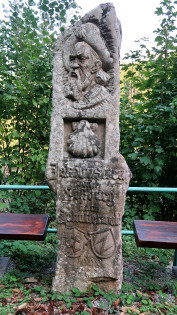
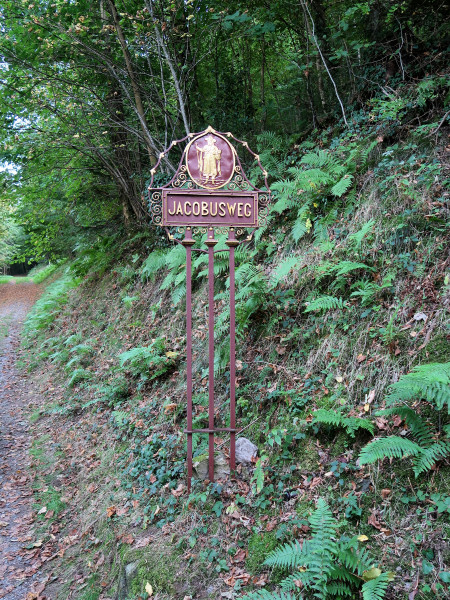
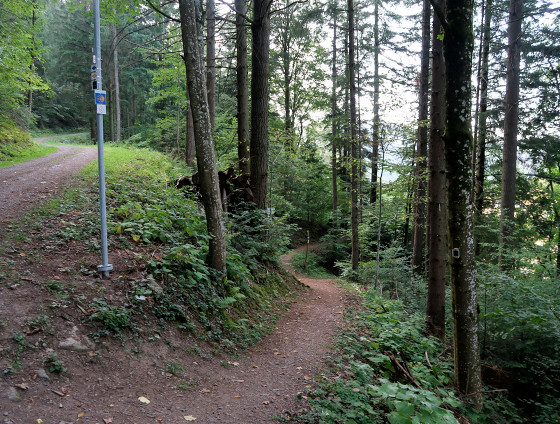
The Way of St James leads downhill through the forest to Wolfach.
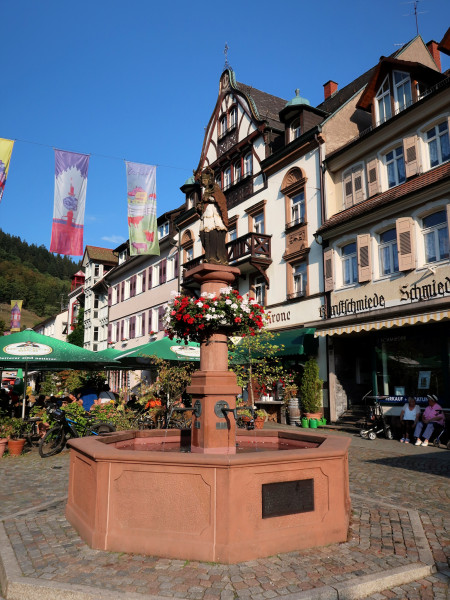
We arrive in Wolfach. There is a statue of Nepomuk on the main street by the fountain.
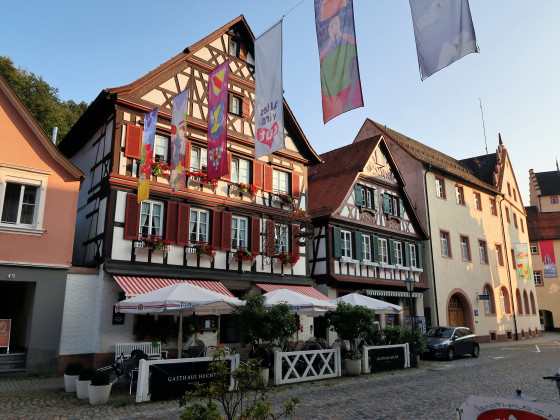
Our ‘pilgrim hostel,’ the Gasthof Hecht inn.
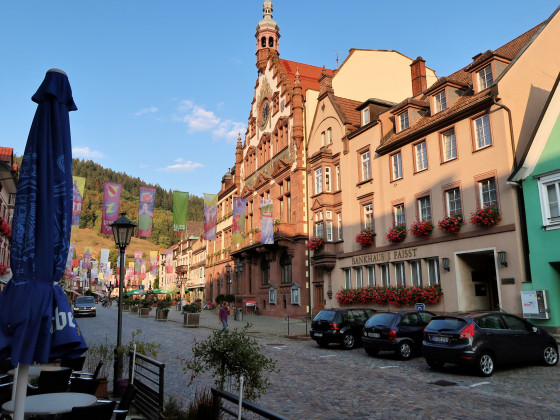
Main street with town hall

Touch the image with your mouse!

Lossburg - Schenkenzell


Wolfach - Haslach

Wolfach - Oberprechtal
