


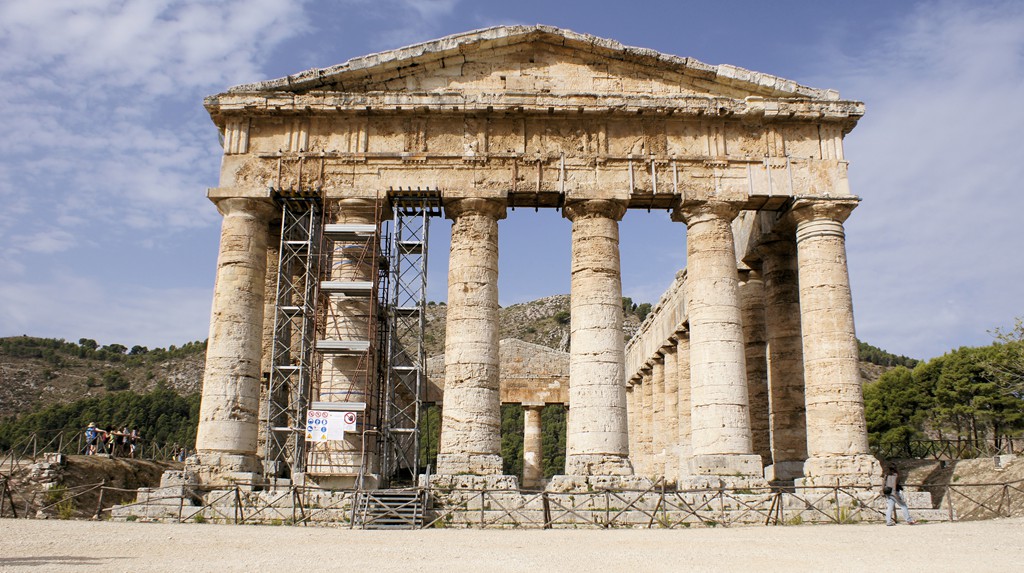
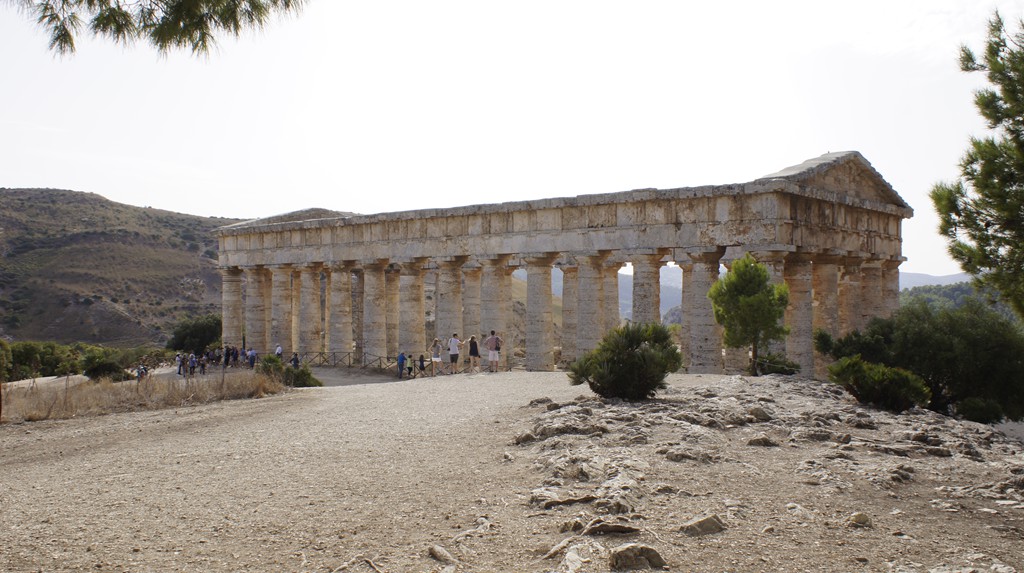
The Temple of Segesta was built by the Elymians around 430/420 BC. The Elymians were pre-Greek inhabitants of the island of Sicily who are said to have migrated from Troy. The temple was never completed. It is not known to which deity the temple was to be dedicated.
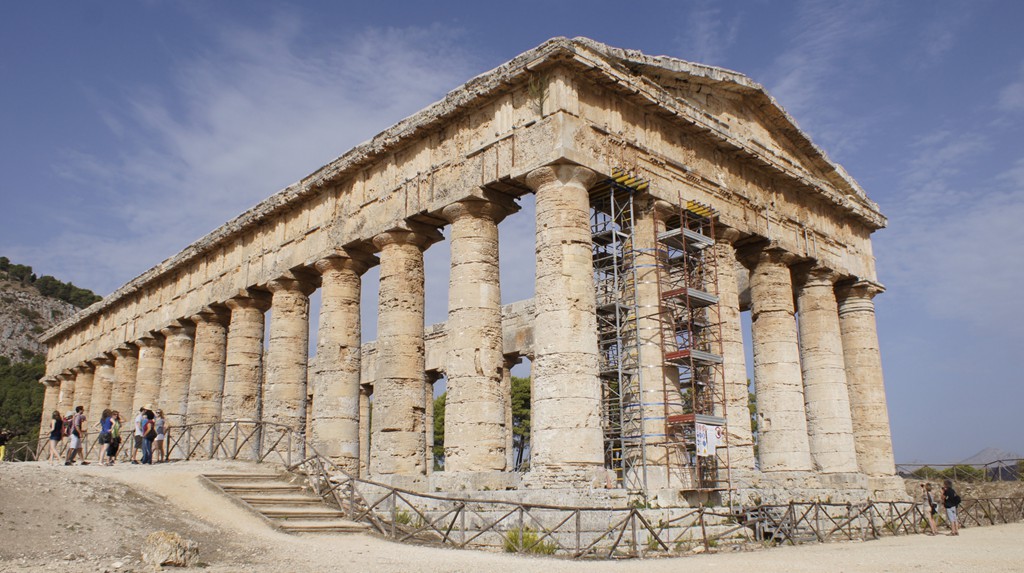
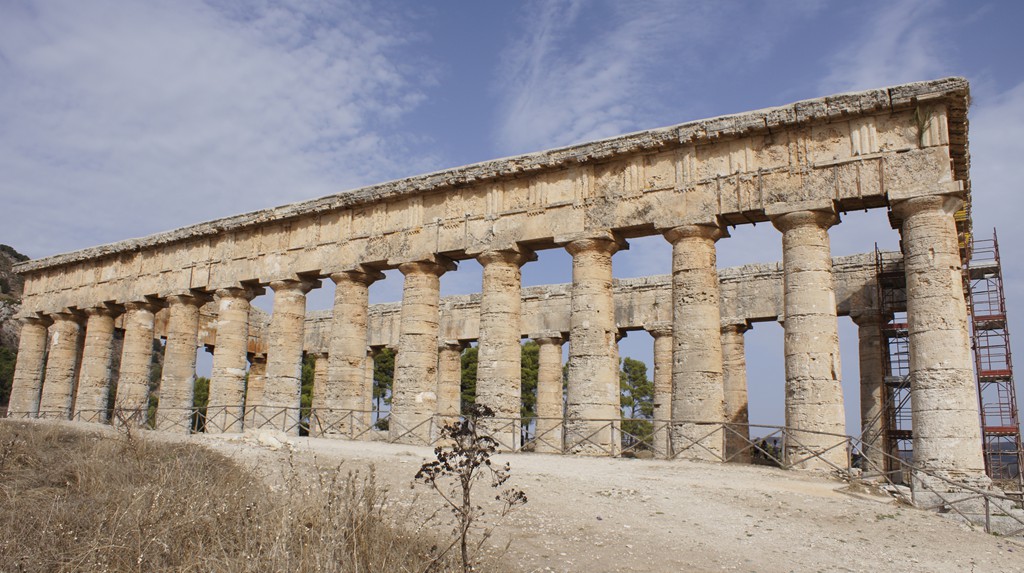
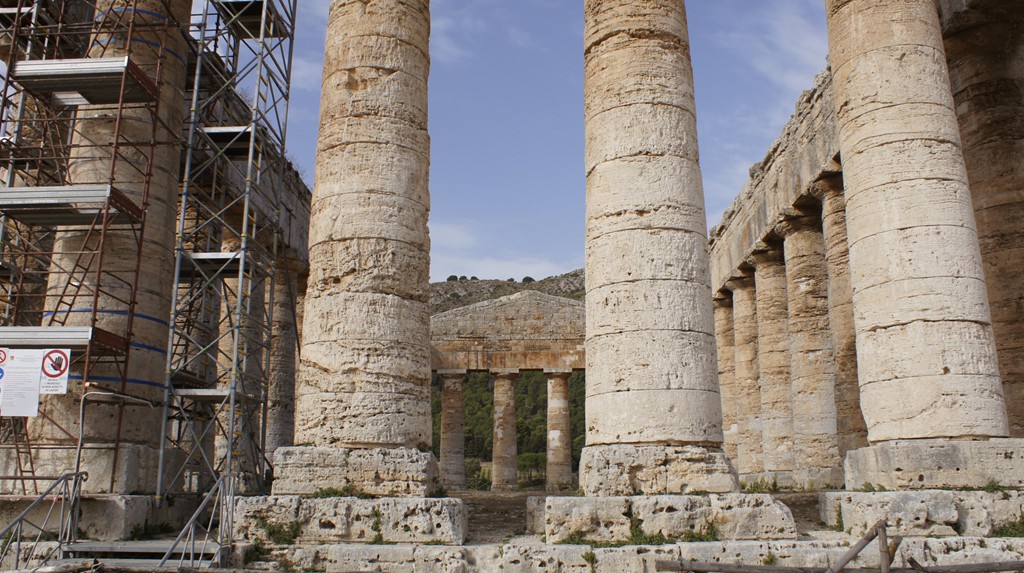
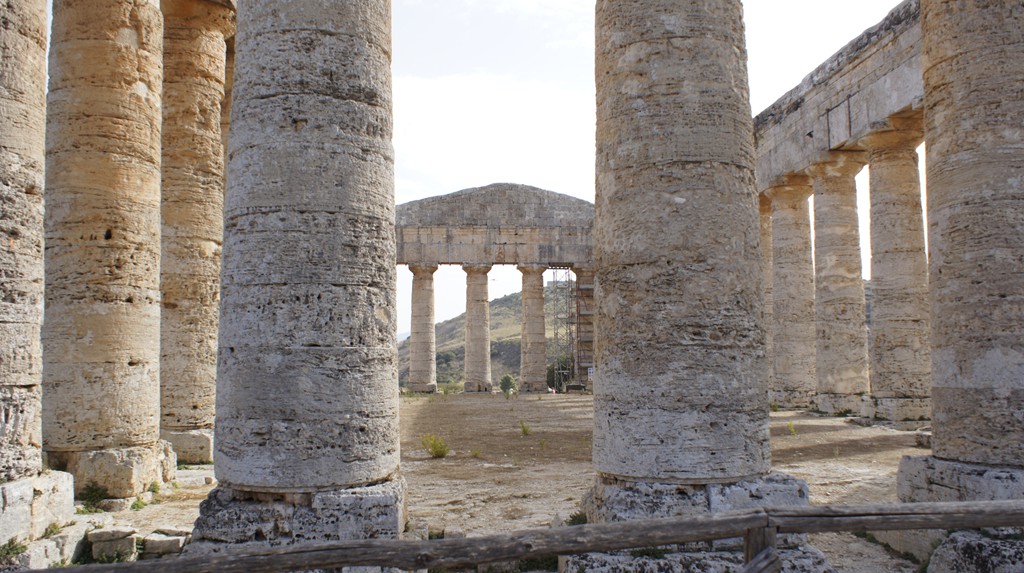
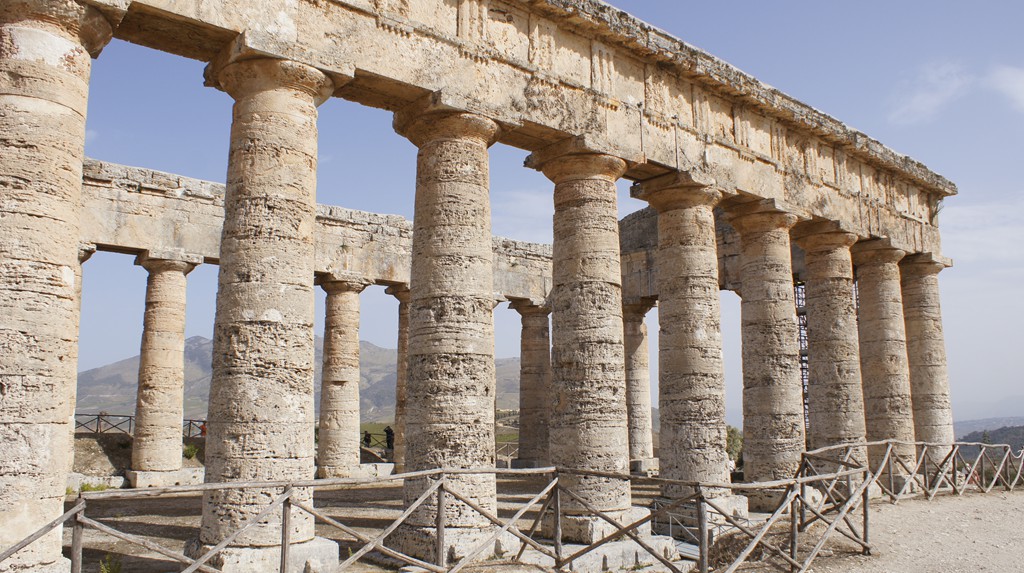
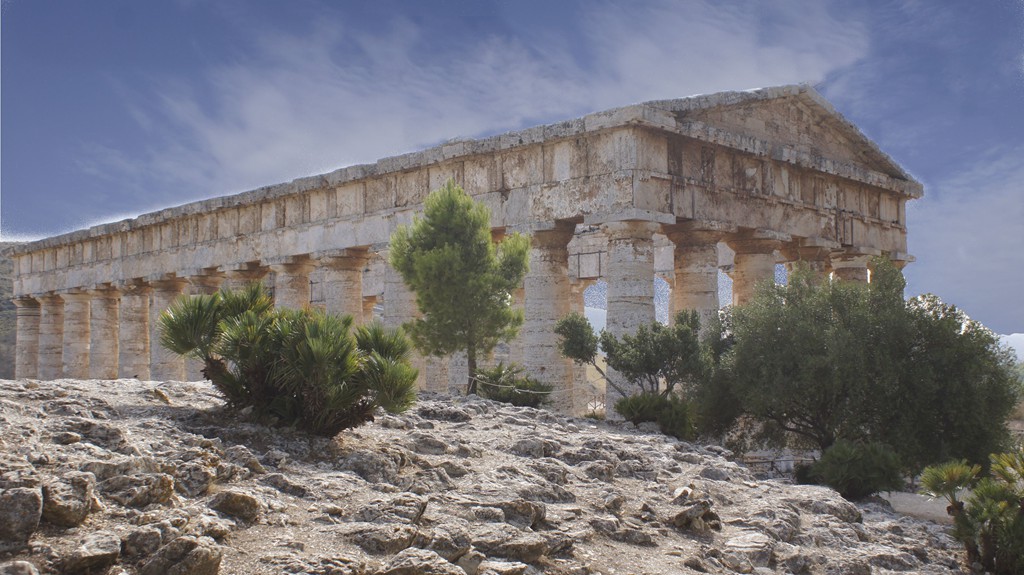
The structure of the temple is intact, the cornices and tympanum are in place, and the devices for lifting the blocks to cover the columns are still on the ground. There are no traces of a cella or a roof.
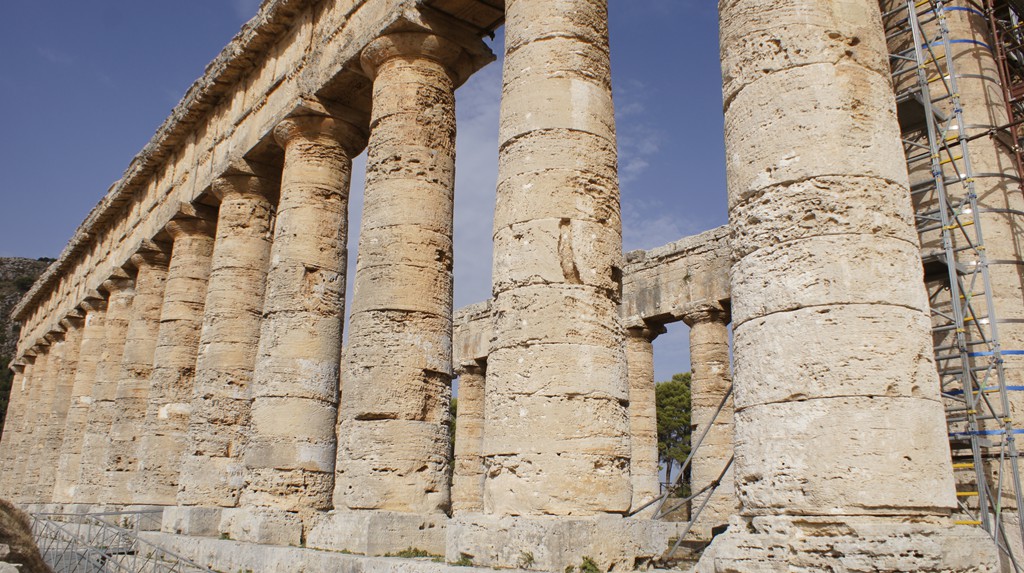
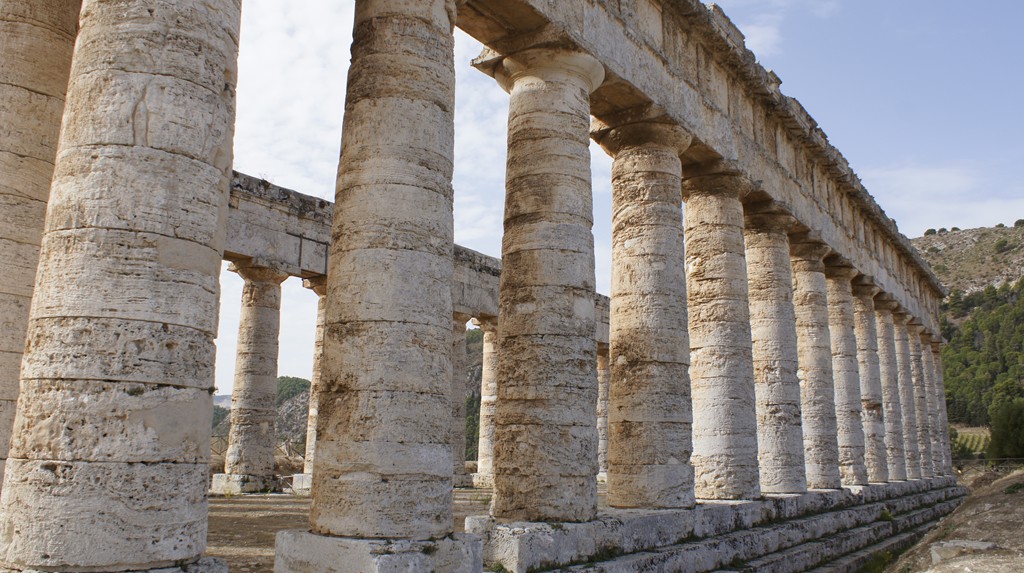
Nevertheless, it is one of the best-preserved Doric temples. This is partly due to its isolated location – there was no attempt to use it as a quarry – and partly to the fact that it could not be desecrated because it had not been completed and consecrated. The fact that the building is unfinished is particularly evident from the columns, which still have a protective layer several centimetres thick. This was intended to protect the columns during transport and would normally have been knocked off when the temple was completed.
The temple has a peripteral plan (the cella – the main room – is completely surrounded by a colonnade) with 6 by 14 columns and a floor area of 21 m × 56 m.
Olive tree
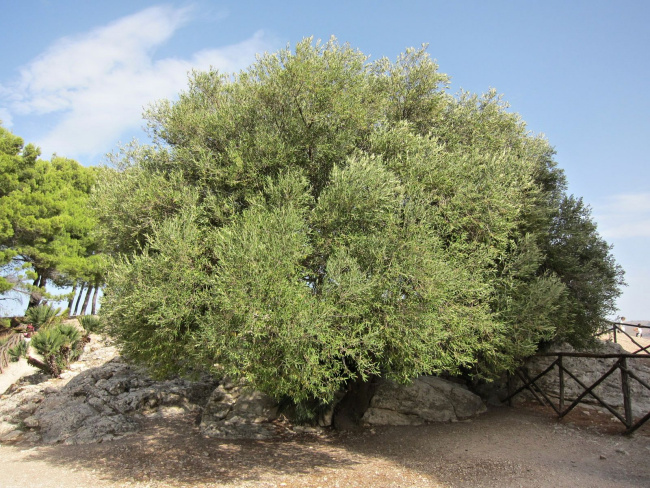
The tree is at least as old as the temple, i.e. almost 2500 years old.
