Mantua is the capital of the province of the same name and is listed as a World Heritage Site. The main attractions of the former capital of the Duchy of Mantua include the Romanesque cathedral, the Renaissance church of Santa Andrea, the Palazzo Ducale and the Palazzo del Te. The city is considered to be the birthplace of Virgil; more precisely, the ancient village of Andes, located nearby. In William Shakespeare’s tragedy ‘Romeo and Juliet’, Mantua is the place of Romeo’s exile. Verdi’s opera Rigoletto is also set in Mantua.
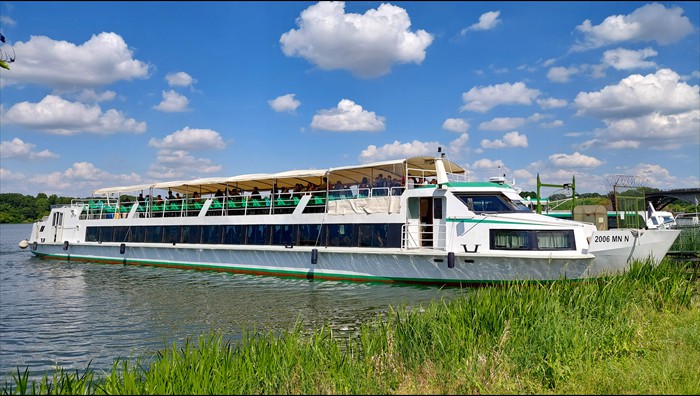
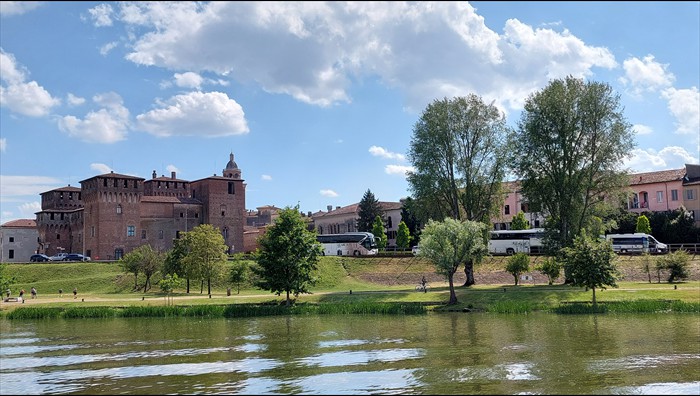
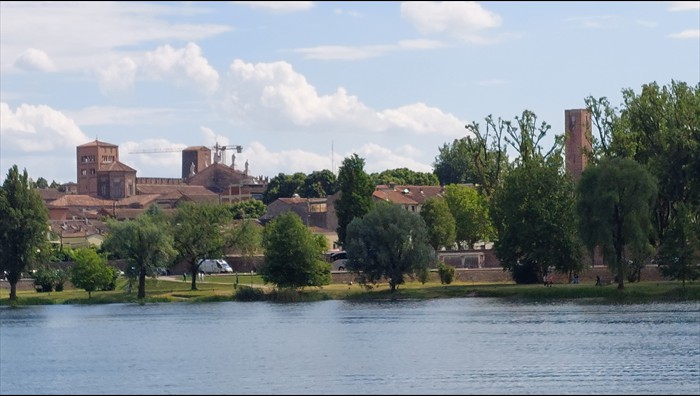
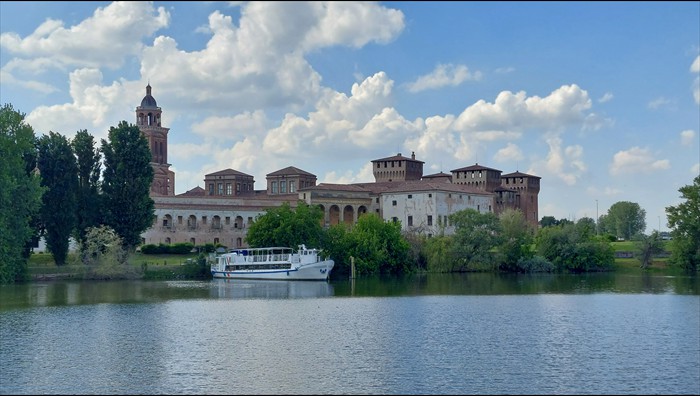
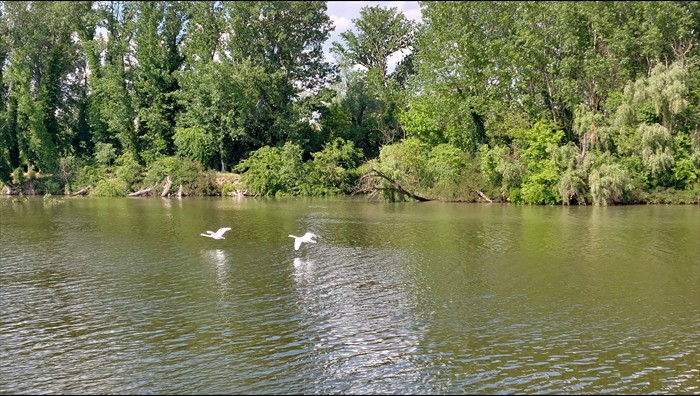
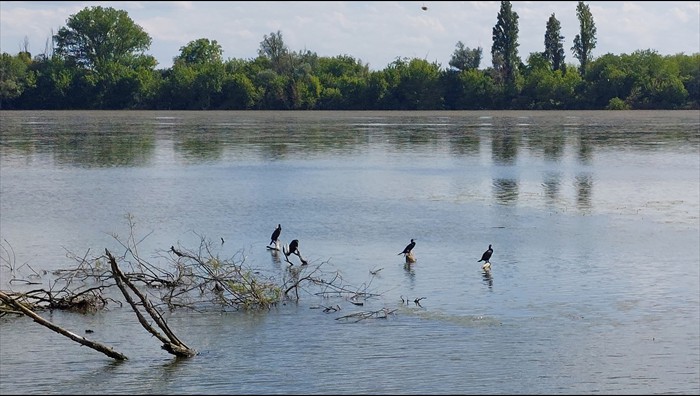
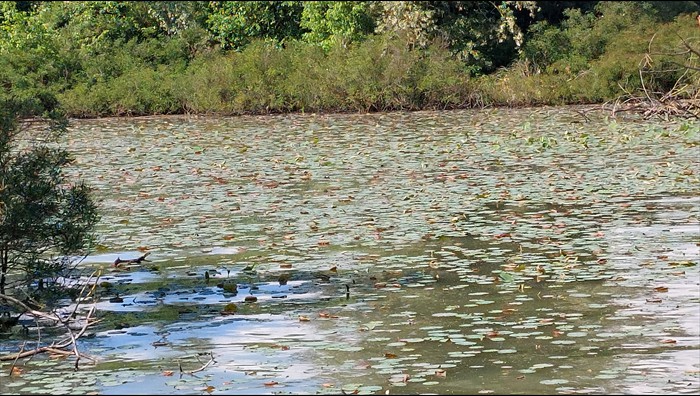
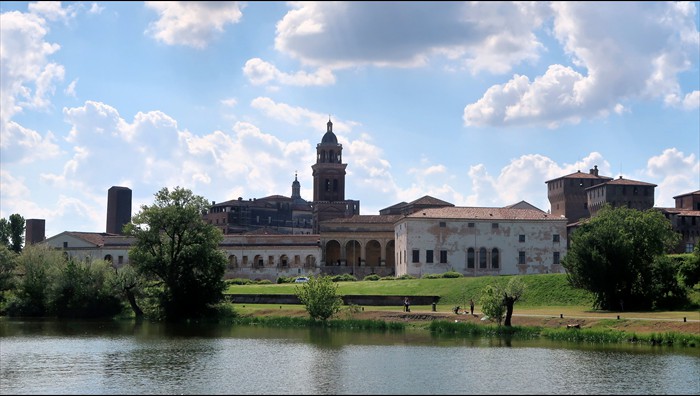
The town centre is surrounded on three sides by lakes – Lago Superiore, Lago di Mezzo and Lago Inferiore – which were created in the 12th century to defend the town and are fed by the River Mincio. Lago Paiolo, which was dammed at the same time and effectively turned the town into an island, no longer exists today.
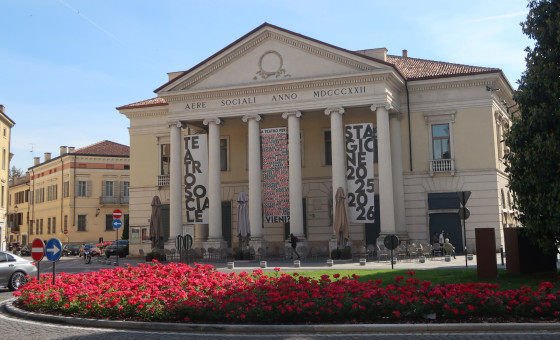
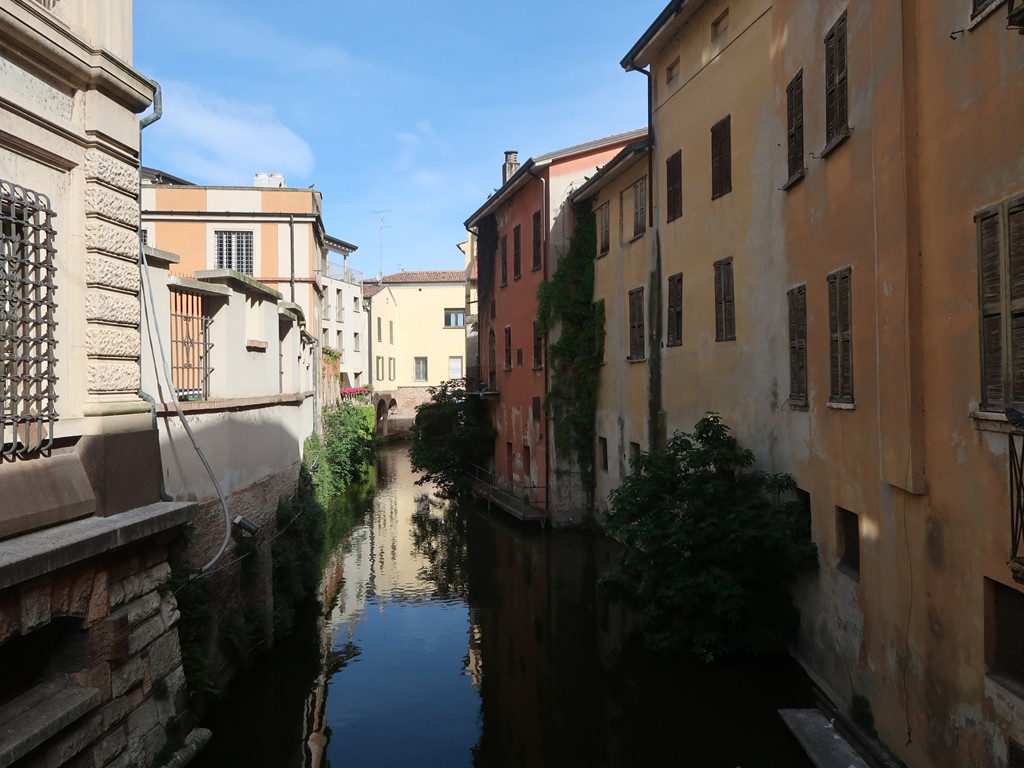
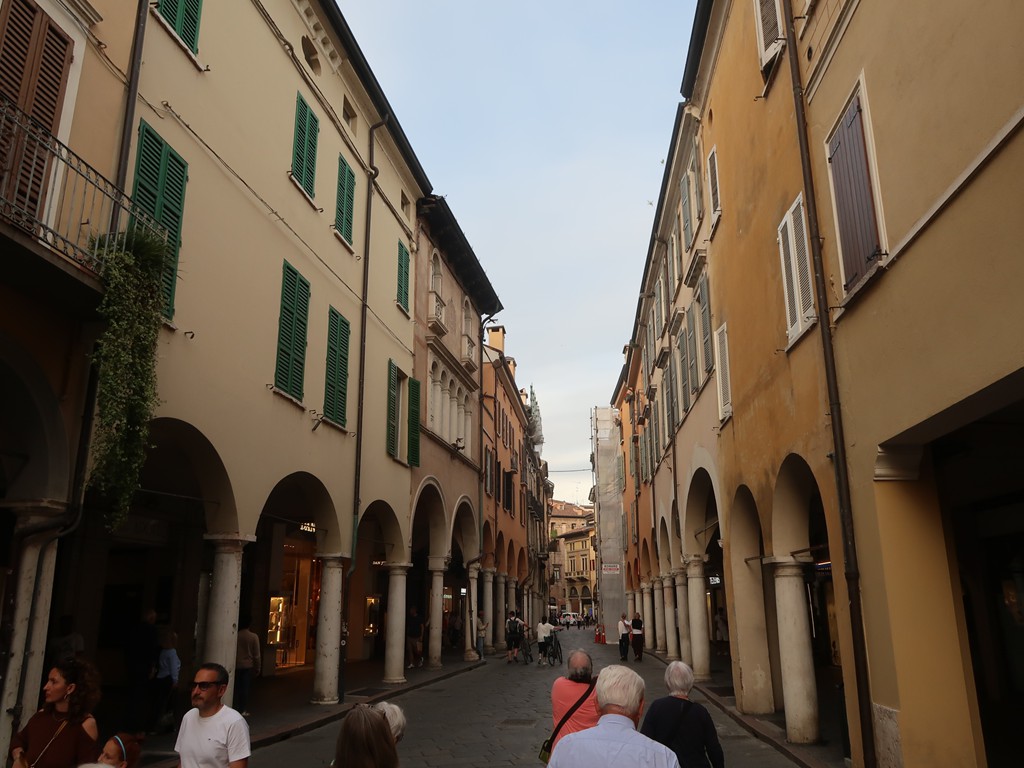
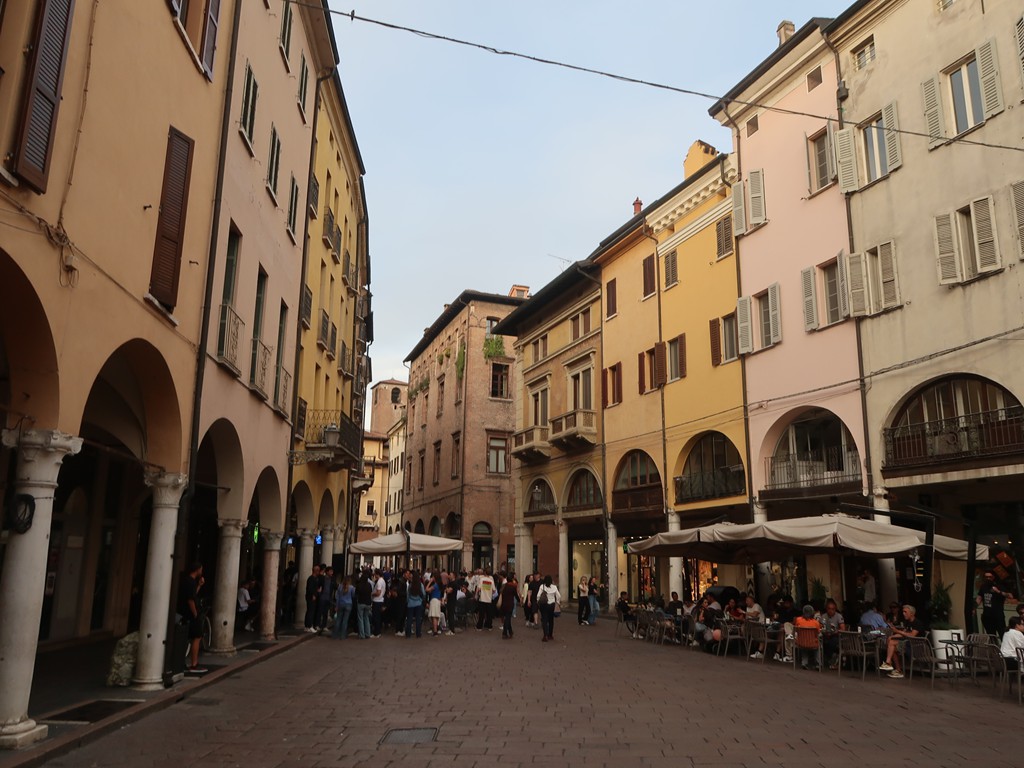
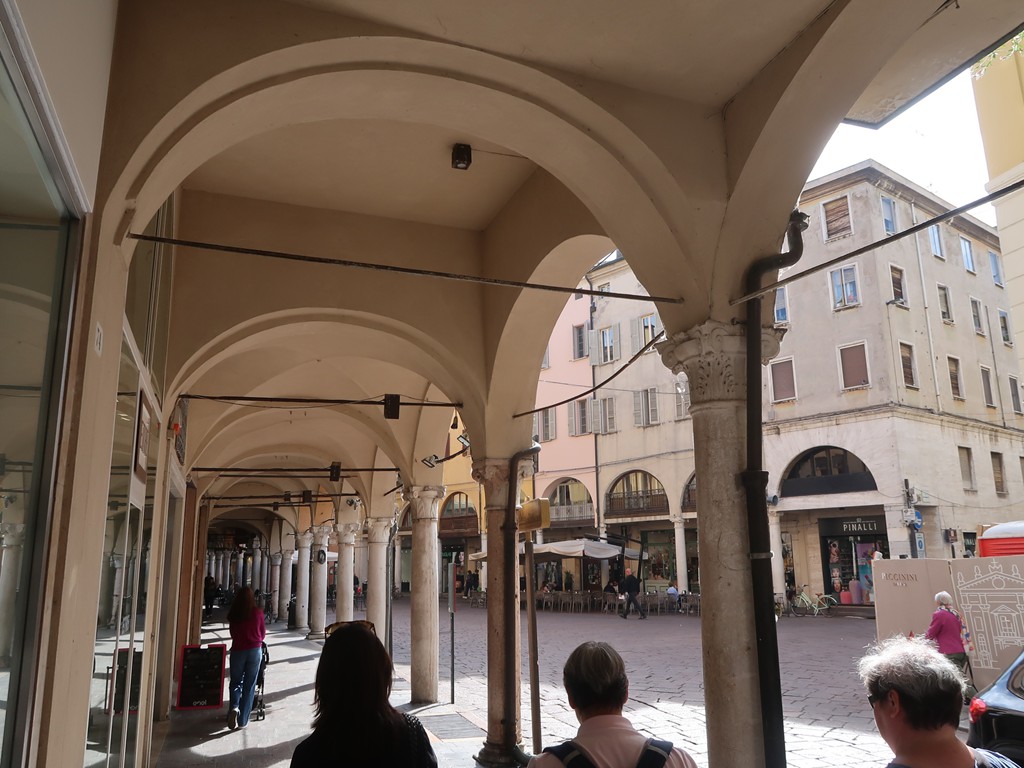
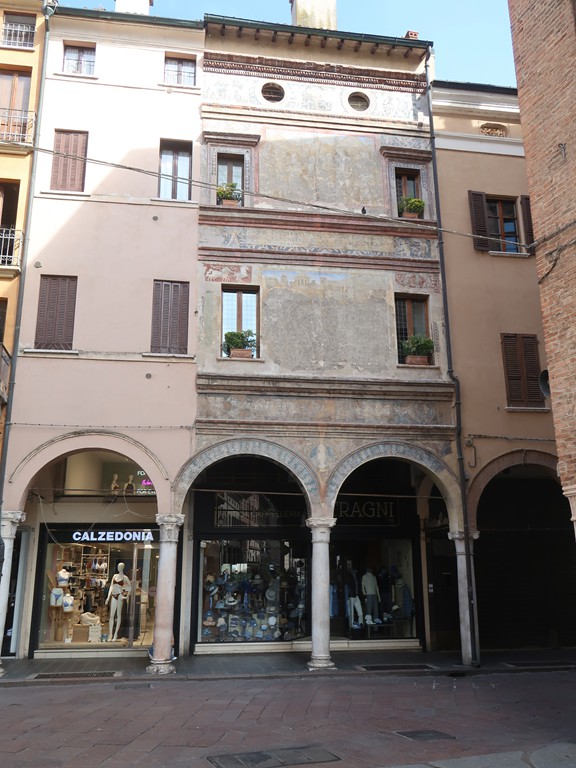
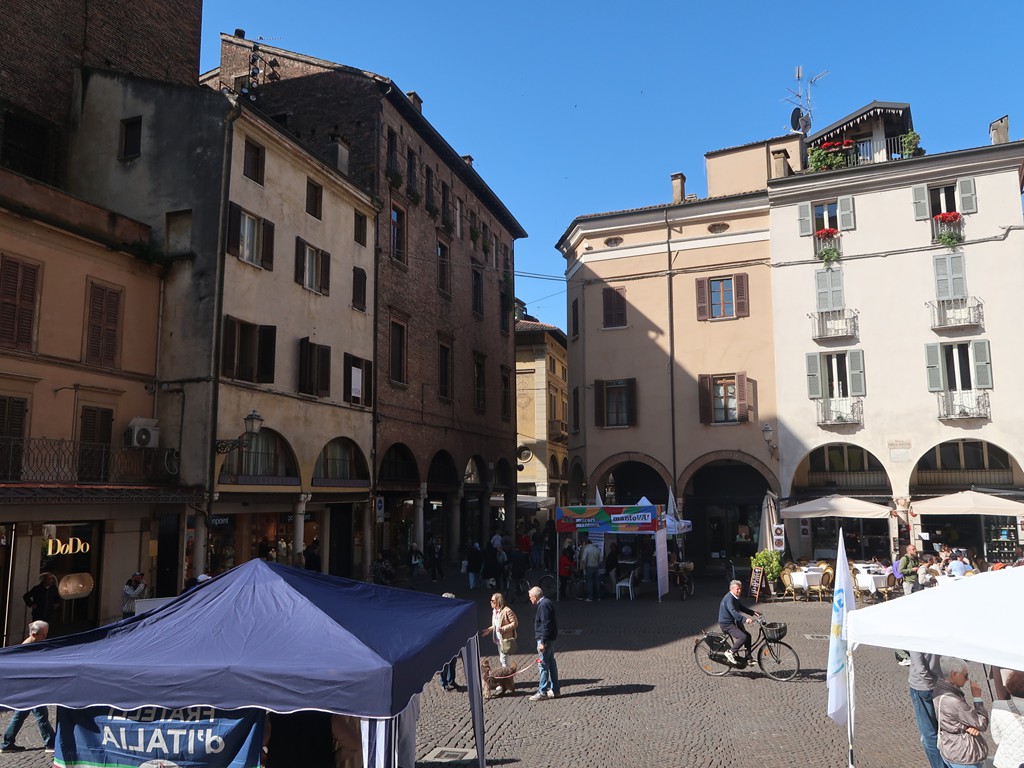
We stayed at the Hotel Italia near Piazza Cavallotti. The Teatro Soziale, with its neoclassical façade, is also located there. Next to it, you can see a canal that used to run right through the city. From the square, you can walk straight into the old town. The route takes you along Corso Umberto I with its arcades. The columns appear to come from Roman temples. At the end of the triangular Piazza Guglielmo, with its cosy cafés, stands an interesting 15th-century house featuring frescoes, and then you’re already at the Basilica of Sant’Andrea.
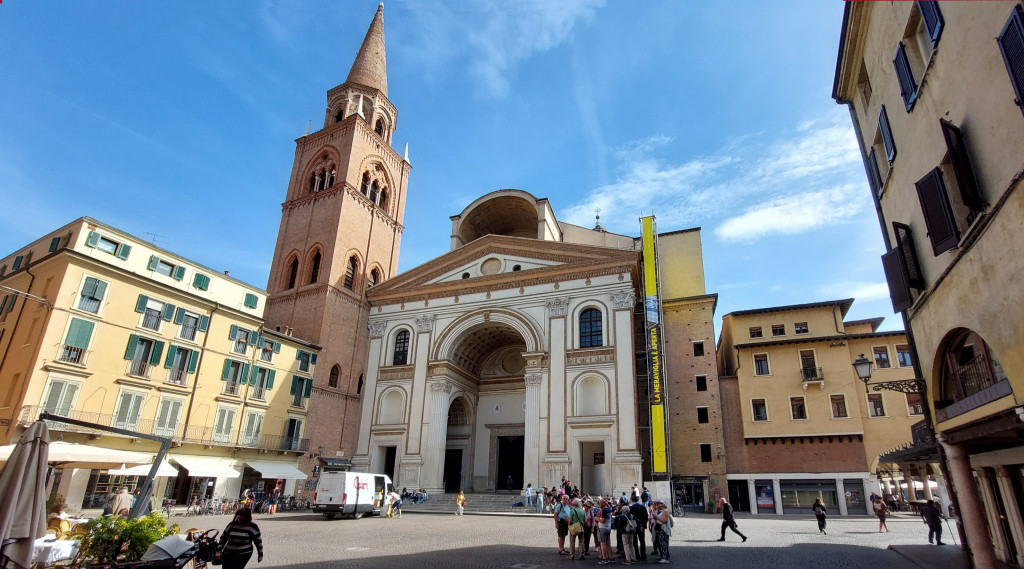
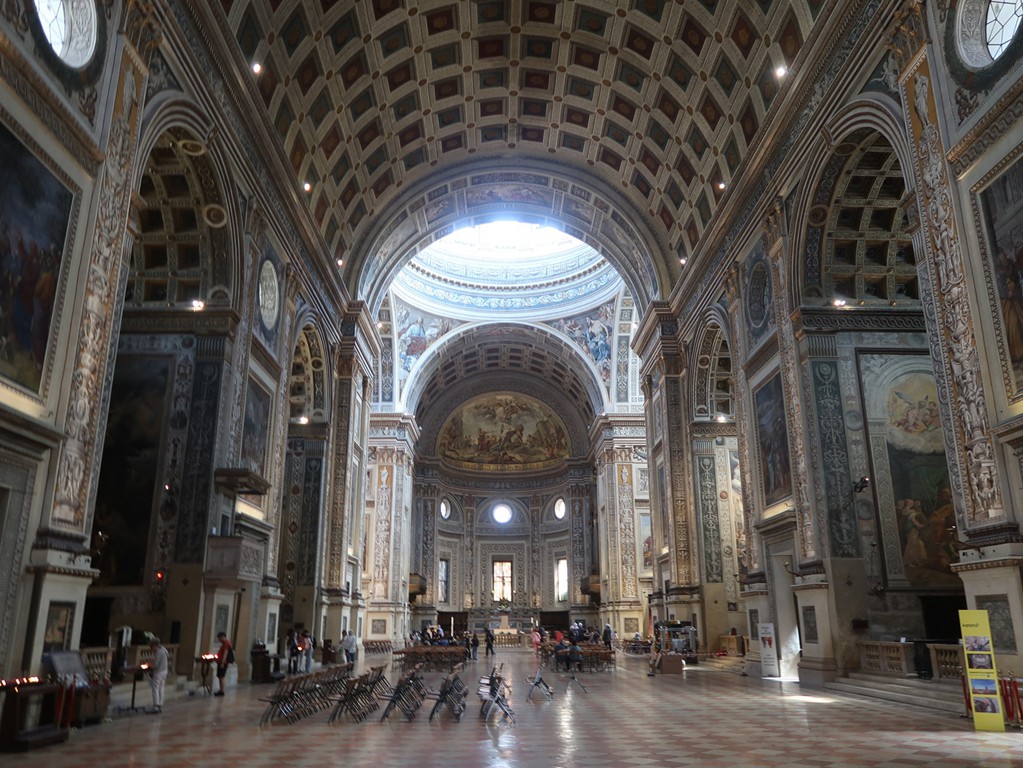
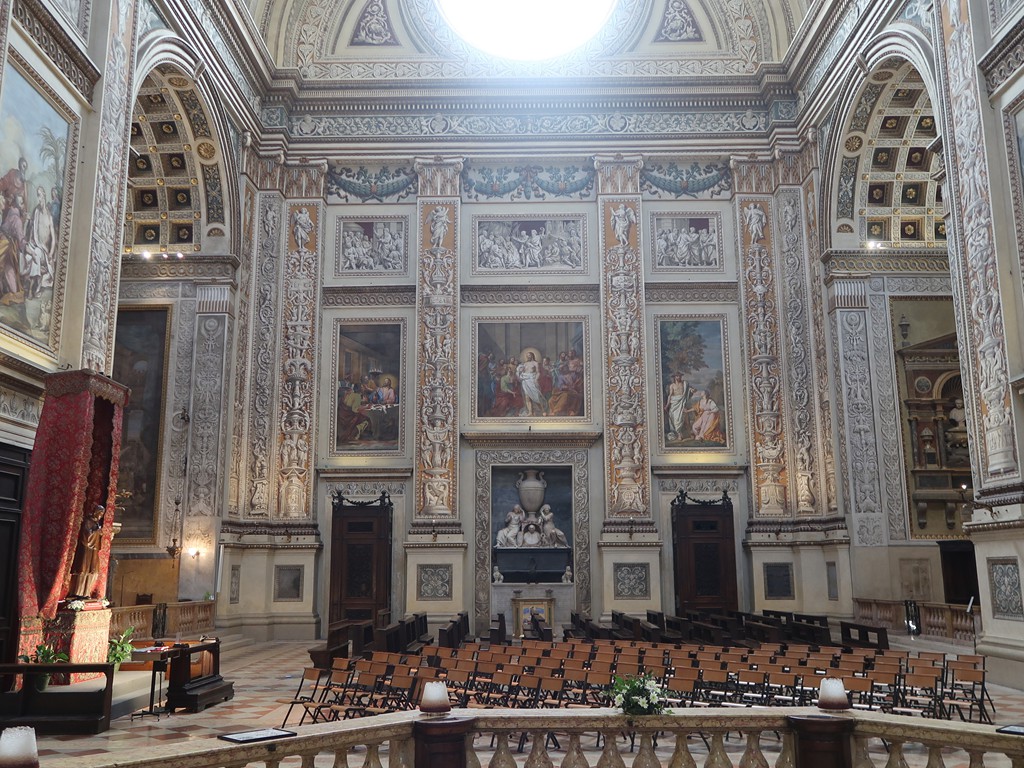
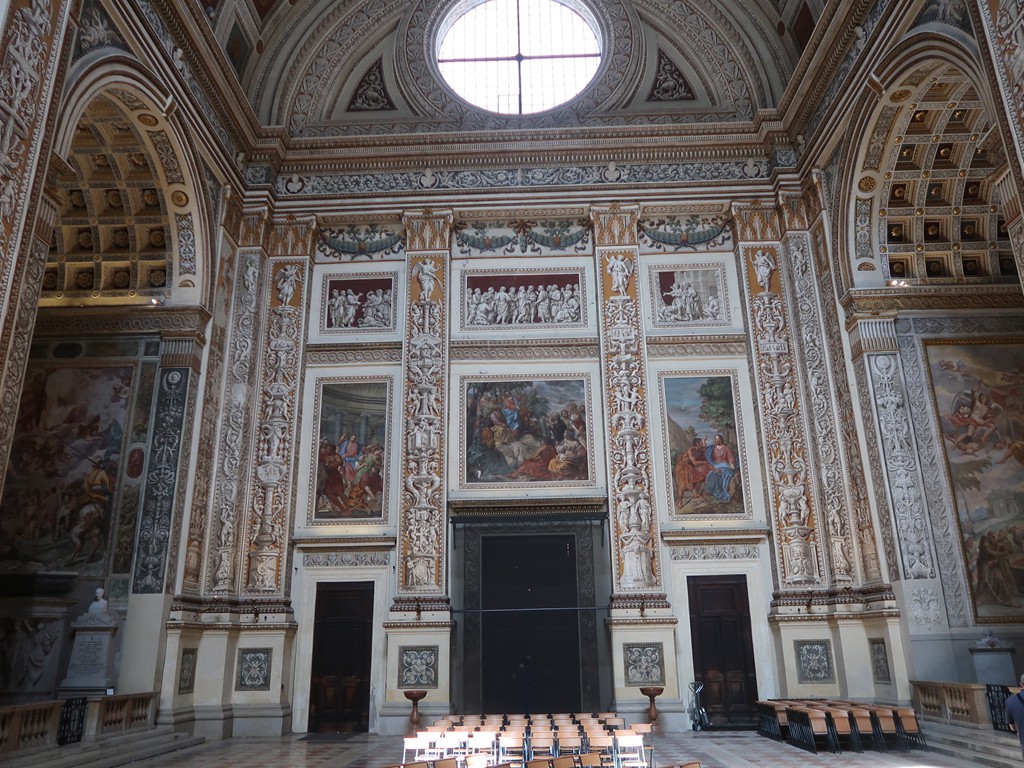
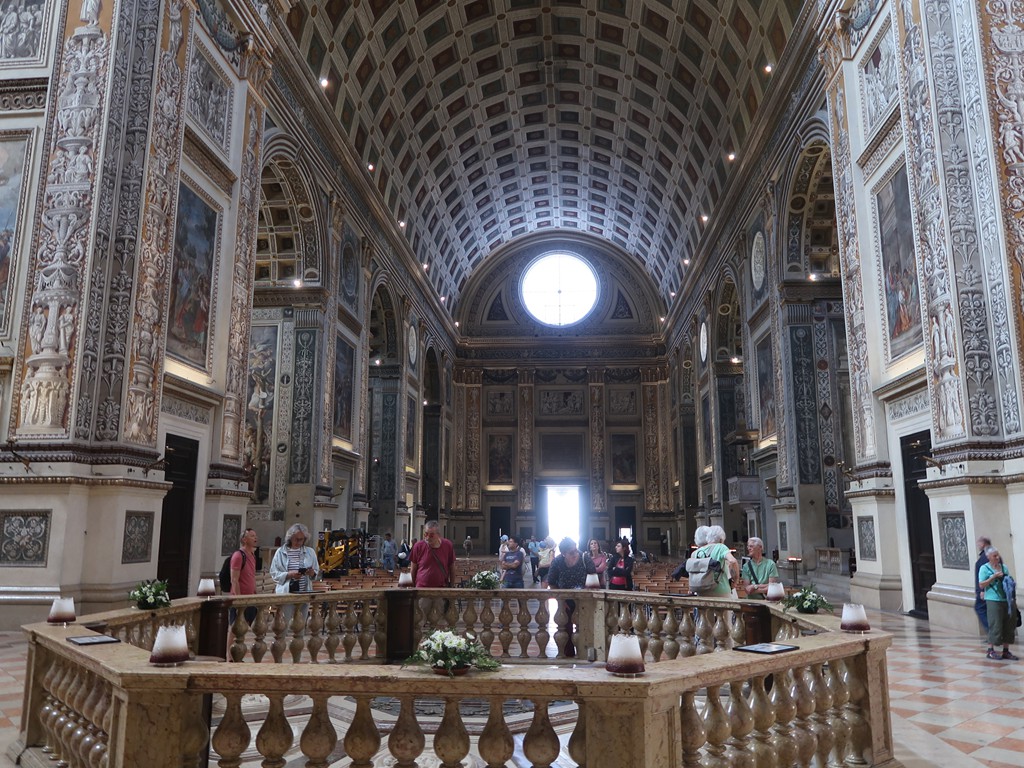
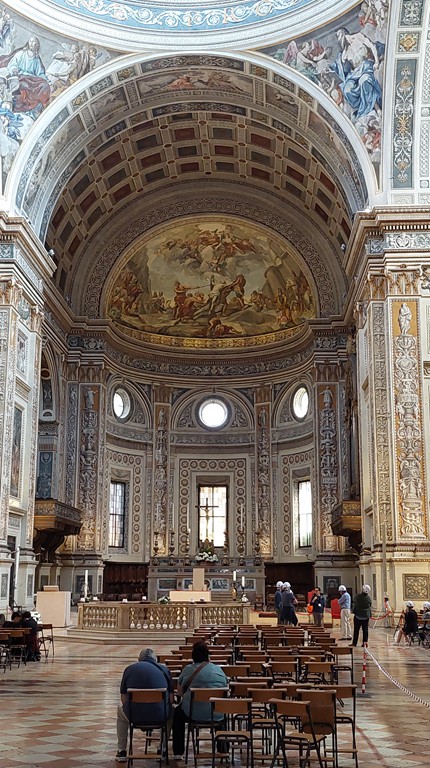
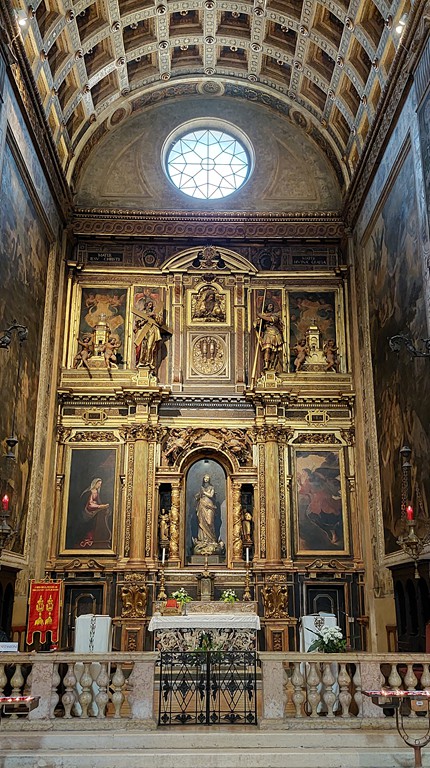
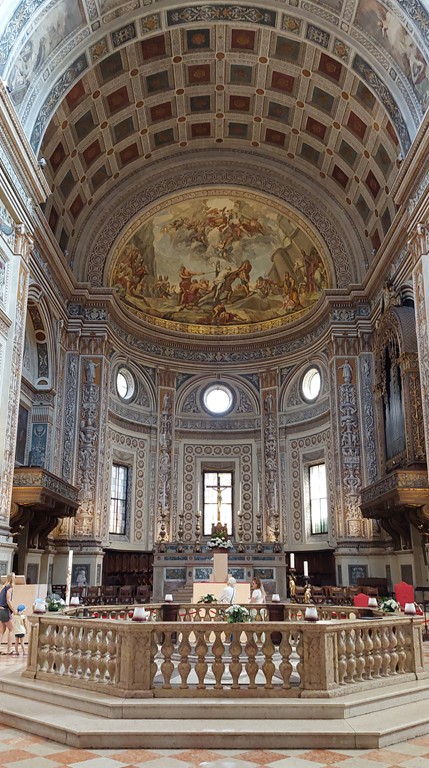
Basilika Sant'Andrea
According to tradition, the basilica stands on the spot where Saint Longinus – the soldier said to have pierced the side of the dead Jesus – buried the earth soaked with the blood of Christ.
In 1470, Ludovico Gonzaga commissioned Alberti to build a church that was to serve as a place of veneration for a relic of the Holy Blood. For the design of the floor plan of Sant’Andrea, Alberti drew on an ancient Roman method of wall arrangement. He replaced the side aisles of the nave with a series of chapels, which represented a significant innovation for church architecture of the late Renaissance and Baroque periods. Alberti, who had studied ancient architecture in depth, aimed for a monumental effect that would rival his historical models. Thus, he derived the massive coffered barrel vault from the Basilica of Maxentius in Rome. In the façade, he combined the ancient temple front with a triumphal arch and flat pilasters instead of the usual columns.
The bell tower features Gothic architectural forms.
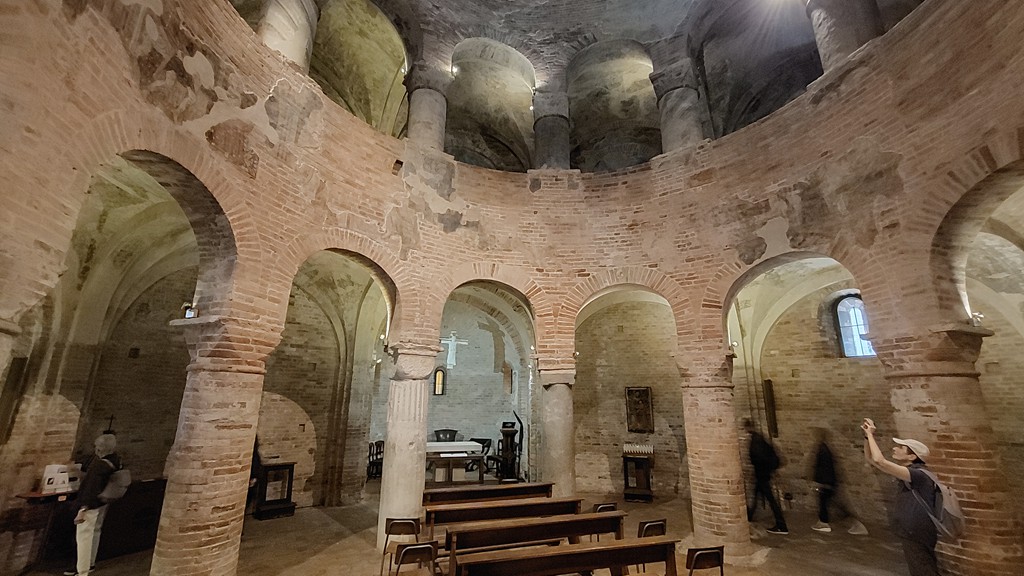
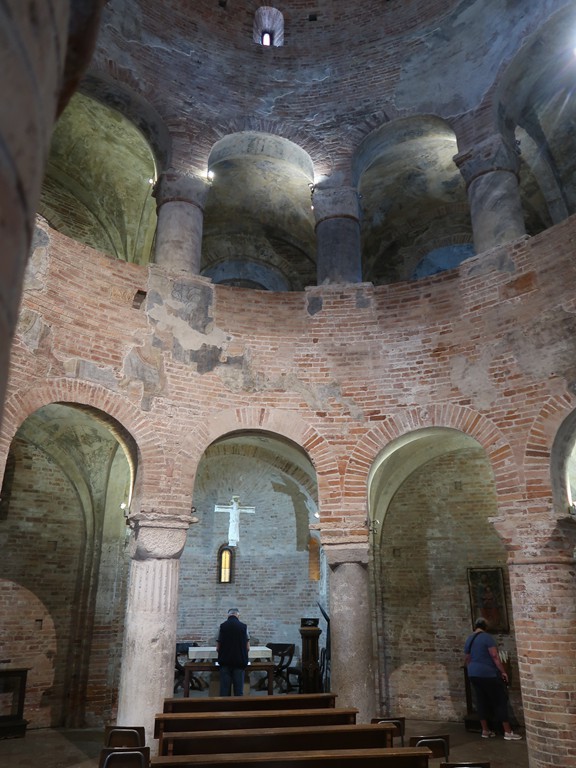
Rotonda of San Lorenzo
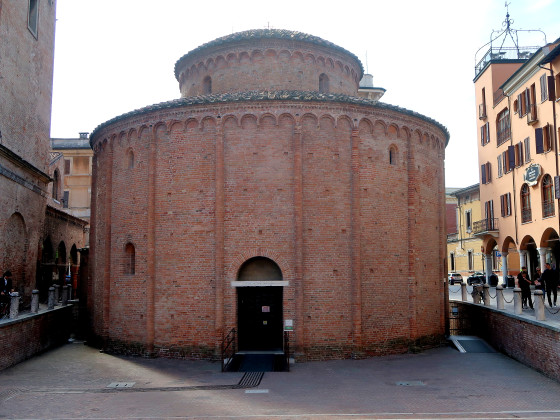
The town’s oldest church is situated approximately 1.5 metres below the level of the square. Built in 1082 at the behest of Matilda of Canossa, the church’s circular design is reminiscent of the Church of the Holy Sepulchre in Jerusalem.
Piazza delle Erbe
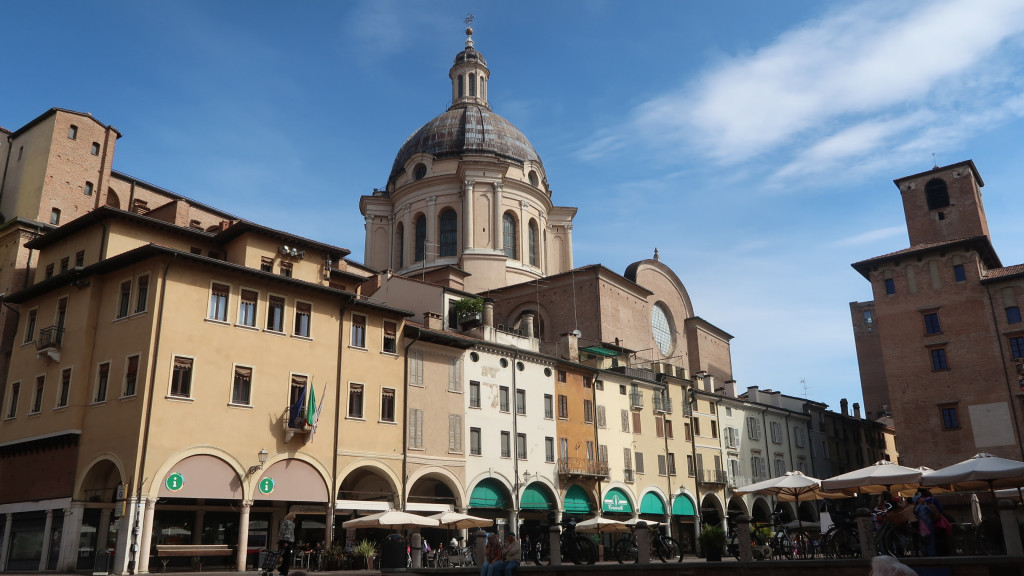
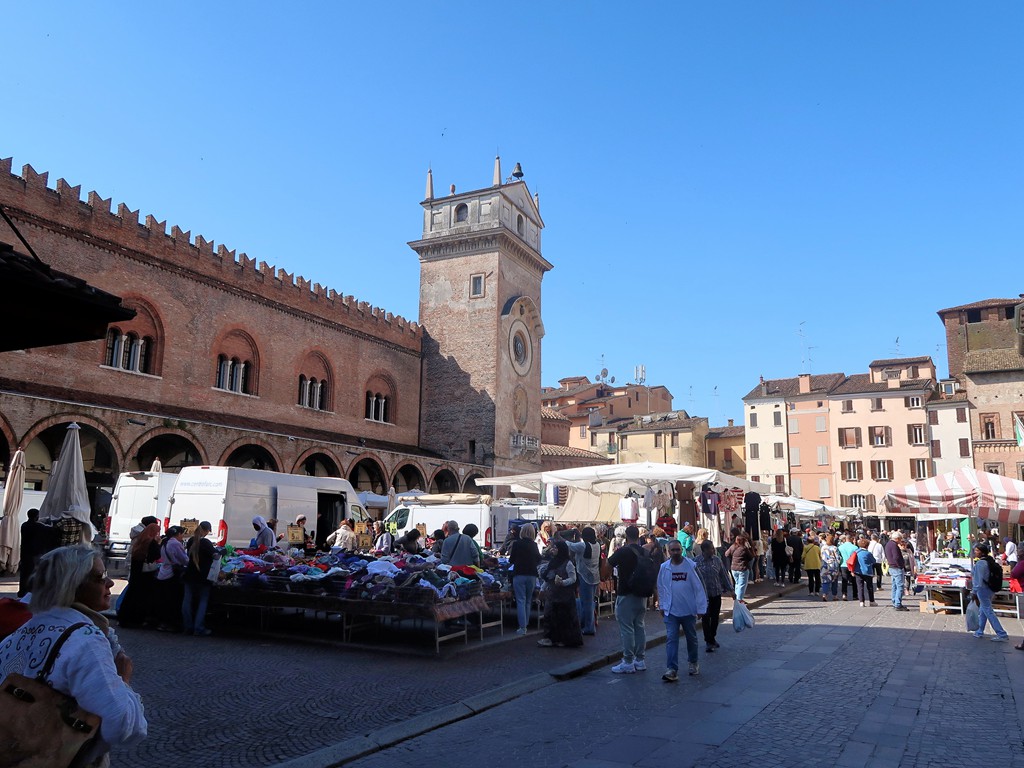
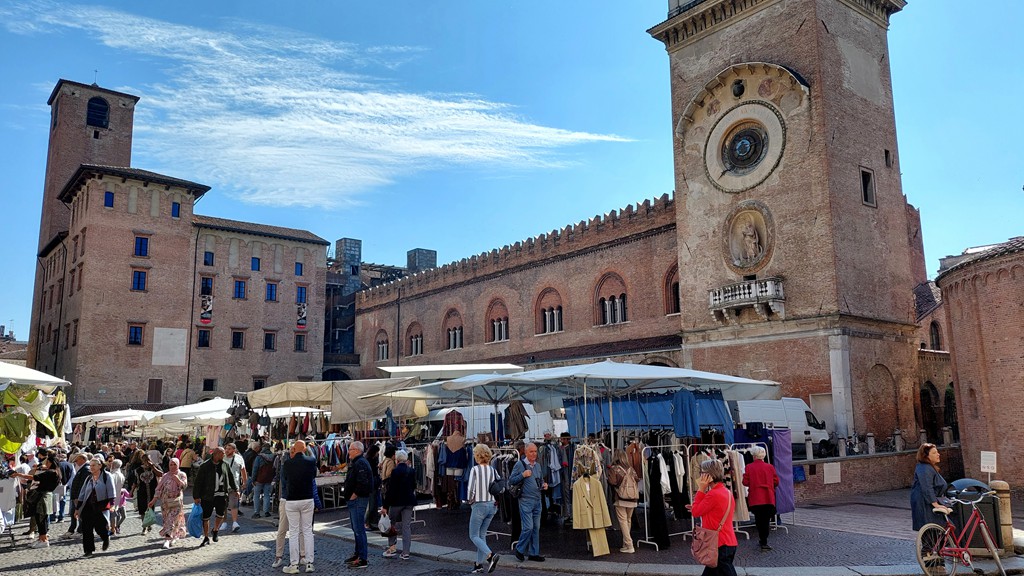
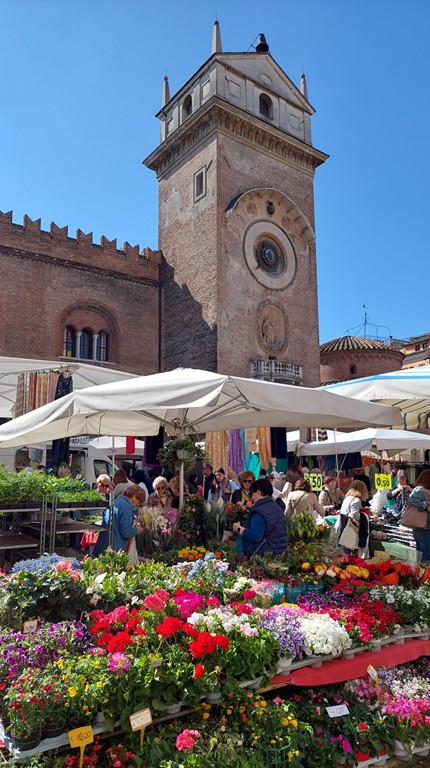
The square was once the city’s commercial hub. Today, a daily fruit and vegetable market is held here, and souvenir sellers also offer their wares. The cohesive ensemble of palazzi, adorned with magnificent frescoes, is truly impressive. At the north-western end stands the Palazzo della Ragione (Palace of Justice) from 1250, next to it the Torre dell’Orologio (15th century) with an astronomical clock. Right next to it rises the two-storey Rotonda San Lorenzo from the 11th century, Mantua’s oldest church. Opposite is the Basilica of Sant’Andrea.
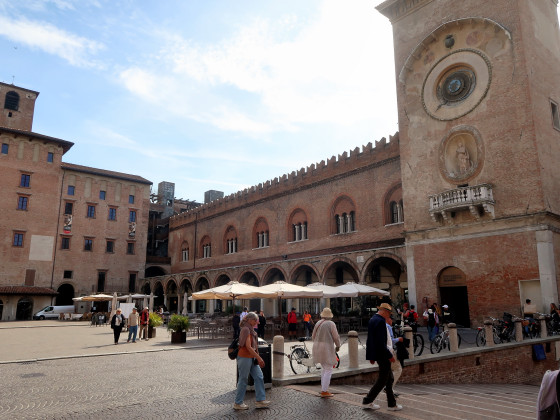
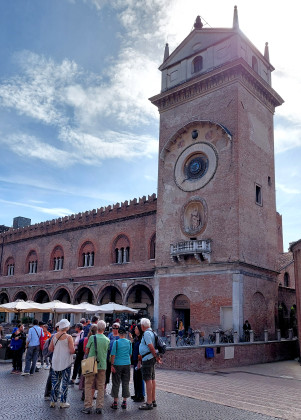
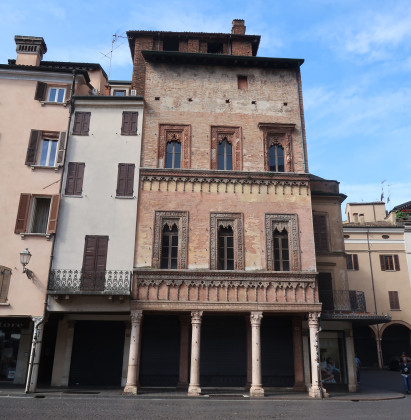
In 1455, a wealthy merchant had this building, the Casa del Mereante, constructed. Its façade is a blend of Gothic and Oriental elements, strongly reminiscent of Venetian houses.
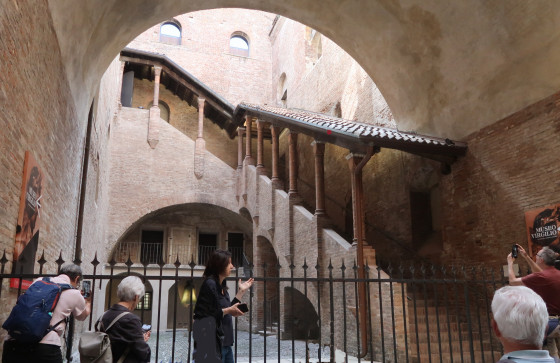
The courtyard of the Palazzo del Podestà, which connects Piazza Broletto with Piazza Erbe. It is called the Sottoportico dei Lattonai.
Piazza Broletto
During the period of the communes, the square was the hub of public life. On the south side stands the Palazzo Broletto, built in 1227 by Laudarengo Martinengo, the city’s podestà (governor).
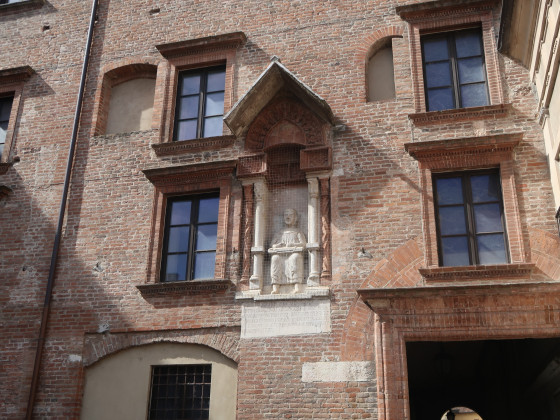
On the rear façade of the palace stands a 13th-century statue depicting Virgil on his chair, known locally as ‘la vecia’. On the corner stands the Torre del Broletto (or Torre del Podestà), with the Casa Tortelli nestled against it.
On the south side stands the 14th-century Palazzo del Massaro, inside which there are important 15th-century frescoes from the school of Pisanello.
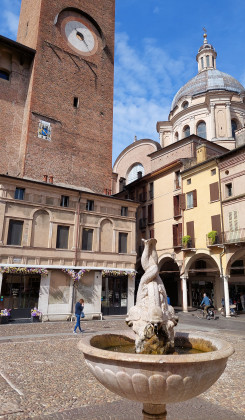
In the centre of the square stands the 19th-century Dolphin Fountain, on the very spot where the first artesian well was dug to supply the town with drinking water.
Piazza Sordello
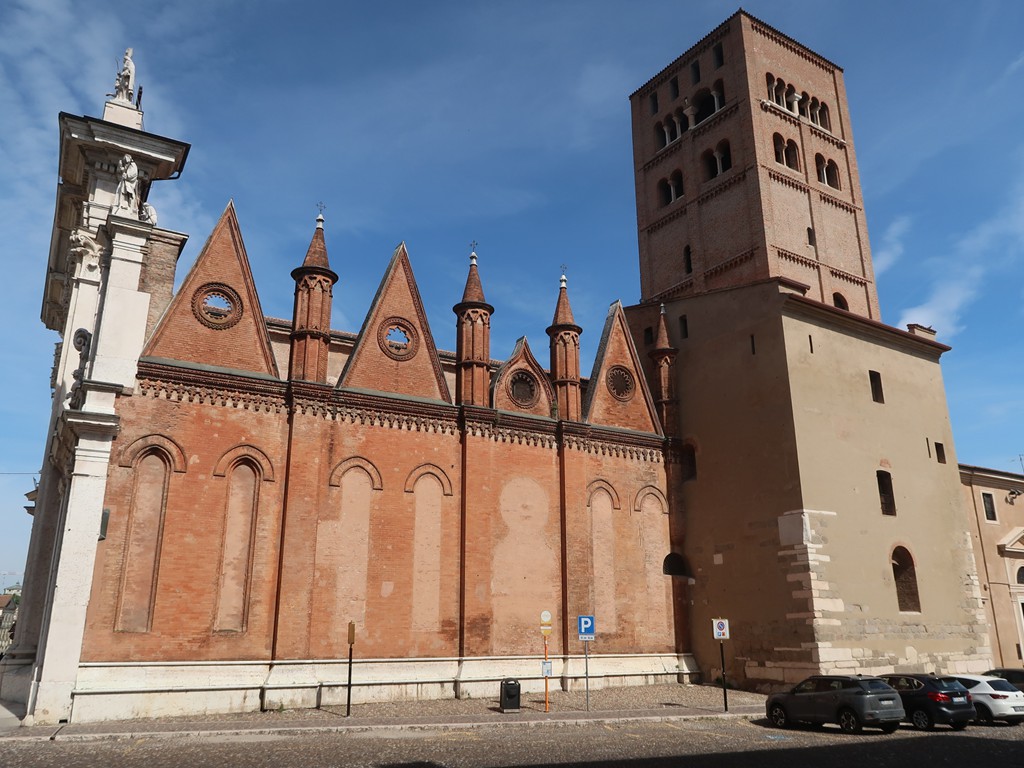
The dominant architecture of the square dates largely from the late Middle Ages and has been supplemented by 18th-century additions, including the façade of the cathedral and the Bishop’s Palace (Bianchi), which stands directly adjacent to the cathedral. At the side of the palace, the massive Romanesque bell tower bears witness to its medieval origins. To the left of the square, opposite the cathedral façade, stand the Palazzo Acerbi, dominated by the Torre della Gabbia, the Palazzo Bonacolsi (Castiglioni) with its triple round-arched windows and two portals – a pointed-arch portal and a Renaissance portal – as well as the Ca’ degli Uberti and the aforementioned Palazzo Bianchi.
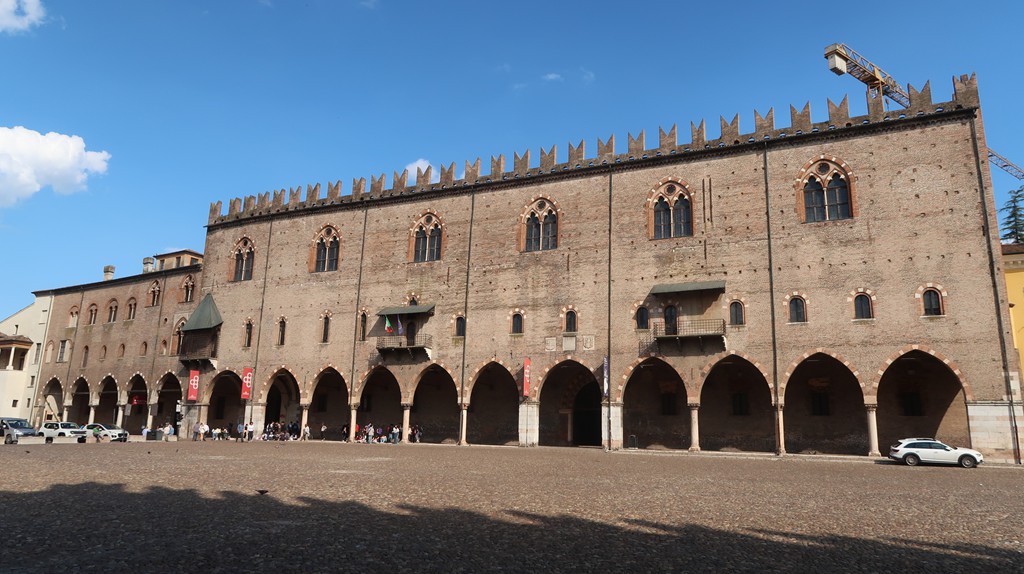
On the opposite side of the square stands the Palazzo del Capitano, whose origins date back to before 1328, the year in which the Gonzaga family came to power. It thus forms the original and oldest core of the ducal palace. Next to this majestic, crenellated building stands the Domus Magna with its 15th-century mullioned windows.
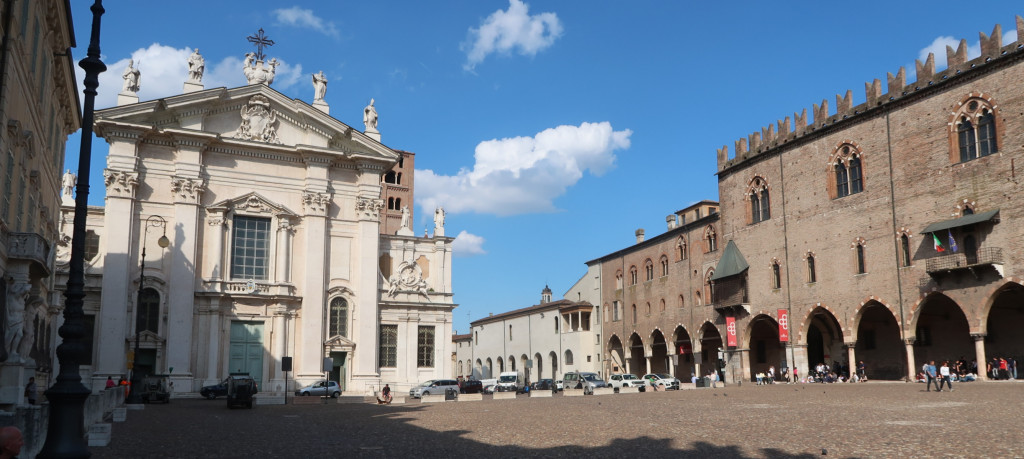
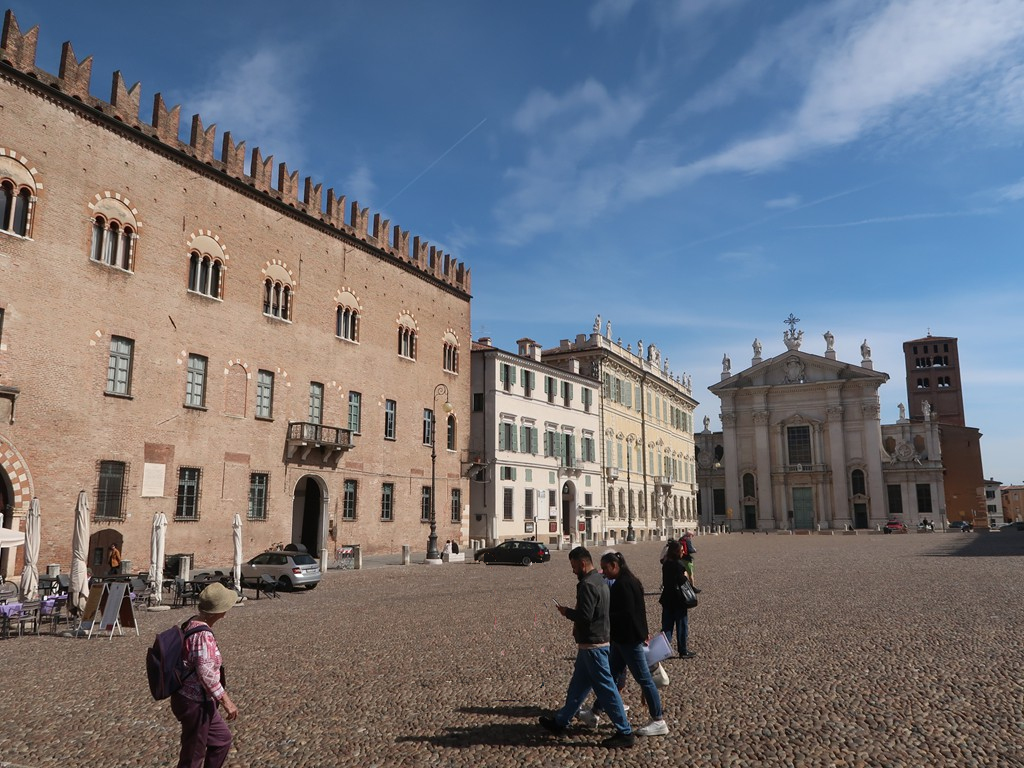
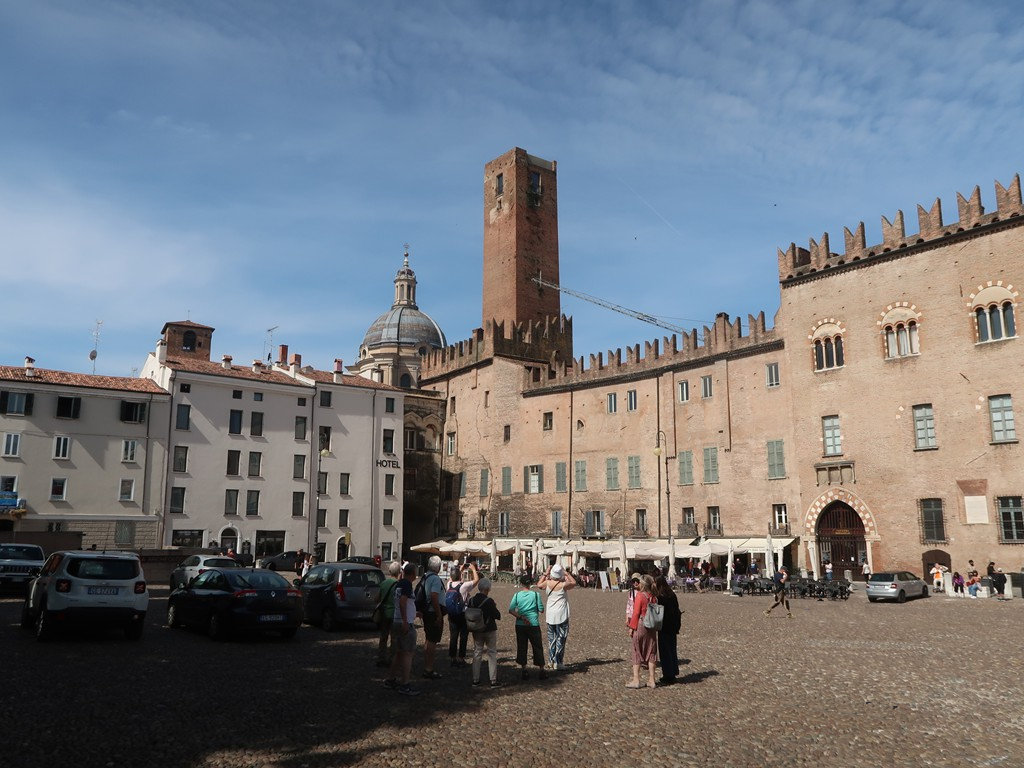
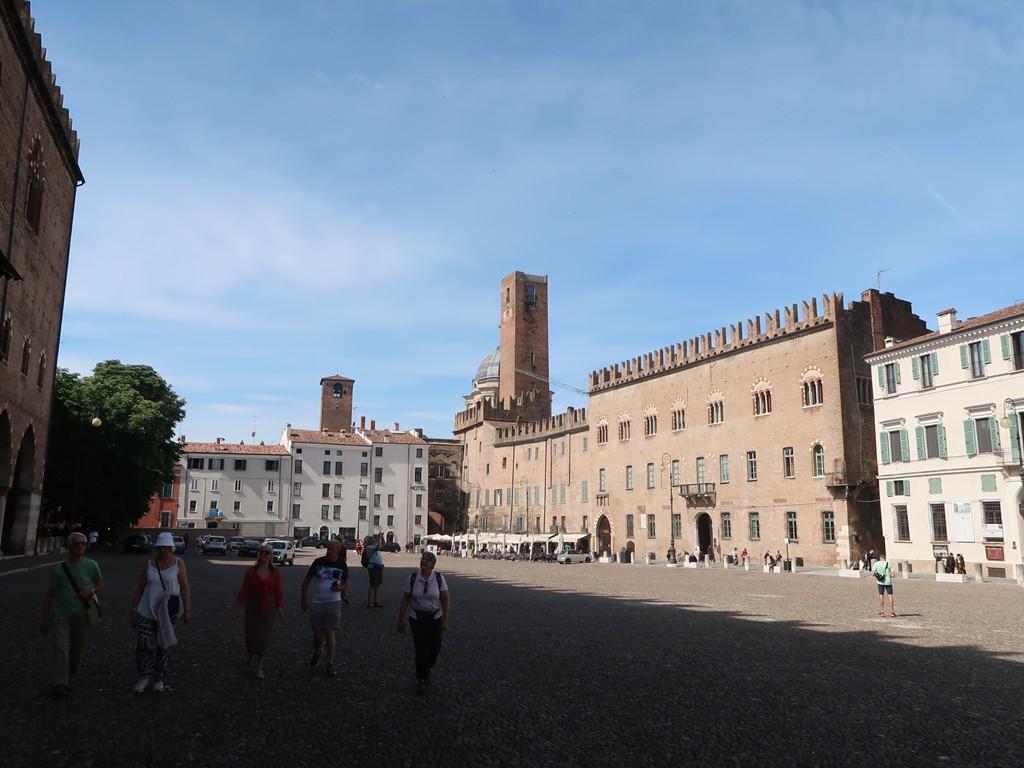
The Cathedral of San Pietro
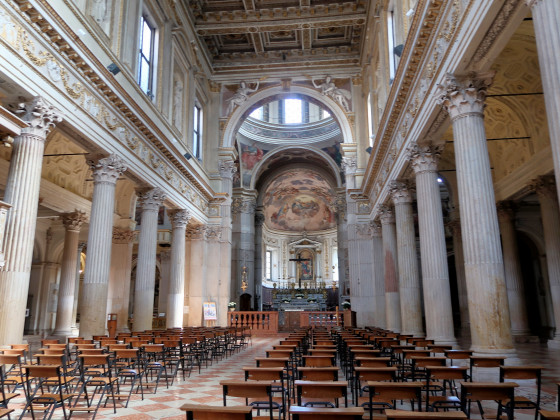
St Peter’s Cathedral reflects the history and artistic development of the city, as it combines various styles: the walls of Gothic chapels that were later destroyed, a Romanesque bell tower, a late-Gothic long side, a 16th-century interior by Giulio Romano, a Neoclassical façade in Carrara marble, and a late 15th-century sacristy whose beautiful vaulted ceiling is from the school of Mantegna.
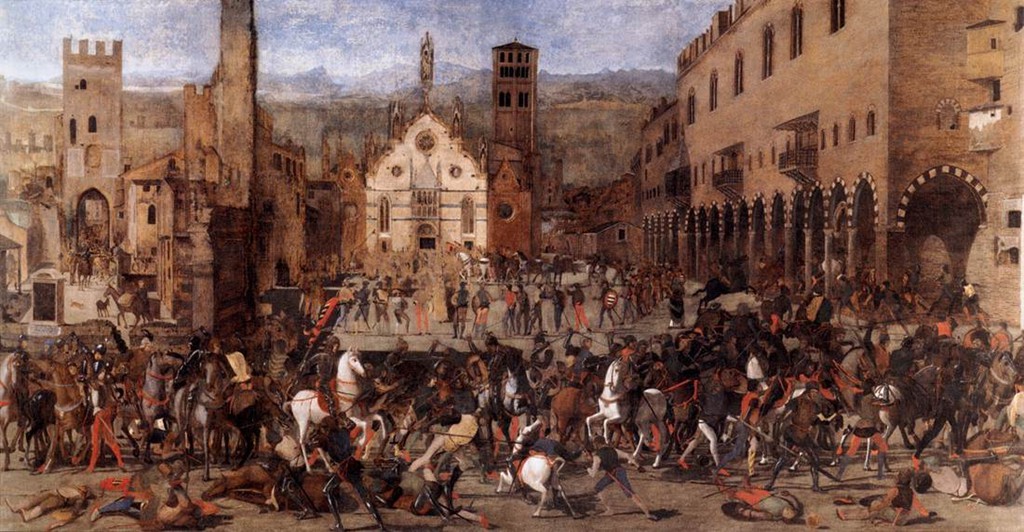
The original façade can be seen in a painting entitled ‘The Expulsion of the Bonacolsi’ (on display in the Ducal Palace).
 lightbox for MACby VisualLightBox.com v6.1
Casa di Rigoletto
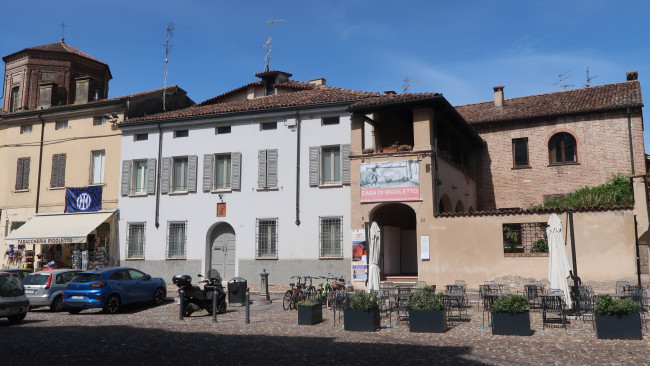
It is said that the legendary court jester Rigoletto, the main character in Giuseppe Verdi’s famous opera, lived in this house (pictured on the right). The medieval house was rebuilt in the 15th century.
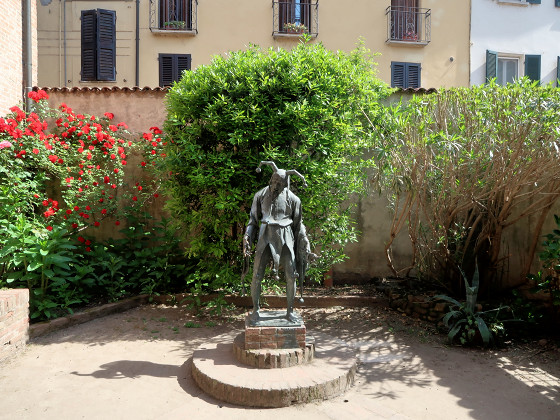
In the courtyard of the house stands a statue of Rigoletto, created by the sculptor Aldo Falchi.
Giuseppe Verdi’s "Rigoletto" (1851) is a tragic opera about revenge, depravity and the curse of Count Monterone. The hunchbacked court jester Rigoletto tries to hide his daughter Gilda from the misogynistic Duke of Mantua. But the courtiers kidnap Gilda, the Duke seduces her, and Rigoletto’s plan for revenge ends fatally for his daughter.
Palazzo Te
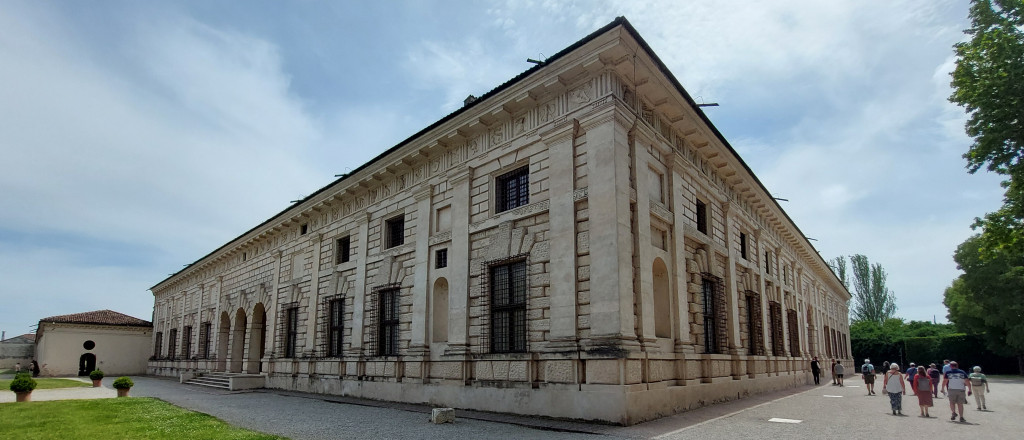
Palazzo Te dates from the 16th century. The entire complex was designed and built by Giulio Romano (1499–1546) for Federico II Gonzaga (1500–1540) as a place of leisure and for lavish receptions. From the outset, the palace opened out through large loggias onto extensive gardens, which were designed in the style of ancient Roman villas.
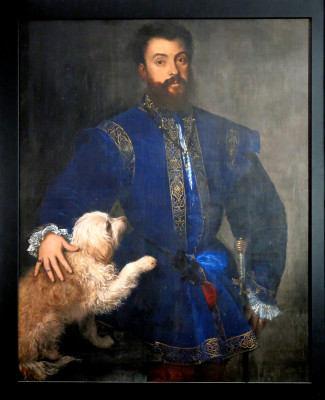
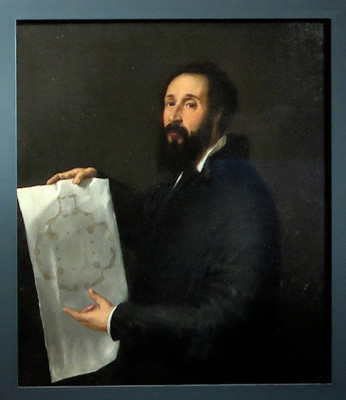
Federico II Gonzaga – a copy of a painting by Titian – and Giulio Romano
Inside, visitors can admire the exquisite frescoes and the intricate stucco work. The entire interior design was realised according to a design by Giulio Romano. He not only designed the architectural structure of the building down to the smallest detail, but also the magnificent decorative fresco cycles, the fireplaces, the ceilings and the floors of all the rooms. He then entrusted their execution to a team of skilled artists.
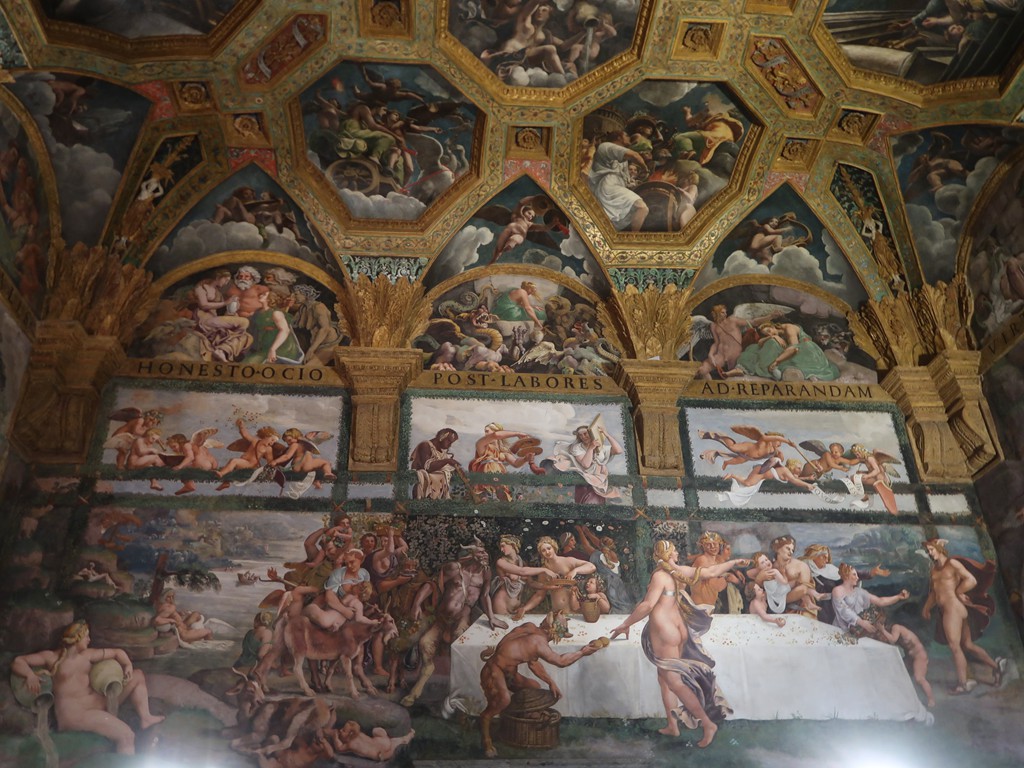
In the Hall of Cupid and Psyche there is an inscription that explicitly explains the reason for the villa’s construction: “This is a palace for leisure and pleasure, for the Duke’s sincere enjoyment.” Famous guests were received here, including Emperor Charles V, who visited in 1530 and 1532.
The rooms on the ground floor, which were intended as Federico Gonzaga’s apartments, are still almost entirely preserved today with their valuable original frescoes and stucco work. Among the true jewels of Mannerist art are, in particular, the Hall of Cupid and Psyche and the Hall of the Giants.
Cupid and Psyche
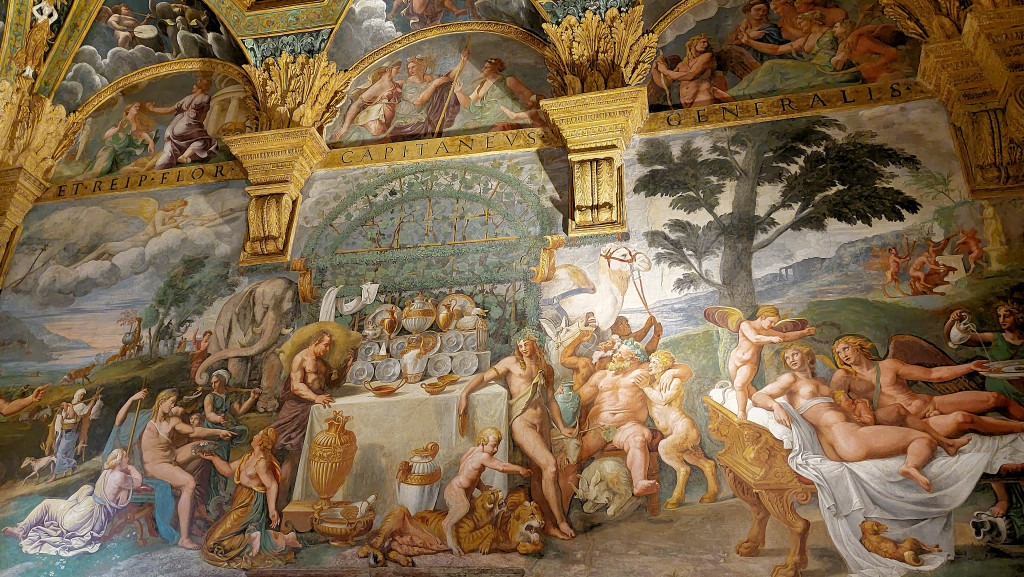
Psyche is the youngest and most beautiful daughter of a king. She is so beautiful that people stop worshipping Venus, the goddess of beauty and love. Angered, Venus summons her faithful son Cupid and orders him to make Psyche fall in love with a wicked man. Her father sends his daughter, as the oracle of the god Apollo has commanded, to a lonely mountain peak in a wedding dress. There she is to marry a terrible demon. But instead of becoming the demon’s bride, she is taken to a fairytale castle by Zephyr, the lord of the winds, on Cupid’s instructions. Cupid himself has succumbed to Psyche’s otherworldly beauty.
...In this palace, Cupid visits her night after night, yet by day he vanishes without her ever catching a glimpse of him. As Psyche feels lonely, Cupid grants her permission to
visit her sisters. However, Cupid warns her not to let her sisters persuade her to find out who he is.
At first, the sisters are glad to find Psyche safe and sound, but they are soon consumed by envy. On a subsequent visit, they manage to convince the naive girl, who is now
expecting a child, that Cupid is in fact a hideous serpent. That is why he never appears before her in daylight and intends to devour her and her unborn child.
Fearing for herself and her unborn child, Psyche follows her sisters’ advice. At night, she waits for her husband with an oil lamp and a knife. When she shines the light on her
lover, she sees not a monster, but the beautiful form of the winged Cupid. Psyche is overwhelmed by love for her divine husband and therefore does not notice a drop of hot oil
falling onto Cupid’s shoulders. The god, who had disobeyed his mother, felt betrayed, flew away and left Psyche inconsolable.
Venus is furious because her son has disobeyed her orders and instead fathered a child with Psyche. She tracks the girl down and forces her to carry out various life-threatening tasks for her. Thanks to the help of ants, a talking reed, towers and so on, Psyche manages to complete these tasks. During the final task, however, she is overcome by the desire to win back her lover. To make herself beautiful for him, she opens a box said to contain a beauty ointment intended for Venus, belonging to Pluto’s wife Proserpina. But inside the box is a deadly sleep, into which she subsequently falls.
Cupid has meanwhile recovered from the burn caused by the hot oil and rushes to Psyche’s rescue. As he still loves her, he uses his wings to drive the deadly sleep back into the box. Whilst Psyche delivers the box, Cupid flies to Zeus, the father of the gods, and asks for permission to marry Psyche. The supreme god (in another version, it is the messenger of the gods, Mercury) shows mercy, hands Psyche a cup of ambrosia and thereby makes her immortal. With that, nothing stands in the way of a wedding among the gods.
Psyche bore Cupid a beautiful daughter, who was given the name Hedone (Lust).
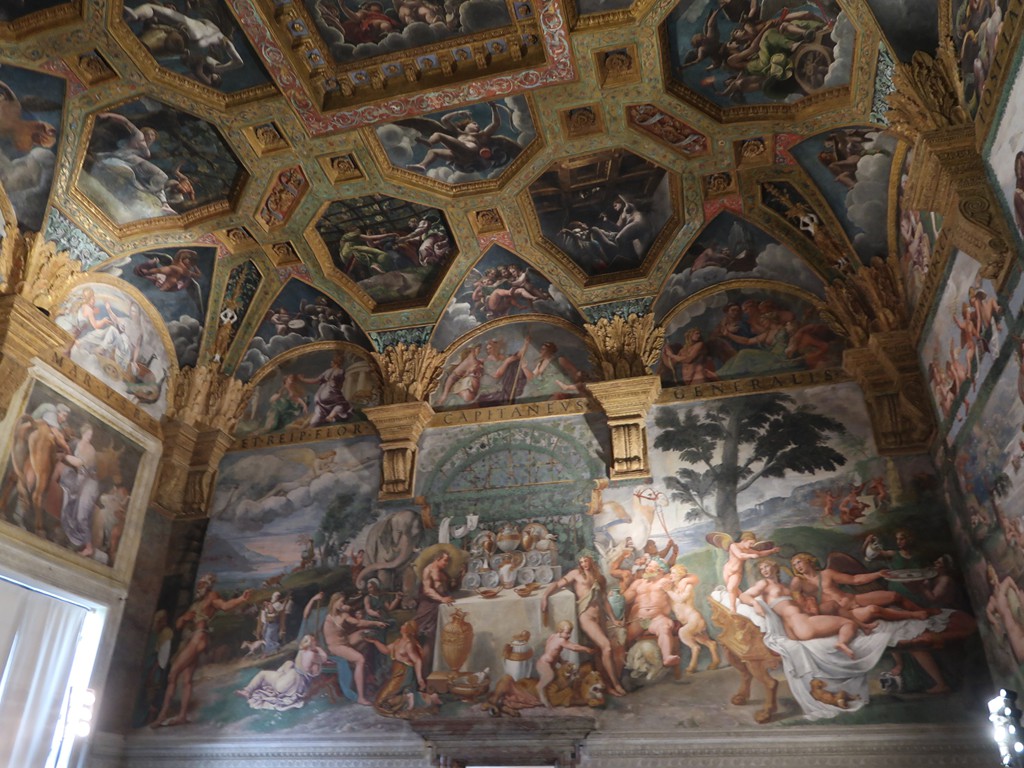
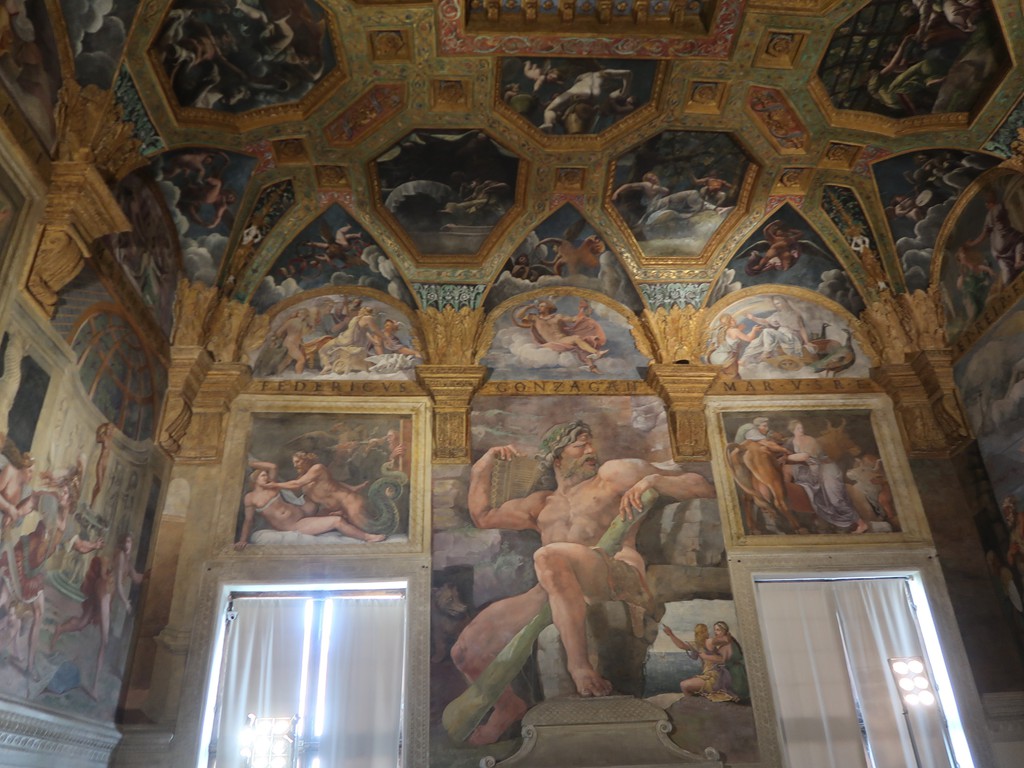
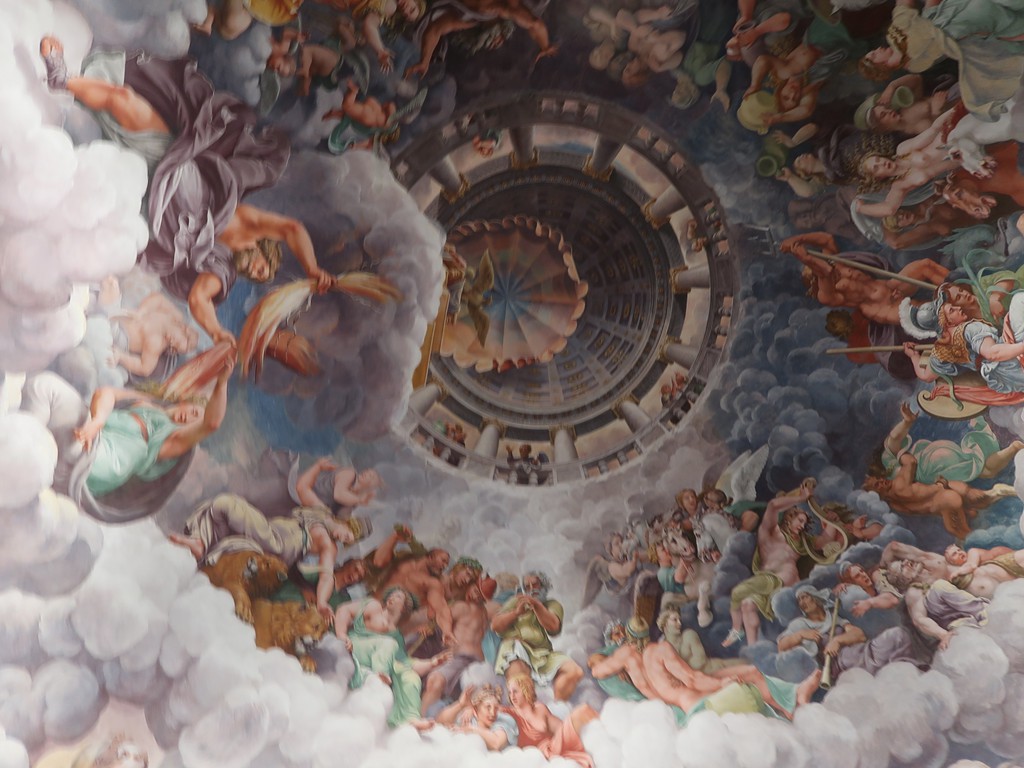
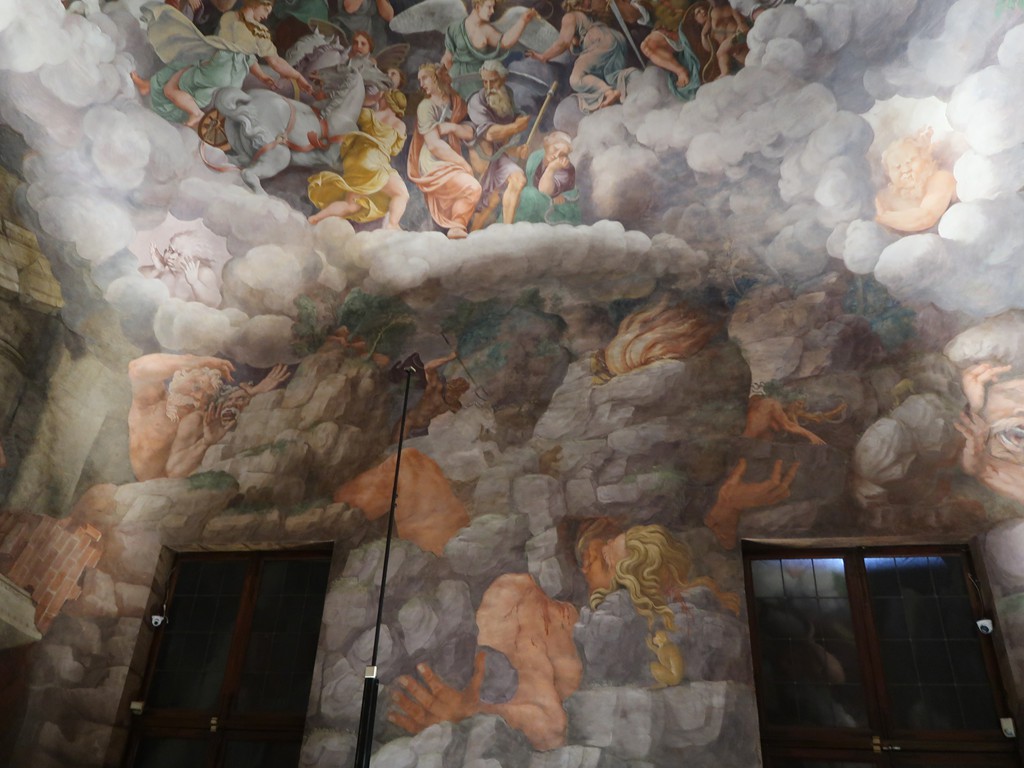
Hall of Giants
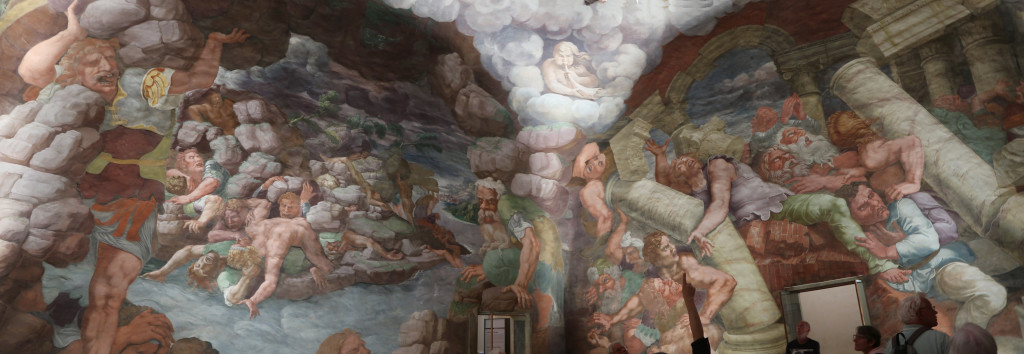
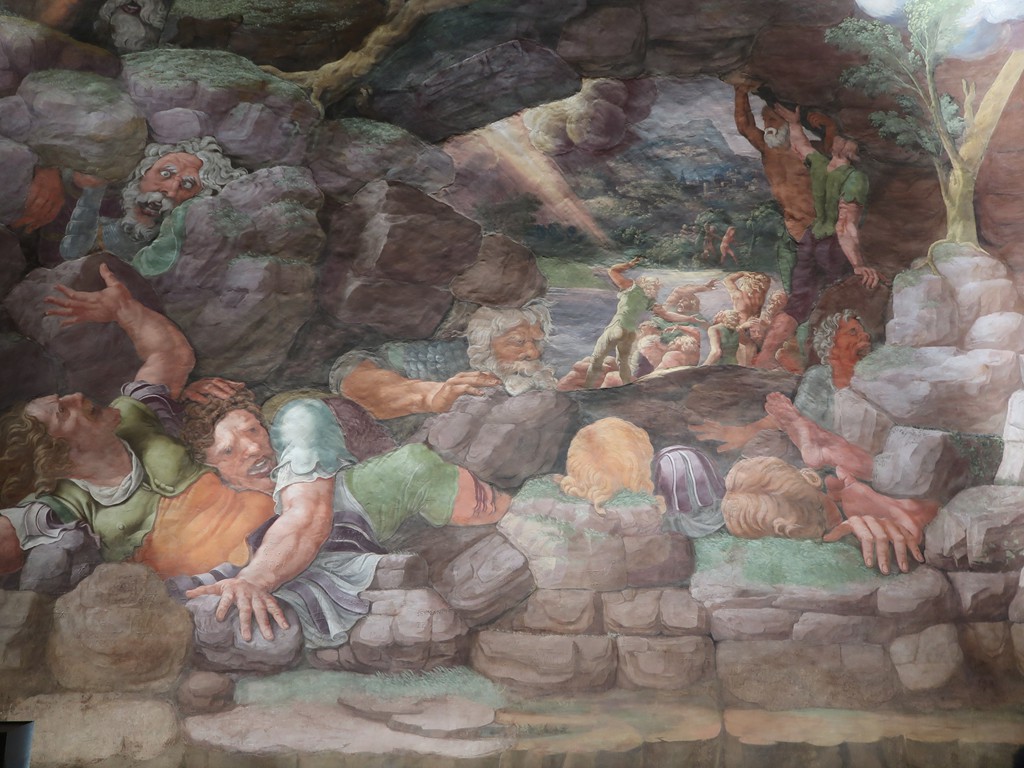
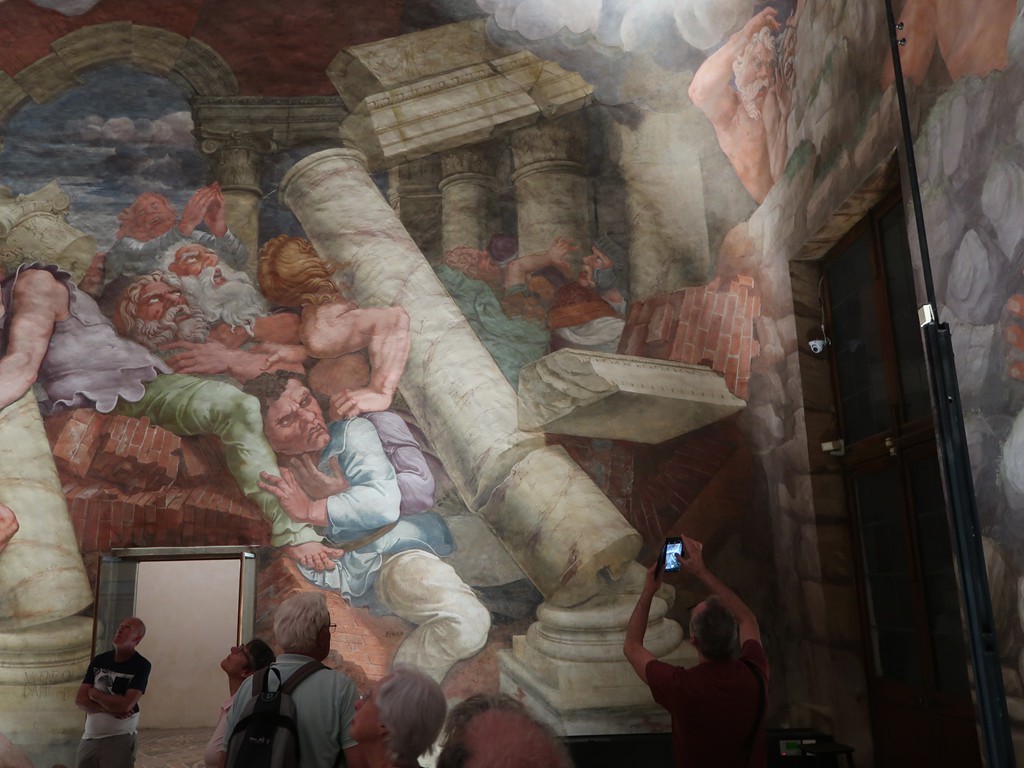
The Sala dei Giganti was painted by Giulio Romano between 1532 and 1535 and is a Renaissance masterpiece. The immersive 360-degree fresco depicts the collapse of Mount Olympus. Through an optical illusion in which architecture and painting merge, visitors are drawn into the battle between Zeus and the Giants.
Zeus hurls lightning bolts at the Giants as they attempt to storm Mount Olympus. The entire room (walls, ceiling, corners) is painted, which breaks the perspective and brings the scene to life. The architectural elements depicted appear to be collapsing, creating the impression that the viewer is right in the thick of the action.
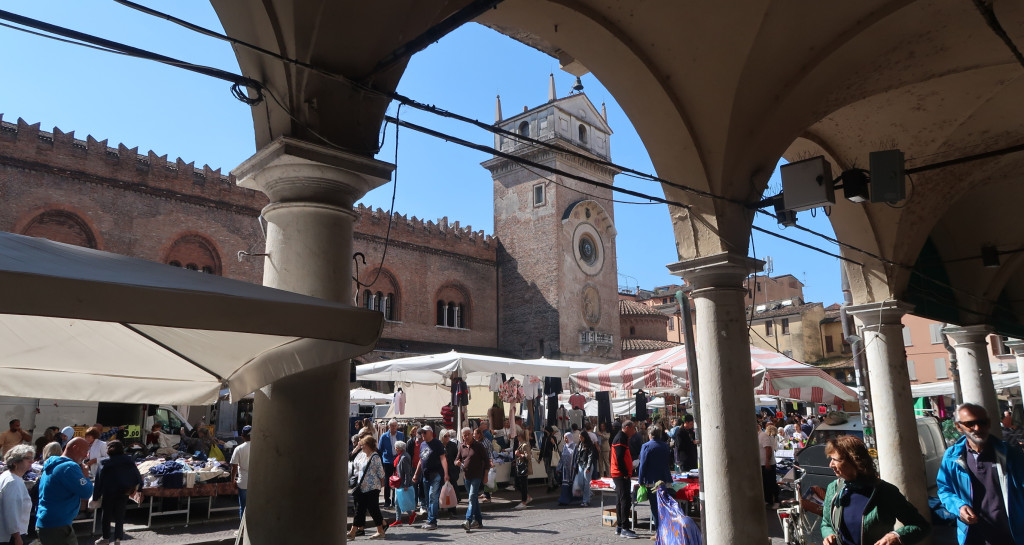
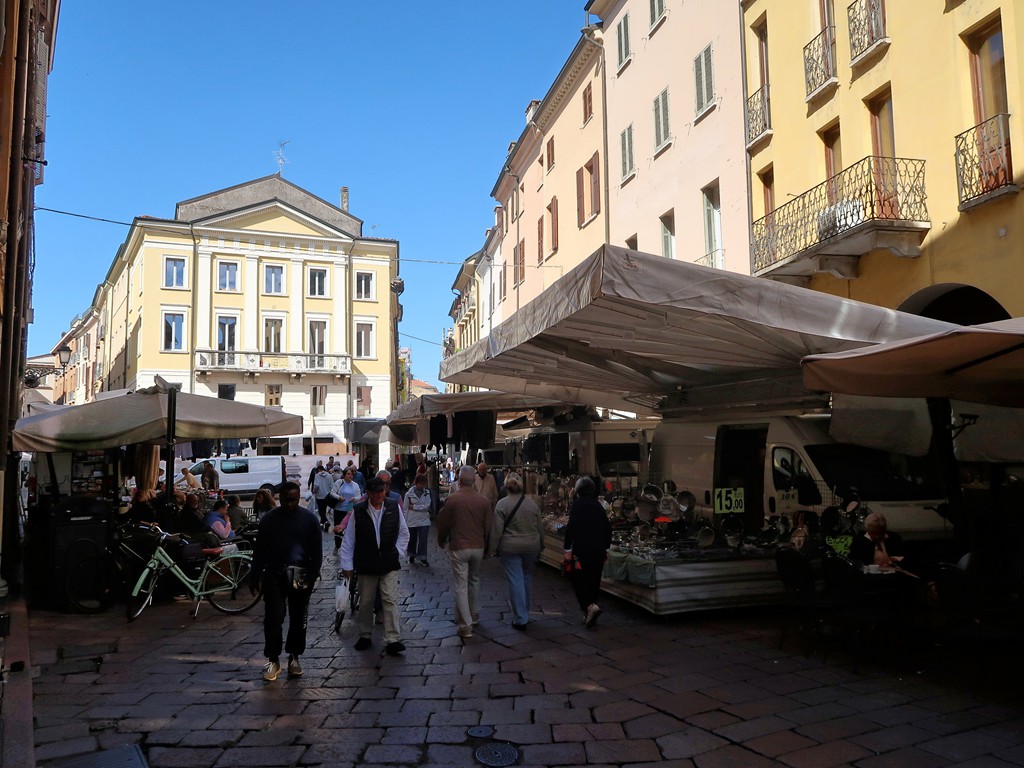
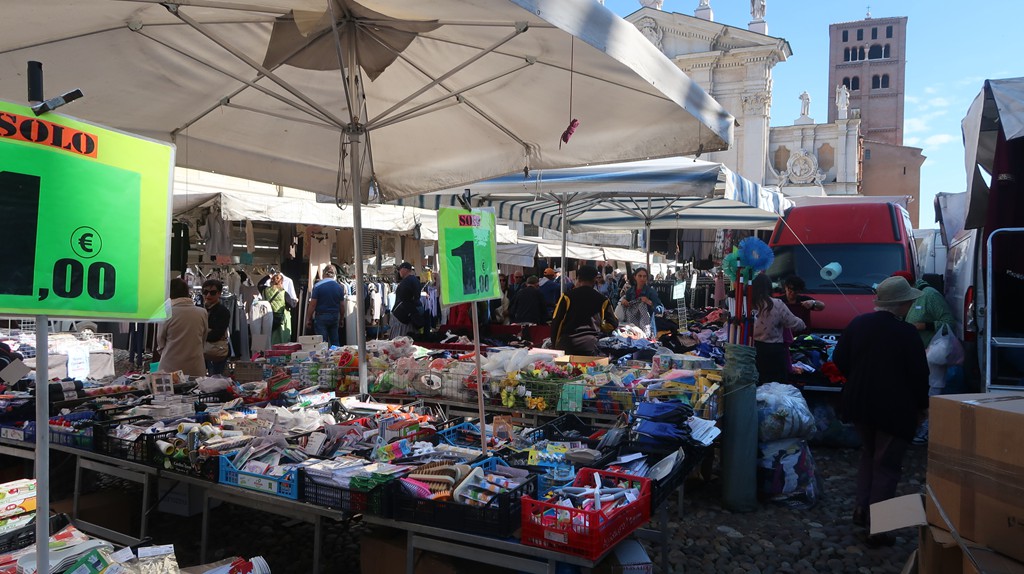
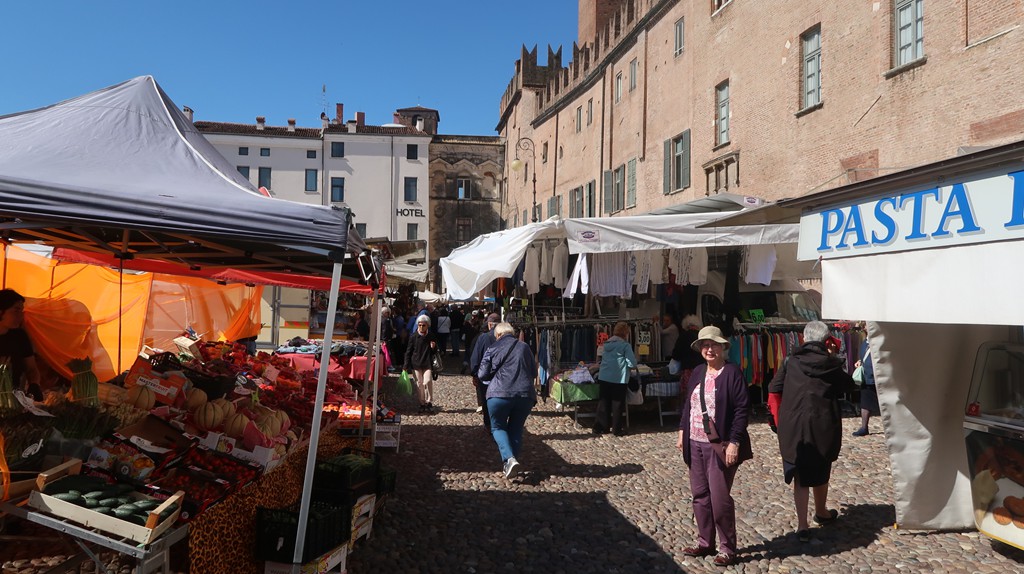
Market day
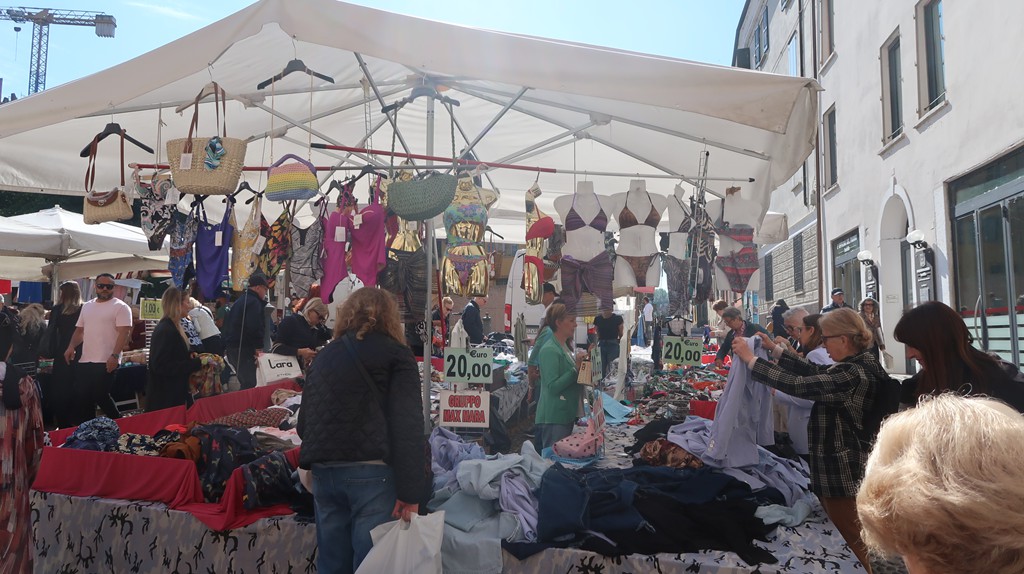
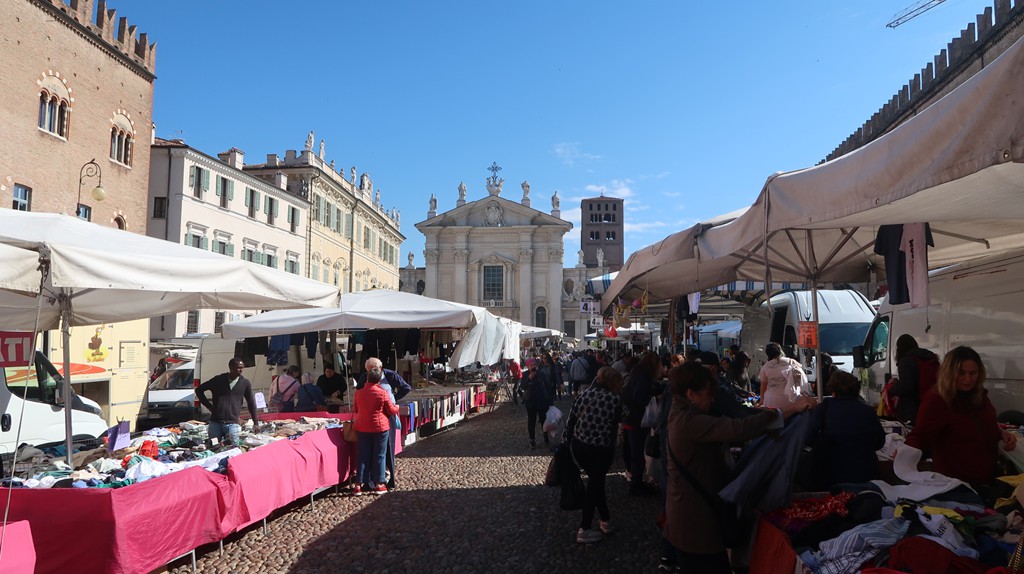
Every Thursday morning, Mantua’s old town is transformed into a huge, bustling market.

Scenes from a boat trip on the lakes around Mantua